Active case
Killing of George W. and Mae Murray Dorsey and Roger and Dorothy Malcom (Moore's Ford lynchings)
Documents violence · ongoing investigation — written to inform, not to shock.

Background
In the aftermath of World War II, racial tensions rose sharply across the South as Black veterans pressed for civil rights, including the right to vote, following a 1946 US Supreme Court ruling striking down white-only primaries. In Georgia, former three-term governor Eugene Talmadge was campaigning for the Democratic gubernatorial nomination using explicitly racist rhetoric, and held a rally in Walton County attended by local farmer J. Loy Harrison, who employed the victims as sharecroppers.
The killings
On July 11, 1946, Roger Malcom was arrested after allegedly stabbing his white landlord's relative, Barnette Hester, and was held in the Walton County jail. On July 25, Harrison bailed Malcom out and drove him, his wife Dorothy Malcom, and George and Mae Dorsey (Dorothy's brother and sister-in-law) back toward his farm. Near Moore's Ford Bridge, their car was stopped by an armed mob of 15 to 20 unmasked white men. According to Harrison's account, the group demanded Malcom and Dorsey, then also seized the two women after one was allegedly identified by a mob member. All four victims were tied to a tree and shot at close range, with a coroner estimating around 60 shots fired. George Dorsey, a World War II veteran, had returned home less than nine months earlier after nearly five years of service.
Investigation and aftermath
The killings drew national media coverage and prompted protests in New York and Washington, DC. President Harry Truman ordered the FBI to investigate under federal civil rights law for the first time in its history, and later formed the President's Committee on Civil Rights; his administration's anti-lynching legislation failed in Congress. The FBI interviewed nearly 3,000 people over several months but found insufficient evidence to bring charges, describing local farmers as uncooperative and Black sharecroppers as fearful of retaliation. A federal grand jury heard nearly three weeks of testimony in December 1946 but could not identify anyone responsible; one witness, George Alvin Adcock, was separately indicted for perjury. A related case saw two brothers, James and Tom Verner, charged with beating a grand jury witness, Lamar Howard, in January 1947; a jury acquitted them.
In 2007, Associated Press review of FBI files revealed a witness account that Talmadge may have offered "immunity" to anyone who "took care of" Malcom, in what was described as an effort to secure votes ahead of the 1946 primary, though an FBI agent at the time called the allegation "unbelievable."
Renewed public attention in the 1990s, including a witness account from Clinton Adams, led Georgia to reopen its investigation in 2001 and the FBI to rejoin the case by 2006. Both agencies again closed their investigations without prosecuting anyone — the FBI in 2015–2017 and the Georgia Bureau of Investigation in January 2018. Researcher Anthony Pitch's legal effort to unseal the 1946 grand jury testimony succeeded at the appellate panel level in 2019 but was ultimately reversed; in March 2020, a full appeals court ordered the records to remain permanently sealed.
The victims have been commemorated through a 1998 memorial service, a 1999 Georgia historical marker — the state's first to recognize a lynching — and an annual re-enactment held since 2005.

Key facts
- Victims
- Mae Murray Dorsey, Roger Malcom, George W. Dorsey, Dorothy Malcom
- Date
- 1946
- Location
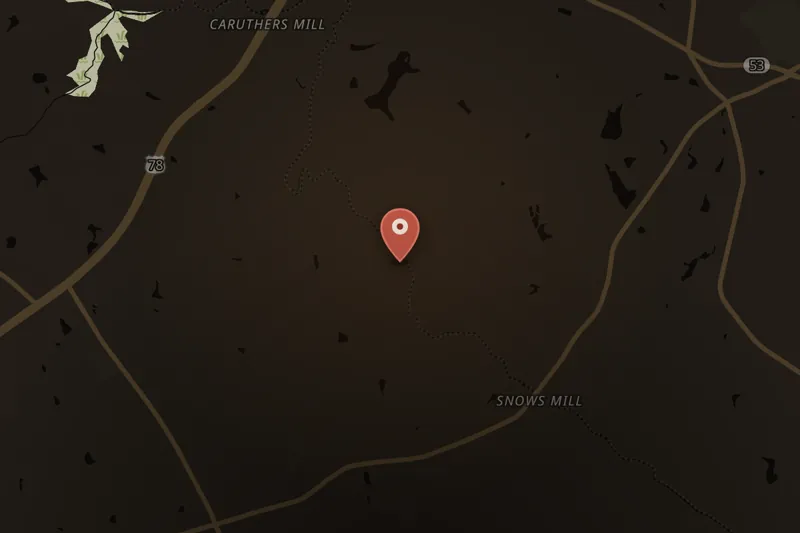
- Near Moore's Ford Bridge, between Monroe and Watkinsville, Walton/Oconee County
- Case status
- cold
Case timeline
1946-07-11
Roger Malcom is arrested and jailed after allegedly stabbing Barnette Hester.
1946-07-25
J. Loy Harrison bails out Roger Malcom; a mob stops their car near Moore's Ford Bridge and shoots and kills George Dorsey, Mae Murray Dorsey, Roger Malcom, and Dorothy Malcom.
1946-07-28
Funeral held for the Dorseys and Dorothy Malcom at Mount Perry Baptist Church.
1946-12
A federal grand jury hears nearly three weeks of testimony but cannot identify a perpetrator; President Truman creates the President's Committee on Civil Rights.
1946-12-21
Eugene Talmadge, Georgia's governor-elect, dies before taking office.
1947-01-01
Lamar Howard, a grand jury witness, is beaten by James and Tom Verner; the brothers are later acquitted.
1992
Witness Clinton Adams comes forward to the FBI and press about the lynchings, renewing public attention.
1997
The biracial Moore's Ford Memorial Committee is established.
1999
A Georgia historical marker recognizing the lynching is erected near the site.
2001
Georgia Governor Roy Barnes reopens the case with the Georgia Bureau of Investigation.
2005
Annual re-enactment of the lynching begins.
2007
Associated Press reports on FBI files suggesting Eugene Talmadge may have encouraged the mob.
2008-06
GBI and FBI search a farm property in Walton County for related material.
2017-12
The FBI closes its investigation without prosecuting any suspect.
2018-01
The Georgia Bureau of Investigation officially closes its investigation.
2019-02-11
The Eleventh Circuit Court of Appeals rules 2–1 to unseal the 1946 grand jury testimony.
2020-03-27
An appeals court reverses course and orders the grand jury records permanently sealed.
Best coverage
No approved coverage links are attached yet.
People
Mae Murray Dorsey
VICTIMSharecropper, shot and killed by a mob on July 25, 1946.
citation on file
Roger Malcom
VICTIMSharecropper, shot and killed by a mob on July 25, 1946, after being bailed out of jail.
citation on file
George W. Dorsey
VICTIMWorld War II veteran, sharecropper, shot and killed by a mob on July 25, 1946.
citation on file
Dorothy Malcom
VICTIMSharecropper, shot and killed by a mob on July 25, 1946, on her twentieth birthday.
citation on file
George Alvin Adcock
CHARGEDIndicted by the federal grand jury on two counts of perjury related to his testimony in the case.
citation on file
Places
Common questions
- What happened to the victim?
- On July 25, 1946, a mob of 15–20 unmasked white men shot and killed two young African-American couples — George and Mae Murray Dorsey and Roger and Dorothy Malcom — on a rural road near Moore's Ford Bridge in Walton County, Georgia. Despite FBI, state, and grand jury investigations spanning decades, no one was ever charged or convicted, and the case remains officially closed as unsolved.
- Where did the killing happen?
- Near Moore's Ford Bridge, between Monroe and Watkinsville, Walton/Oconee County.
- What is the current status of the case?
- Status: cold. Last verified July 2026.
Sources
- Moore's Ford lynchingswikipedia · Wikipedia · 2026-07-07
- A lynching in Georgia: the living memorial to America's history of racist violencenews · The Guardian · 2026-07-07
- Moore's Ford massacre: Activists reenact racist lynching, call for justicenews · NBC News · 2026-07-07
Last verified JUL 2026