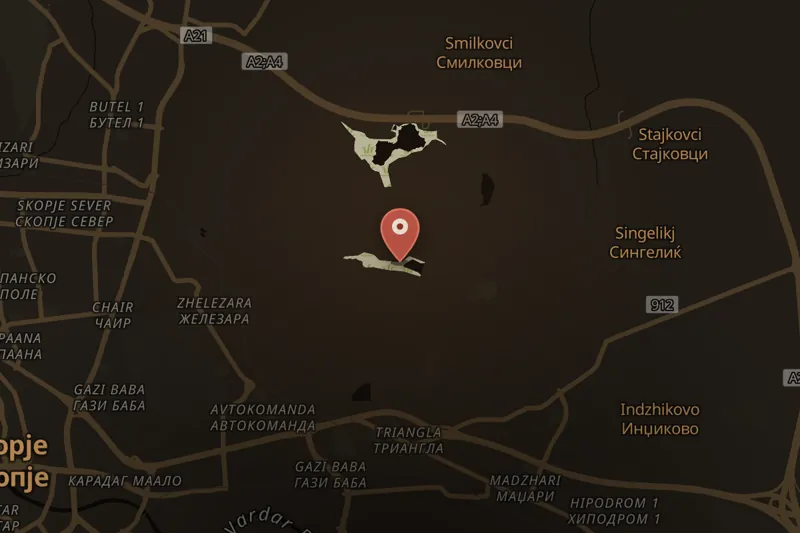
On the evening of 12 April 2012, the eve of Orthodox Easter, five ethnic Macedonian civilians were shot and killed at a man-made lake near the village of Smilkovci, outside Skopje, North Macedonia. The killings occurred between 19:30 and 22:30. Four of the victims were between 18 and 20 years old and the fifth was 45. Three were from Radišani, one from Ljuboten, and one from Creševo. Their bodies were found lined up and appeared to have been shot at close range with automatic rifles and a pistol; the body of the 45-year-old was found a short distance from the others.
The Macedonian Ministry of Internal Affairs characterized the attack as a "deliberate terrorist act aimed at destabilizing the country," intended to "incite fear and insecurity." The Helsinki Committee for Human Rights criticized the ministry for prematurely declaring suspects guilty before trial. A day of mourning was observed in Skopje's Butel municipality, and angry crowds blocked a nearby highway after the killings became known. Interior Minister Gordana Jankuloska initially said police had no suspects and could not confirm an ethnic motive.
On 1 May 2012, in an operation dubbed "Operation Monster," roughly 600 police officers raided properties and arrested 20 people. Jankuloska alleged the perpetrators were radical Islamic terrorists, some of whom had fought in Pakistan and Afghanistan. Five men — Afrim Ismailoviq, Agim Ismailoviq, Alil Demiri, Fejzi Aziri, and Rami Sejdi — were charged with terrorism. Weapons, military clothing with UÇK insignia, and identity cards were reportedly found at suspects' homes. Most of the initially arrested were later released.
The operation and subsequent trial triggered large protests among both ethnic Macedonians and ethnic Albanians, some turning violent, with clashes, injuries to police and journalists, and property damage. On 30 June 2014, Alil Demiri, Afrim Ismailovic, Agim Ismailovic, Fejzi Aziri, Haki Aziri, and Sami Ljuta were found guilty of the killings and given life sentences for terrorism; Rami Sejdi was acquitted. Two of the convicted were sentenced in absentia. An appeals court upheld the sentences in December 2015.
In October 2017, prosecutors asked the Supreme Court to end the life sentences, citing new circumstances and evidence; the Supreme Court ordered a retrial in December 2017 over procedural errors. A retrial began in May 2018. In February 2021, the Skopje Criminal Court again found Agim and Afrim Ismailovic, Alil Demiri, and Fejzi and Haki Aziri guilty. Agim and Afrim Ismailovic and Alil Demiri received life sentences; Fejzi Aziri received 15 years and Haki Aziri received 9 years. Samir Ljuta was acquitted after prosecutors withdrew charges due to lack of evidence. Only Agim was present at trial; the others were sentenced in absentia. The motive for the killings was never determined. Protests followed the verdict, and Demiri was arrested in Kosovo in August 2023 on an international warrant but was later released.

 Credit: HolaquetalcomotevaCC BY-SA 3.0SourceUNSOLVEDListen