

 UNSOLVEDListen
Niš, Serbia · 1990s
Niš cluster bombing
On 7 and 12 May 1999, cluster bombs dropped during the NATO-led bombing of Yugoslavia struck civilian areas of Niš, Serbia, killing at least 14 people and injuring dozens more.
Solved case · 1915
Also known as Slaughterhouse of Serbs
The short answer
During the Bulgarian occupation of southern Serbia in World War I, Bulgarian military authorities detained thousands of Serbian men—intelligentsia, former soldiers, and suspected persons—under the pretext of deporting them to Sofia, but instead executed an estimated 2,000–3,000 of them in and around the town of Surdulica between 1915 and 1916.
No one's coverage is attached to this file yet.
Know great coverage of this case?
A documentary, a podcast episode, a careful long-form video. Suggest it and an editor will review it before it appears here.
Suggest coverage for Surdulica massacreThe Surdulica massacre refers to the mass killing of Serbian men by Bulgarian occupation authorities in the southern Serbian town of Surdulica between 1915 and 1916, during World War I. Victims were primarily drawn from the Serbian intelligentsia in the region—functionaries, teachers, priests, and former soldiers—who were detained by Bulgarian forces under the pretext that they would be deported to the Bulgarian capital, Sofia. Instead, they were taken to Surdulica and killed. An estimated 2,000–3,000 Serbian men were executed in the town.
Following Austria-Hungary's declaration of war on Serbia on 28 July 1914 and the subsequent invasion of Serbia by combined German and Austro-Hungarian forces on 7 October 1915, the Kingdom of Bulgaria declared war on Serbia and invaded from the east on 14 October 1915. Serbia was divided among the occupying powers, with Bulgaria administering the zone between Skopje and Nis—an area long targeted by Bulgarian nationalist claims. A policy described as Bulgarianisation was implemented against ethnic Serbs in this zone. On 14 December 1915, the Bulgarian governor-general ordered the arrest and internment of Serbian Army veterans aged 18–50, officers, former teachers, priests, journalists, former deputies, military officials, and other people deemed suspicious.
Detained Serbian men were told they were being taken to Sofia. Instead, according to historian Andrej Mitrovic, they were transported to Surdulica and killed. In some instances, Bulgarian soldiers reportedly handed victims over to komitadjis of the Internal Macedonian Revolutionary Organisation, who had already been conducting similar killings in the area. Colonel von Lustig, an Austro-Hungarian liaison officer attached to the German 11th Army, documented that Bulgarian patrols would take suspects away under orders to bring them "to Sofia" and return the following day without them, and reported that Bulgarian officers openly acknowledged the executions. A military commission reportedly screened deported prisoners in Surdulica and decided on executions. Mass executions also occurred near Surdulica at a site called "Duboka Dolina," with victims buried in mass graves. Bulgarian military authorities are also reported to have killed civilians in Vranje, Zajecar, Kacanik, and other locations in the region during this period.
An American writer, William A. Drayton, visited the region between December 1918 and January 1919 as part of a Serbian commission investigating Bulgarian war crimes. He interviewed fifteen eyewitnesses who stated that Bulgarian forces deported Serbs to Surdulica and executed a portion of them according to pre-determined lists of names, while others were in fact deported to Sofia. According to Colonel von Lustig, relatives of those executed also suffered in the aftermath.
Austria-Hungary declares war on Serbia, beginning World War I hostilities in the region.
Serbia is invaded by a combined German and Austro-Hungarian force.
The Kingdom of Bulgaria declares war on Serbia and invades from the east.
Bulgarian occupation of southern Serbia, including Surdulica, begins; mass killings of detained Serbian men reported to begin around this time.
The Bulgarian military governor of occupied Serbian territories orders the arrest and internment of Serbian men aged 18-50 who served in the army, along with officers, teachers, priests, journalists, deputies, and functionaries.
Mass executions of an estimated 2,000-3,000 Serbian men occur in Surdulica and at a nearby site called Duboka Dolina.
The Toplica rebellion breaks out among Serbian guerrillas against Bulgarian occupation.
Bulgarian counterattack against the Toplica rebellion begins under Alexander Protogerov.
Order is reported fully restored following suppression of the Toplica rebellion.
American writer William A. Drayton begins interviewing eyewitnesses in the region as part of a Serbian commission investigating Bulgarian war crimes.
Drayton's eyewitness interviews conclude; witnesses describe executions in Surdulica based on pre-determined lists of names.
Victims first. Every legal label is set from public records and court outcomes, not from the prose.
American writer who, as part of a Serbian commission investigating Bulgarian war crimes, interviewed fifteen eyewitnesses to the massacre in December 1918-January 1919[3]
Coverage is not a source: every fact in this file rests on the records below.
Are you family of someone named in this file? Corrections and removal requests from victims’ families are prioritized.
UNSOLVEDListenNiš, Serbia · 1990s
On 7 and 12 May 1999, cluster bombs dropped during the NATO-led bombing of Yugoslavia struck civilian areas of Niš, Serbia, killing at least 14 people and injuring dozens more.
 SOLVEDListen
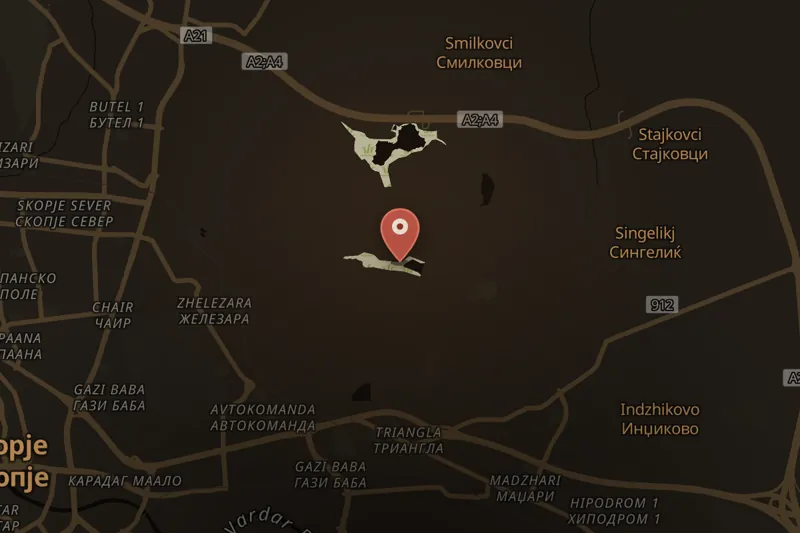
Smilkovci Lake, near Skopje · 2010s
Five ethnic Macedonian men were shot dead near Smilkovci Lake outside Skopje on 12 April 2012, sparking ethnic tensions and years of contested trials before a 2021 retrial produced fresh convictions.
 Credit: HolaquetalcomotevaCC BY-SA 3.0SourceUNSOLVEDListen
Dulje Pass, near Prizren, Kosovo · 1990s
Stern magazine journalists Gabriel Grüner and Volker Krämer were shot at a checkpoint at the Dulje Pass in Kosovo on June 13, 1999, two days after the Kosovo War ended, along with their translator Senol Alit. No one has been identified or held legally accountable for the shootings.
 Credit: BlondhairGirlCC BY-SA 3.0SourceSOLVEDListen
İzmit (Nicomedia), Turkey · 1915
During the Greco-Turkish War (1919–1922), Turkish nationalist bands and regular forces carried out massacres and village burnings against Greek and Armenian civilians in the İzmit region, which an Inter-Allied Commission of Enquiry found had killed more than 12,000 people and left 2,500 missing.
 Credit: Arcangelo GhisleriPublic domainSourceSOLVEDListen
Shar al-Shatt, Tripoli, Libya · 1911
On 23 October 1911, during the Italo-Turkish War, Ottoman forces and local Arab militias attacked Italian defensive positions at the oasis village of Shar al-Shatt near Tripoli, Libya, killing 503 Italian soldiers, including 290 Bersaglieri who had surrendered and were subsequently tortured and killed in a local cemetery.
 Credit: Voice of AmericaPublic domainSourceSOLVEDListen
Vladislav Ribnikar Model Elementary School, Vračar, Belgrade, Serbia · 2023
On 3 May 2023, a 13-year-old boy opened fire at Vladislav Ribnikar Model Elementary School in Belgrade, Serbia, killing ten people — nine students and a security guard — and wounding six others. Because he was under Serbia's age of criminal responsibility, he could not be criminally charged; his parents were later convicted over the firearms used.