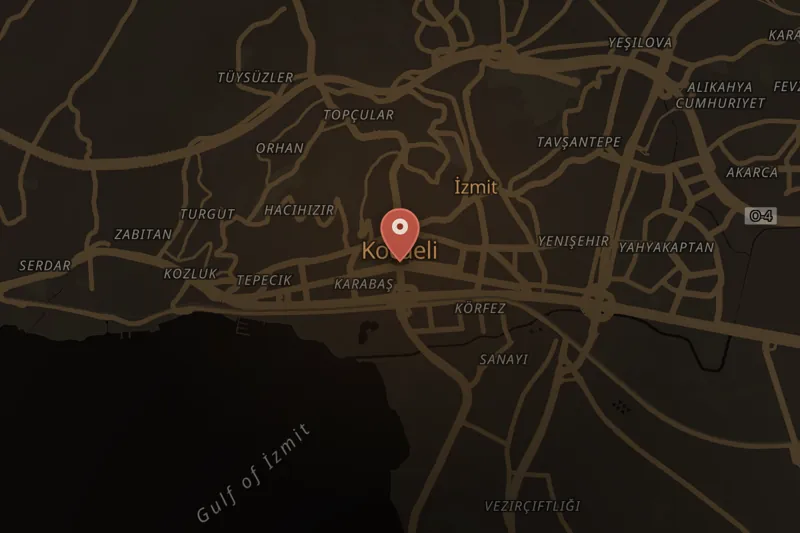
The İzmit massacres refer to a series of atrocities committed in the region of İzmit (Nicomedia), Turkey, during the Greco-Turkish War of 1919–1922, within the broader context of the Greek genocide. Ethnic cleansing policies by the Ottoman government had already targeted local Greek and Armenian communities in the İzmit region as early as 1915, including mass deportations. The New York Times reported in 1915 that 19,000 Greeks from the İzmit province had been forcibly removed from their homes. The Armenian Metropolitan of İzmit, Stephan Hovakimian, stated that of 80,000 Armenians in his Diocese, 70,000 had been lost in exile due to hunger, exhaustion, and killings. Following the 1918 Armistice of Mudros, nationalist bands began attacking local Christian populations.
Violence against the local Greek population escalated from March 1920 and intensified during June–July 1920 as the Hellenic Army's advance into the region became imminent. Nationalist bands, some organized by the Turkish Nationalist Movement, operated as far as Üsküdar, burning villages and killing inhabitants, particularly in areas south, north, and northeast of Adapazarı, and south and southeast of İznik. The presence of the Hellenic Army from July 1920 curtailed some of this activity, though attacks continued in areas such as Karamürsel. The Hellenic Army itself was accused of supporting assaults on villages east of Beykoz, including killings of civilians and burning of settlements, with some violence attributed to local Greek civilians who had previously suffered Turkish attacks. From spring 1921, Turkish band activity increased again south of İzmit, destroying further Christian villages.
In early summer 1921, amid the retreat of the Hellenic Army, an evacuation of the region occurred. According to the British High Commission, roughly 33,000 people were evacuated, including approximately 21,000 Greeks, 9,000 Armenians, and 3,000 Turks and Circassians, dispersed to locations including Volos, Tekirdağ, Pyrgo, Lemnos, Samos, and Mytilene.
An Inter-Allied Commission of Enquiry investigated the incidents and submitted a report on 1 June 1921. It generally accepted Greek authorities' claims that 32 villages had been looted or burned and that more than 12,000 local civilians had been massacred by Turkish forces, with 2,500 reported missing, characterizing these figures as "fundamentally true, notwithstanding a certain amount of exaggeration." British historian Arnold Toynbee offered a contrasting estimate, stating that activities of the Hellenic Army and irregulars killed up to 300 persons, though he reportedly did not address the Allied commission's conclusions. Winston Churchill described the Greek-attributed atrocities as "on a minor scale" compared to Turkish nationalist deportations from Trebizond and Samsun provinces the same year. Specific villages documented as affected include Fulacık, Kara Tepe, Küplü, İznik, Fındıklı, Ortaköy, and Konzes, among others, with testimonies describing looting, burning, rape, and mass killings.

 SOLVEDListen