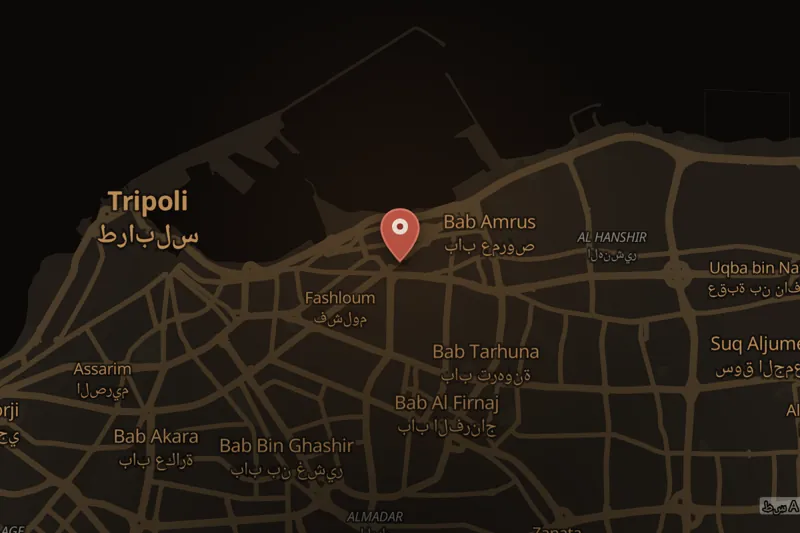
On 23 October 1911, during the Italo-Turkish War, Ottoman forces under Colonel Neşet, supported by Arab militias, launched a coordinated assault on Italian defensive positions surrounding Tripoli, Libya. While diversionary attacks struck the western perimeter held by the 6th and 82nd Infantry Regiments, the main assault targeted the less fortified eastern positions at the oasis village of Shar al-Shatt, held by the 11th Bersaglieri Regiment under Colonel Gustavo Fara. The Bersaglieri companies, deployed across Fort Messri, Henni, and the Shar al-Shatt sector, were unable to receive artillery support due to the dense civilian population of the Menscia district and had not fortified their positions to avoid damaging local property.
The IV Battalion of the 11th Bersaglieri, numbering approximately 500 soldiers, came under sustained attack and was overrun. Companies were forced to retreat under fire, with some units suffering severe losses while being fired upon by local civilians from surrounding houses. The 4th Company withdrew to the cemetery of Rebab, where it barricaded itself until surrendering. Approximately 290 Bersaglieri who survived the initial assault and surrendered were subsequently tortured and killed by their captors in the cemetery. The situation stabilized only around 5 p.m. with the arrival of reinforcements, including a battalion of the 82nd Infantry Regiment and naval landing companies, and Shar al-Shatt was reoccupied at sunset after house-to-house fighting.
Contemporary press accounts described extensive mutilation of the dead. French correspondent Gaston Leroux of "Matin-Journal" reported observing bodies described as crucified and mutilated within a mosque at Sciara Sciat, and further remains at the cemetery of Chui. Argentine journalist Enzo D'Armesano of "La Prensa," present the following morning, reported that local civilians had approached Italian lines under the guise of friendship before attacking with knives, and that survivors of the 4th Battalion accused Arab civilians of betrayal.
Officially, 21 Italian officers and 482 soldiers were recorded as killed at Shar al-Shatt, with 290 of these deaths attributed to the massacre of surrendered soldiers in the cemetery. In the aftermath, Italian forces reoccupied Shar al-Shatt and conducted reprisals. Three days later, on 26 October, Ottoman forces launched a further attack at Bu-Meliana, which was repulsed by Italian artillery and counterattacks. The oasis was fully recaptured by Italian forces on 26 November 1911 following reinforcements from Italy. In 1932, a Monument to the Bersaglieri was inaugurated in Rome, inaugurated by Mussolini, with one of its sculpted panels commemorating those killed at Shar al-Shatt.

 UNSOLVEDListen