
Start here
Inside the final days of Muammar Gaddafi's brutal regime | 60 Minutes Australia

60 Minutes Australia's 13-minute overview: the quickest complete way into the case.
Watch on YouTubeBefore you continue
This case involves sexual violence. Casepin presents the record in neutral, non-graphic language. Choose whether to continue.
Unsolved case · 2011
Also known as Former Libyan leader Gaddafi killed · Muammar Gaddafi's killing
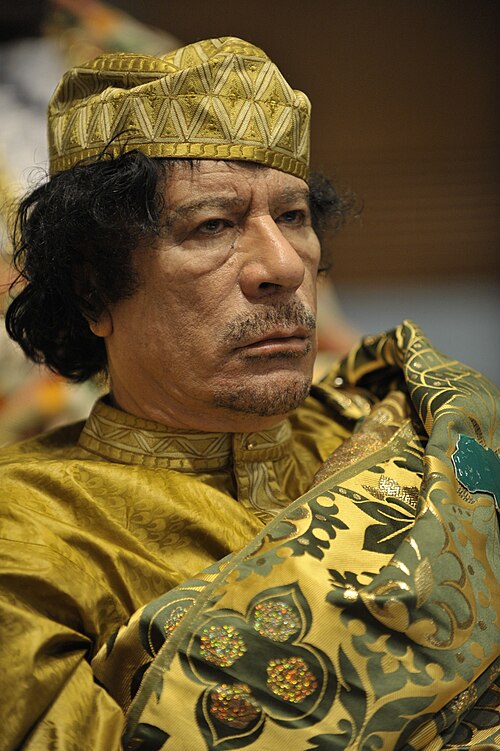 Muammar al-Gaddafi at the AU summitCredit: U.S. Navy photo by Mass Communication Specialist 2nd Class Jesse B. Awalt/Released·Public domain·Source
The short answer
Former Libyan leader Muammar Gaddafi was captured by National Transitional Council (NTC) forces near Sirte on 20 October 2011 following a NATO airstrike on his convoy, and was killed shortly after his capture. Video evidence contradicted initial NTC claims that he died in crossfire, and international bodies called for an independent investigation into his death.
Start hereInside the final days of Muammar Gaddafi's brutal regime | 60 Minutes Australia60 Minutes Australia · 13 minThe coverage index
1 piece from 1 creator: ranked, with duplicates removed and short clips set aside.
Start here
Video · YouTube · 13 min · 2024
60 Minutes Australia's 13-minute overview: the quickest complete way into the case.
Watch on YouTubeTitles and descriptions are the creators’ own and may not reflect current legal status. The sourced facts are in the file below. Players load only when you press play. Suggest coverage we’re missing.
The case file
Muammar Gaddafi, who had led Libya for over four decades, was killed on 20 October 2011 near Sirte after being captured by fighters of the National Transitional Council (NTC) in the closing stages of the Libyan Civil War. Following the fall of Tripoli in August 2011, Gaddafi had fled to his hometown of Sirte, where he remained in hiding with loyalist forces for several months as NTC forces besieged the city.
On the morning of 20 October 2011, Gaddafi and a convoy of loyalists attempted to flee Sirte. NATO aircraft, alerted after intercepting a satellite phone call believed to be Gaddafi's, struck the convoy; a Royal Air Force Tornado had spotted it, and a U.S. Predator drone fired the first missiles before French Mirage 2000D jets continued the bombing. NATO later stated it had not known Gaddafi was in the convoy at the time of the strike but said the strike likely contributed to his eventual capture. After the strike, Gaddafi, his son Mutassim, and former defence minister Abu-Bakr Yunis Jabr took shelter in a house and then in drainage pipes as NTC forces closed in. A grenade thrown by one of Gaddafi's own guards exploded, killing the guard and Jabr and wounding Gaddafi.
NTC fighters found Gaddafi in a drainage pipe, and accounts of what followed conflict. Some fighters said he was captured alive and then beaten and killed while being taken away; NTC prime minister Mahmoud Jibril said Gaddafi died from a bullet to the head sustained in crossfire during transport. Widely circulated video footage showed Gaddafi alive and bloodied, being dragged by armed men, and being sodomized with a bayonet, followed by footage of his body with a gunshot wound to the head. A doctor's examination in Misrata found he had been shot in the head and abdomen. His body was publicly displayed in a commercial freezer in Misrata until 24 October 2011, alongside the body of his son Mutassim, who was also killed in Sirte that day under unclear circumstances. Gaddafi, Mutassim, and Jabr were buried in a secret desert location on 25 October 2011; the Misrata military council vetoed a proposed independent autopsy.
The killing drew international criticism as a possible extrajudicial killing and war crime. The United Nations, the United States, the United Kingdom, and human rights organizations including Amnesty International and Human Rights Watch called for an independent investigation. The NTC announced on 24 October 2011 that it had ordered an inquiry and would prosecute those responsible if Gaddafi was found to have died after capture. In October 2012, Human Rights Watch reported new evidence of mass killings at the site of Gaddafi's death. International reactions were mixed: several Western leaders welcomed the death as marking the end of the Libyan civil war, while allies such as Venezuela, Nicaragua, and Syria condemned it as an assassination or crime. Omran Shaban, the fighter credited with finding Gaddafi in the drainage pipe, was later captured and tortured by pro-Gaddafi loyalists and died of his injuries.
9 dated entries · 2011–2012
Tripoli falls to NTC forces; Gaddafi and his family flee the capital, with Gaddafi's convoy heading to Sirte.
Libyan prime minister Mahmoud Jibril states Gaddafi is believed to be in the southern desert; NTC forces close in on Sirte.
Gaddafi's convoy is struck by NATO aircraft near Sirte; he is later captured by NTC fighters in a drainage pipe and killed shortly afterward. His son Mutassim Gaddafi and former defence minister Abu-Bakr Yunis Jabr also die.
NTC official Ali Tarhouni says Gaddafi's body will be kept in a commercial freezer in Misrata for public viewing.
Libya's interim head of government declares the country 'liberated' at a ceremony in Benghazi.
Public viewing of Gaddafi's body in Misrata ends; NTC announces it has ordered an investigation into the circumstances of his death.
Gaddafi is buried in a secret desert location along with his son Mutassim and Abu-Bakr Yunis Jabr.
A United Nations report is published giving an account of Gaddafi's capture, describing him being wounded by grenade fragments before his capture.
Human Rights Watch reveals new evidence of mass killings at the site of Gaddafi's death.
4 named in this file
Victims first. Every legal label is set from public records and court outcomes, not from the prose.
Gaddafi's army chief and former defence minister, killed by a grenade explosion near Sirte on 20 October 2011.[3]
Former Libyan leader captured and killed by NTC forces near Sirte on 20 October 2011; no individual has been charged or convicted over his death.[3]
Son of Muammar Gaddafi and former Libyan national security advisor, killed in Sirte on 20 October 2011 under unclear circumstances.[3]
Misrata fighter credited with finding Gaddafi in the drainage pipe; later captured and tortured by pro-Gaddafi loyalists and died from his injuries.[3]
3 cited
Coverage is not a source: every fact in this file rests on the records below.
PressReutersAccessed Jul 7, 2026
PressABC News (Australia)Accessed Jul 7, 2026
EncyclopedicWikipediaAccessed Jul 7, 2026
Trust
Are you family of someone named in this file? Corrections and removal requests from victims’ families are prioritized.
Near this case
 UNSOLVEDListen
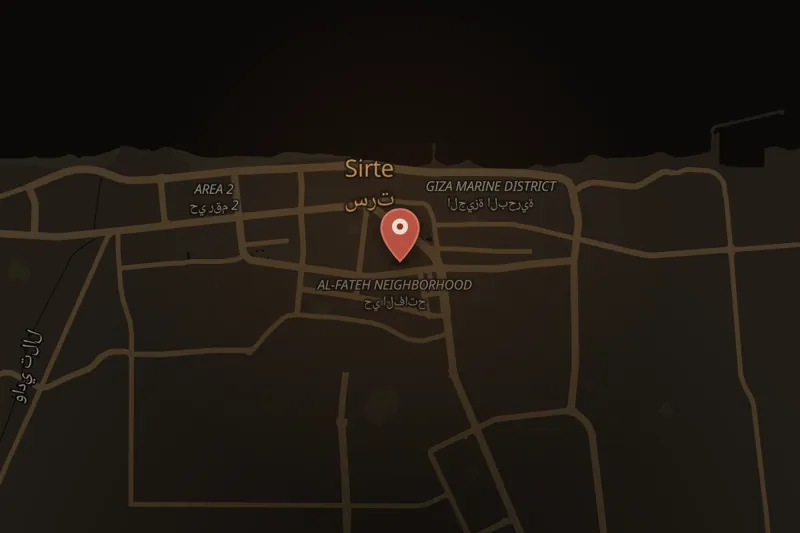
Libya (eastern coastal region and southern desert; mass grave later found in Sirte) · 2010s
On 19 April 2015, the Islamic State's Libyan branch released a video showing the beheading and shooting of around 30 Christian migrant workers, mostly Ethiopian and Eritrean nationals, held in two separate groups in eastern and southern Libya.
 Credit: Unknown author·CC BY-SA 4.0·SourceSOLVEDListen
Beach near Al Mahary Hotel, Sirte, Libya · 2010s
In February 2015, the Islamic State released a video showing the beheading of 21 Christian construction workers—20 Egyptians and one Ghanaian—who had been kidnapped in Sirte, Libya. The men were killed on a beach for their Christian faith, prompting international condemnation and Egyptian airstrikes on IS targets in Libya.
 ONGOINGListen
Southern Kaduna region, Kaduna State, Nigeria · 2010
Since the early 2010s, Southern Kaduna communities in Nigeria's Kaduna State have experienced repeated attacks attributed to Fulani herdsmen groups, along with kidnappings and killings of local chiefs, journalists, and residents, amid disputes over grazing reserves, land, and political power.
 SOLVEDListen
Tel Rumeida neighborhood, Hebron · 2016
On March 24, 2016, IDF soldier Elor Azaria fatally shot Abdel Fattah al-Sharif, a wounded Palestinian who had earlier stabbed an Israeli soldier, as he lay incapacitated on the ground in Hebron. Azaria was later convicted of manslaughter and served nine months of an 18-month sentence.
 SOLVEDListen
Near Tabankort, Mali · 2011
Two French hostages kidnapped from a restaurant in Niamey, Niger, were killed alongside three Nigerien gendarmes and four AQIM militants during a botched French-Nigerien rescue raid near Tabankort, Mali, in January 2011.
 SOLVEDListen
Benghazi, Cyrenaica, Libya · 1929
Between 1929 and 1934, Italian colonial authorities under Benito Mussolini killed an estimated 20,000 to 100,000 Libyans and interned nearly half the population of Cyrenaica in concentration camps as part of the suppression of Senussi resistance during the Second Italo-Senussi War.
Also covered by
 Credit: Instagram/@gabspetito, widely distributed in press coverage·Editorial use·SourceSOLVEDListen
Bridger–Teton National Forest, Wyoming · 2021
Gabby Petito, a 22-year-old travel vlogger, was killed by strangulation and blunt-force trauma in August 2021 while on a cross-country van trip with her fiancé, Brian Laundrie. Laundrie returned to Florida alone, was named a person of interest, and later died by suicide, leaving a note admitting he had killed her.
 Credit: English Wikipedia·Editorial use·SourceSOLVEDListen
Brookfield (family home), Brisbane · 2011
Allison Baden-Clay, a 43-year-old Brisbane mother of three, was murdered by her husband Gerard Baden-Clay in April 2012; his murder conviction was downgraded on appeal and then restored by the High Court of Australia in 2016.