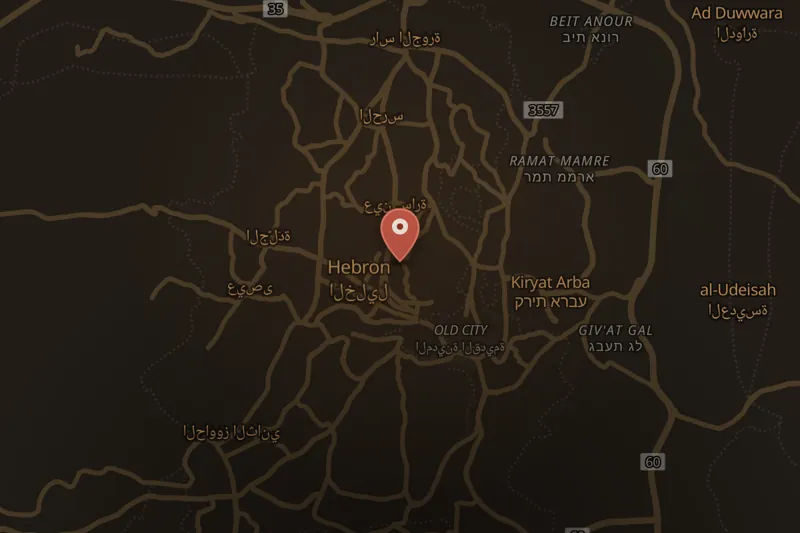
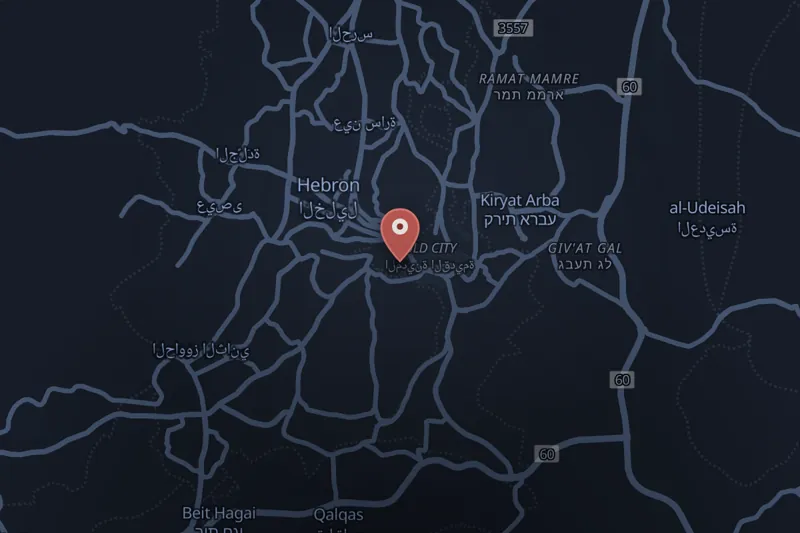
On 24 March 2016, two Palestinians armed with knives, Ramzi Aziz al-Tamimi al-Qasrawi and Abdel Fattah al-Sharif, approached an Israeli military post in the Tel Rumeida neighborhood of Hebron and stabbed an Israeli soldier in the hand and shoulder. Soldiers guarding the post opened fire, killing al-Qasrawi and seriously wounding al-Sharif. Minutes later, reinforcements arrived, including Elor Azaria, a medic with the Shimshon Battalion of the IDF's Kfir Brigade. Azaria approached the wounded al-Sharif, who was lying on the ground, and shot him in the head at close range, killing him. The shooting was filmed and the footage was published by the Israeli human rights organization B'Tselem, going viral on Israeli social media and prompting a major public controversy.
Azaria was initially investigated as a murder suspect but the charge was later reduced to manslaughter. Investigators found that the fatal shot came three minutes after the assailants had already been shot and neutralized, and pathologists concluded Azaria's shot, not earlier wounds, caused al-Sharif's death. An internal IDF investigation reported that Azaria had said the assailant "needs to die" before shooting him; Azaria denied making the statement, though a fellow soldier and his company commander, Major Tom Na'aman, testified that he had said it. Azaria's defense argued he believed al-Sharif might be concealing an explosive vest, a claim IDF officials and video evidence disputed, noting the knife used in the stabbing was several meters away from al-Sharif at the time of the shooting.
The trial opened in May 2016 at a court in Jaffa. Over several months, the court heard extensive and contested testimony, including from pathologists on whether al-Sharif was already dead or dying when shot, from military commanders on whether al-Sharif posed a threat, and from witnesses regarding alleged evidence tampering involving the knife used in the earlier stabbing. On 4 January 2017, a panel of military judges convicted Azaria of manslaughter. On 21 February 2017, he was sentenced to 18 months' imprisonment, 12 months' probation, and a demotion in rank. Azaria's appeal against the conviction was rejected in July 2017, as was a prosecution request to increase his sentence. IDF Chief of Staff Gadi Eizenkot later reduced the sentence to 14 months. Pardon requests submitted to President Reuven Rivlin were rejected. Azaria began serving his prison term in August 2017 and was released in May 2018 after serving nine months.
The killing and subsequent trial drew widespread reactions in Israel and internationally. Israeli political and military leaders, including then-Defense Minister Moshe Ya'alon and Prime Minister Benjamin Netanyahu, initially condemned the shooting as contrary to IDF values, while some right-wing politicians, including Naftali Bennett and Avigdor Lieberman, publicly supported Azaria and called for leniency or a pardon. The Palestinian Authority described the trial as a "farce," and al-Sharif's family said Israeli military courts impose harsher sentences on Palestinian children convicted of throwing stones. Human Rights Watch stated that Israeli officials had encouraged security forces to kill Palestinian suspects even when they no longer posed a threat.

 Credit: Ynhockey (talk · contribs)CC BY-SA 4.0SourceSOLVEDListen