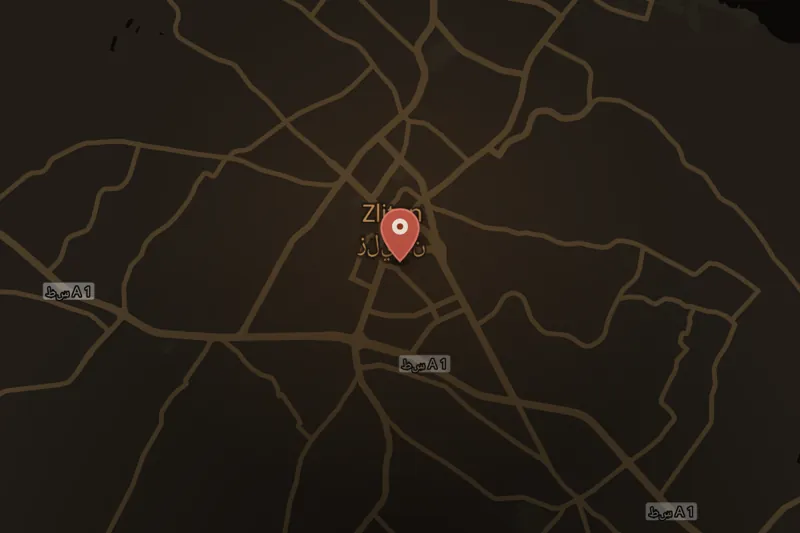
On 7 January 2016, a truck bomb was detonated at the al-Jahfal police training camp in the coastal town of Zliten, Libya. Libyan authorities reported that at least 60 policemen were killed and more than 200 others were wounded in the blast. The explosion caused severe structural damage to concrete buildings inside the compound, charring walls and blowing out windows, while nearby vehicles were reduced to twisted metal wrecks.
Martin Kobler, then head of the United Nations Support Mission in Libya, described the attack as a suicide bombing. Wilayat al-Barqah, identified as a Libyan province of the Islamic State of Iraq and the Levant, claimed responsibility for the attack, stating that the bomber was a person it identified as Abu al-Abbas al-Muhajir, who detonated an explosive-laden truck among Libyan border police stationed at the base.
This attack is described as the deadliest militant strike in Libya since the 2011 revolution that toppled the government of Muammar Gaddafi. It followed the Al Qubbah bombings of February 2015, which had killed 40 people.
The attack drew condemnation from Libyan officials and the international community. Mohammad Bashir al-Naas, deputy defence minister for the Tripoli-based New General National Congress, vowed to avenge the attack, telling a news conference that "the perpetrator is not known but he is a coward" who "kills our sons from the shadows."
Internationally, United Nations envoy Martin Kobler called for Libyan unity in response to the bombing, emphasizing on social media that implementing a political agreement was crucial and calling on "all Libyans to urgently unite in fight against terrorism." Egypt's foreign ministry issued a statement describing the events as "despicable acts of terrorism" and reaffirmed the need to support legitimate security institutions in Libya, including the Libyan National Army. Turkey's foreign ministry also condemned the attack, calling it "atrocious" and stressing the need for an effective fight against terrorism in Libya along with the establishment of national security and stability.

 Credit: Arcangelo GhisleriPublic domainSourceSOLVEDListen