

Start here
STONEWALL | A HISTORY SERIES

Georgia Marie's 43-minute breakdown, the fullest single telling on file.
Watch on YouTubeSolved case · 1969
Also known as Stonewall uprising · Stonewall rebellion
The short answer
A police raid on the Stonewall Inn, a Mafia-owned gay bar in Greenwich Village, in the early hours of June 28, 1969, sparked days of spontaneous street demonstrations and clashes with police, becoming a foundational event for the modern LGBTQ rights movement.
STONEWALL | A HISTORY SERIESGeorgia Marie · 43 min1 piece from 1 creator: ranked, with duplicates removed and short clips set aside.
Start here
Georgia Marie's 43-minute breakdown, the fullest single telling on file.
Watch on YouTubeTitles and descriptions are the creators’ own and may not reflect current legal status. The sourced facts are in the file below. Players load only when you press play. Suggest coverage we’re missing.
The Stonewall riots were a series of spontaneous demonstrations and confrontations between police and LGBTQ residents of Greenwich Village, New York City, beginning in the early morning of June 28, 1969, after police raided the Stonewall Inn. The events are widely regarded as a turning point in the American gay rights movement, though they were not the first instance of LGBTQ resistance to police harassment in the United States.
Through the 1950s and 1960s, LGBTQ people in the United States faced systemic legal and social persecution, including surveillance by the FBI and local police, exclusion from federal employment, and classification of homosexuality as a mental disorder by the American Psychiatric Association. Early homophile organizations such as the Mattachine Society and the Daughters of Bilitis pursued assimilationist strategies. Earlier instances of resistance included a 1959 riot at Cooper Do-nuts in Los Angeles and the 1966 Compton's Cafeteria riot in San Francisco, both involving drag queens, hustlers, and trans people confronting police harassment.
In Greenwich Village, gay bars—including the Stonewall Inn—were typically owned by organized crime, specifically the Genovese crime family, which paid off police to limit raids. The Stonewall Inn lacked a liquor license and basic sanitation facilities but was popular for allowing dancing and for welcoming marginalized patrons including drag queens, transgender people, and homeless youth.
At approximately 1:20 a.m. on June 28, 1969, plainclothes and uniformed officers, led by Detective Charles Smythe and Deputy Inspector Seymour Pine, raided the Stonewall Inn. Unlike typical raids, patrons resisted identification checks, and a crowd of released patrons and bystanders gathered outside, growing to several hundred people. Tensions escalated after officers used force on some patrons, including an unidentified woman in handcuffs who urged bystanders to act. The crowd began throwing coins, bottles, and bricks, and set fires; police barricaded themselves inside the bar for a period before the Tactical Patrol Force arrived to disperse the crowd. Thirteen people were arrested, and several police and bystanders were injured that night.
Rioting resumed the following night, June 29, with thousands gathering near the reopened bar, and further clashes occurred after a July 2, 1969 Village Voice article described participants disparagingly, prompting another confrontation with arrests and injuries.
The riots catalyzed the formation of new activist groups, including the Gay Liberation Front, and directly influenced the July 4, 1969 Mattachine Society picket in Philadelphia, where participants for the first time held hands publicly. The first anniversary of the riots was marked by organized demonstrations in several U.S. cities, precursors to modern LGBTQ Pride marches. The Stonewall National Monument was established at the site in 2016.
Police raid the Stonewall Inn in the early morning hours; patrons resist, a crowd gathers outside, and rioting breaks out, lasting roughly 45 minutes before the Tactical Patrol Force disperses the crowd.
Rioting resumes on Christopher Street with thousands gathered near the reopened Stonewall Inn.
Activity in Greenwich Village is sporadic amid rain; leaflets calling for gay-owned establishments and a boycott of Mafia-owned bars are distributed.
Following a Village Voice article with disparaging descriptions of participants, another confrontation occurs on Christopher Street with injuries and arrests.
The Mattachine Society holds its Annual Reminder picket in Philadelphia; participants hold hands publicly for the first time in the demonstration's history.
The Stonewall National Monument is established at the site of the riots.
Victims first. Every legal label is set from public records and court outcomes, not from the prose.
Coverage is not a source: every fact in this file rests on the records below.
Are you family of someone named in this file? Corrections and removal requests from victims’ families are prioritized.
 UNSOLVEDListen
Greenwich Village / Hudson River, New York City · 1970s
Between 1975 and 1977, dismembered remains of six men were found stuffed in garbage bags floating in the Hudson River near New York City. The victims' identities and the killer were never officially established, though a suspect implicated by a witness was never charged in these deaths.
SoHo, Lower Manhattan (near Prince Street and West Broadway) · 2010s
Etan Patz, a six-year-old boy, vanished while walking to his school bus stop in Manhattan in 1979; decades later Pedro Hernandez was convicted of his kidnapping and murder, a verdict upheld after appeals.
 Image recordPublic domainSourceSOLVEDListen
Astor Place, Manhattan, New York City · 1840s
On May 10, 1849, a dispute between rival Shakespearean actors escalated into a deadly riot outside Manhattan's Astor Opera House, ending when militia opened fire on the crowd, killing between 22 and 31 people and injuring more than 120.
 Credit: Family/Instagram photograph, widely distributed in press coverageEditorial useSourceSOLVEDListen
Moscow, Idaho · 2022
Four University of Idaho students—Madison Mogen, Kaylee Goncalves, Ethan Chapin, and Xana Kernodle—were fatally stabbed inside an off-campus house in Moscow, Idaho, in the early morning hours of November 13, 2022. Bryan Kohberger, a criminology PhD student at nearby Washington State University, was arrested that December and pleaded guilty in 2025, receiving four consecutive life sentences.
 Credit: Mona EshaikerCC BY-SA 3.0SourceSOLVEDListen
Holmby Hills, Los Angeles, California · 2009
Singer Michael Jackson died on June 25, 2009, in Los Angeles from acute propofol intoxication administered by his personal physician, Conrad Murray. The Los Angeles County coroner ruled the death a homicide, and Murray was convicted of involuntary manslaughter in November 2011.
 Credit: RaptacCC BY-SA 4.0SourceSOLVEDListen
Bardstown, Kentucky · 2015
Crystal Rogers, a 35-year-old Bardstown, Kentucky, mother of five, disappeared in July 2015 and has never been found; in 2025, her former boyfriend, Brooks Houck, was found guilty of her murder, and two other men were convicted of related conspiracy and evidence-tampering charges.
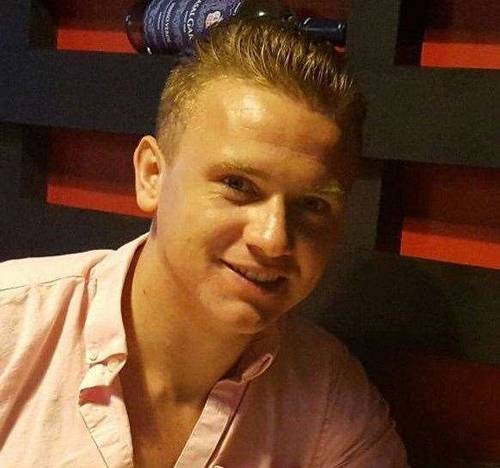 Credit: Family handout via Suffolk NewsEditorial useSourceCOLDListen
Bury St Edmunds, Suffolk, England · 2016
Royal Air Force gunner Corrie McKeague disappeared after a night out in Bury St Edmunds in September 2016, and a 2022 inquest concluded he died after climbing into a waste bin that was tipped into a bin lorry, though his remains were never found.
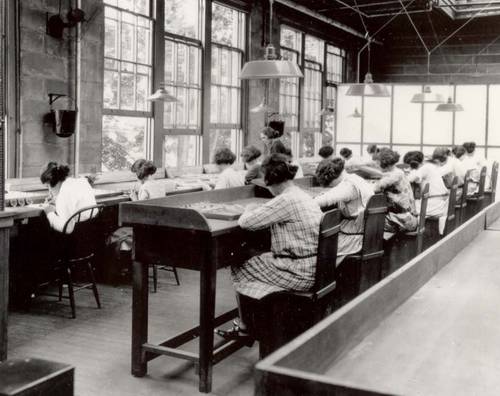 Credit: Argonne National Laboratory / Wikimedia Commons, c.1922–23Public domainSourceSOLVEDListen
Orange, New Jersey · 1917
Beginning in 1917, factory workers who came to be known as the Radium Girls were poisoned after being instructed to shape radium-paint brushes with their lips; the resulting illnesses, deaths, and lawsuits against the United States Radium Corporation and the Radium Dial Company reshaped U.S. occupational health and labor law.
El Pianista trail, near Boquete, Panama · 2014
Two Dutch students, Kris Kremers and Lisanne Froon, disappeared while hiking a jungle trail in Panama in April 2014, and their remains were recovered along a riverbank months later, but no official cause of death has ever been established.

