Start here
WATCH: KSAT 12 News Special: After Sutherland Springs
The creator's telling of the case, the strongest entry point on file.
Watch on YouTubeBefore you continue
This case involves crimes against children. Casepin presents the record in neutral, non-graphic language. Choose whether to continue.
Solved case · 2017
Also known as Sutherland Springs shooting
 NRA Annual Meeting (33855757778) (cropped)Credit: The White House from Washington, DC·Public domain·Source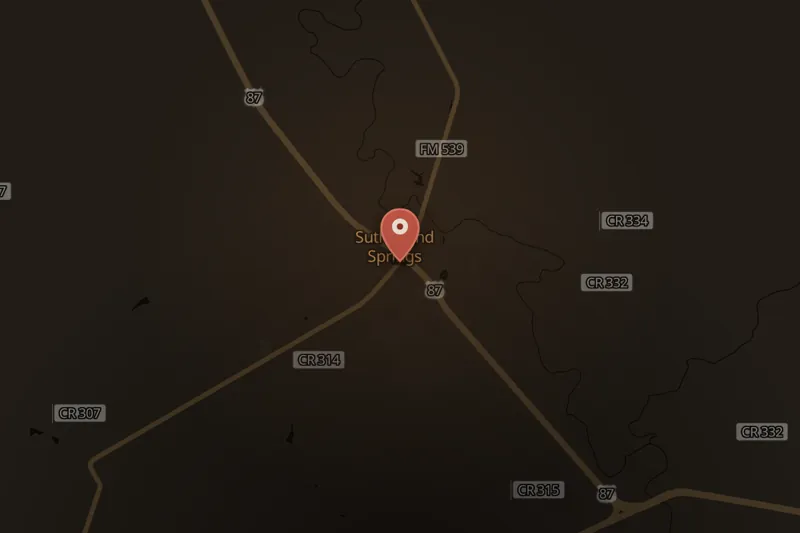
The short answer
On November 5, 2017, Devin Kelley shot and killed 26 people and wounded 22 others at the First Baptist Church in Sutherland Springs, Texas, before being wounded by an armed resident and fatally shooting himself during a pursuit.
Start hereWATCH: KSAT 12 News Special: After Sutherland SpringsThe coverage index
1 piece from 1 creator: ranked, with duplicates removed and short clips set aside.
Start here
Video · YouTube
The creator's telling of the case, the strongest entry point on file.
Watch on YouTubeTitles and descriptions are the creators’ own and may not reflect current legal status. The sourced facts are in the file below. Players load only when you press play. Suggest coverage we’re missing.
The case file
On the morning of November 5, 2017, Devin Patrick Kelley drove to the First Baptist Church in Sutherland Springs, Texas, during Sunday service. Around 11:20 a.m., he exited his vehicle wearing tactical gear and a skull-patterned face mask, armed with a Ruger AR-556 semi-automatic rifle. He killed two people outside the building before entering the sanctuary, where he shouted at worshippers and fired up and down the aisle. Investigators recovered 15 empty 30-round magazines and estimated that Kelley fired approximately 450 rounds over about 11 minutes. The attack was captured on a camera set up to record services.
Local resident Stephen Willeford, a former firearms instructor, confronted Kelley with his own rifle and shot him twice, in the leg and torso. Kelley fled in his vehicle; Willeford and another resident, Johnnie Langendorff, pursued him at high speed while relaying the route to police. During the chase, Kelley called his wife and parents, said he had "shot up the Sutherland Springs church," and expressed remorse. He lost control of the vehicle and crashed into a field. Police found him dead of three gunshot wounds, including a self-inflicted head wound.
Twenty-six people were killed, including ten women, seven men, six girls, two boys, and an unborn child; 22 others were injured. Victims included the 14-year-old daughter of the church's pastor and visiting pastor Bryan Holcombe, who died along with eight family members. One survivor, Kris Workman, was shot twice and left paralyzed. The Texas Rangers led the investigation with the FBI and ATF, and found no indication anyone other than Kelley was involved; investigators initially attributed the attack to a dispute involving Kelley's mother-in-law.
Kelley had a 2012 general court-martial conviction for domestic assault against his first wife and stepson while serving in the U.S. Air Force, a conviction that under federal law should have barred him from purchasing firearms. The Air Force failed to report the conviction to the National Crime Information Center, allowing Kelley to pass background checks and legally purchase the weapons used in the attack. This failure led Congress to pass the Fix NICS Act, signed into law in March 2018, to address gaps in background-check reporting.
In 2018, families of two victims sued the U.S. Air Force and Department of Defense for negligence. In 2021, a federal judge ruled the government was largely responsible for the shooting and later awarded more than $230 million in damages to survivors and victims' families.
The shooting also drew a wave of conspiracy theories and false claims about Kelley's motives and identity, including harassment of victims' families by individuals who denied the massacre occurred; two such individuals were later arrested after confronting the church's pastor. The former church building was preserved as a memorial before being demolished in 2024 following a legal dispute among victims' families over its fate.
7 dated entries · 2017–2024
Devin Kelley opens fire at the First Baptist Church in Sutherland Springs, Texas, killing 26 people and wounding 22 others before fleeing and dying of a self-inflicted gunshot wound after being shot by a resident and pursued by two others.
Vice President Mike Pence visits the crime scene, three days after the shooting.
Senator John Cornyn introduces the Fix NICS Act of 2017 in the U.S. Senate.
President Donald Trump signs the Fix NICS Act into law as part of the Consolidated Appropriations Act, 2018.
Family of two victims files a negligence lawsuit against the U.S. Air Force and Department of Defense.
A federal judge rules the U.S. government negligent and later awards more than $230 million in damages to victims and families.
Demolition of the former church building begins following a legal dispute over its preservation.
5 named in this file
Victims first. Every legal label is set from public records and court outcomes, not from the prose.
Visiting pastor killed in the shooting along with eight family members, including an unborn grandchild.[3]
Shot twice and left paralyzed from the waist down.[3]
Perpetrator of the shooting; previously convicted at a 2012 general court-martial of assaulting his wife and stepson while in the U.S. Air Force; died by self-inflicted gunshot wound after fleeing the scene.[3]
Resident who drove Willeford in pursuit of Kelley's vehicle and relayed the route to police dispatch.[3]
Local resident and former firearms instructor who confronted and shot Kelley, then joined a pursuit of his vehicle.[3]
3 cited
Coverage is not a source: every fact in this file rests on the records below.
PressCNNAccessed Jul 7, 2026
PressThe New York TimesAccessed Jul 7, 2026
EncyclopedicWikipediaAccessed Jul 7, 2026
Trust
Are you family of someone named in this file? Corrections and removal requests from victims’ families are prioritized.
Near this case
 Image record·Public domain·SourceSOLVEDListen
Near San Antonio de Bexar (present-day San Antonio, Texas) · 1840s
On September 17, 1842, a company of 54 Texian militiamen led by Nicholas Mosby Dawson was attacked by Mexican cavalry and artillery near San Antonio de Bexar; 36 Texans were killed, fifteen captured, and two escaped, during the larger Battle of Salado Creek.
 Image record·CC BY-SA 4.0·SourceSOLVEDListen
San Antonio, Texas · 1950s
Three-year-old Chere Jo Horton was abducted, raped, and murdered on the night of July 3–4, 1954, in San Antonio, Texas, while her parents were inside a nearby tavern. Jimmy Shaver, a U.S. Air Force airman, was arrested, convicted at two trials, and executed in 1958.
 Credit: Unknown author Unknown author·Public domain·SourceUNSOLVEDListen
Jack Harris Vaudeville Saloon and Theater, San Antonio, Texas · 1880s
On March 11, 1884, former lawmen Ben Thompson and King Fisher were shot dead in an ambush at the Jack Harris Vaudeville Saloon and Theater in San Antonio, Texas, an attack tied to lingering resentment over Thompson's 1882 killing of theater owner Jack Harris.
 Credit: Pax Ahimsa Gethen·CC BY-SA 4.0·SourceSOLVEDListen
Pulse nightclub, Orlando, Florida, United States · 2016
On June 12, 2016, Omar Mateen, identified by police as the gunman, shot and killed 49 people and wounded 58 others at Pulse, a gay nightclub in Orlando, Florida, during a Latin Night event, before being fatally shot by police after a three-hour standoff.
 Credit: Canadaolympic989·CC BY-SA 3.0·SourceSOLVEDListen
Sandy Hook Elementary School, Newtown, Connecticut · 2012
On December 14, 2012, 20-year-old Adam Lanza fatally shot his mother at their Newtown, Connecticut home, then killed 20 children and six adult staff members at Sandy Hook Elementary School before killing himself as police arrived.
 Credit: Algr·CC BY-SA 3.0·SourceSOLVEDListen
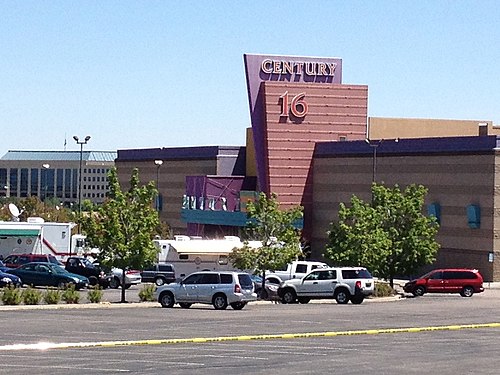
Century 16 theater (now Century Aurora), Aurora, Colorado · 2012
On July 20, 2012, James Eagan Holmes opened fire during a midnight screening of The Dark Knight Rises at a Century 16 theater in Aurora, Colorado, killing 12 people and injuring 70 others. He was convicted in 2015 of 24 counts of first-degree murder and sentenced to life in prison.