
The cases that changed the law
Cases whose aftermath rewrote a statute, a police procedure, or a citizen's rights.
Take the tour
Public attacks remembered by place — and the lives, movements, safety changes, and public arguments that followed.
A mass shooting is remembered, more often than not, by a place. Sandy Hook. Parkland. Pulse. Las Vegas. The name of a school, a nightclub, a festival comes to stand for the people killed there — and for an argument a country has again each time, and rarely settles.
The files here are among the most-documented in the archive: twenty first-graders and six educators at an elementary school in Newtown; forty-nine people at a nightclub in Orlando during its Latin Night; fifty-one worshippers at two mosques in Christchurch. A few reshaped the law — Christchurch led New Zealand to ban military-style semi-automatic weapons within a month, and the students who survived Parkland built a national movement. Others changed almost nothing but the vocabulary of grief.
This collection is heavy by design. It keeps its subject on the people the attacks were aimed at, not the people who carried them out — a perpetrator is named only where a court has convicted them. What the files record is the loss, and what a society did, or failed to do, once the shooting stopped.
 Aiden Hale at The Covenant — Credit: Unknown authorPublic domainSource
Three nine-year-old children and three staff were killed at The Covenant School before responding police stopped the attacker.
 V20230125LJ-0503 (53894193408) — Credit: The White HousePublic domainSource
Eleven people were killed at a dance studio after a Lunar New Year festival in a majority Asian American city.
 John Cornyn in Uvalde — Credit: John CornynPublic domainSource
Nineteen students and two teachers were killed at Robb Elementary; the 77-minute delay in confronting the gunman became its own scandal.
 Tops supermarket, Jefferson Avenue, Buffalo, New York - 20220220 (cropped) — Credit: Andre CarrotflowerCC BY-SA 4.0Source
Ten Black shoppers were killed in a racially motivated attack on a Buffalo supermarket, part of it livestreamed.
 Highland Park Shooting (52476898247) — Credit: Stephen Hogan from Chicago, United StatesCC BY 2.0Source
Seven people were killed and forty-eight wounded at an Independence Day parade; prior warning signs and Illinois gun law became central to the aftermath.
Four students were killed and seven people injured; the shooter's parents were separately convicted over their failure to secure the firearm and respond to warning signs.
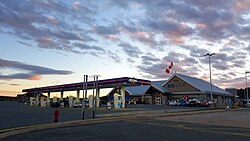 Big Stop in Enfield, Nova Scotia — Credit: Indrid__ColdCC BY-SA 2.0Source
Twenty-two people were killed across sixteen locations; the public inquiry later issued more than 130 recommendations.
 Patrick Crusius exiting the building after killing 23 people at a Walmart in El Paso, Texas — Credit: Security cameraPublic domainSource
Twenty-three people were killed at a Walmart in an attack investigated as domestic terrorism and a hate crime targeting Latinos.
 Christchurch attack magazines duo — Credit: Brenton TarrantPublic domainSource
Fifty-one worshippers were killed at two mosques during Friday prayer; New Zealand banned military-style weapons within a month.
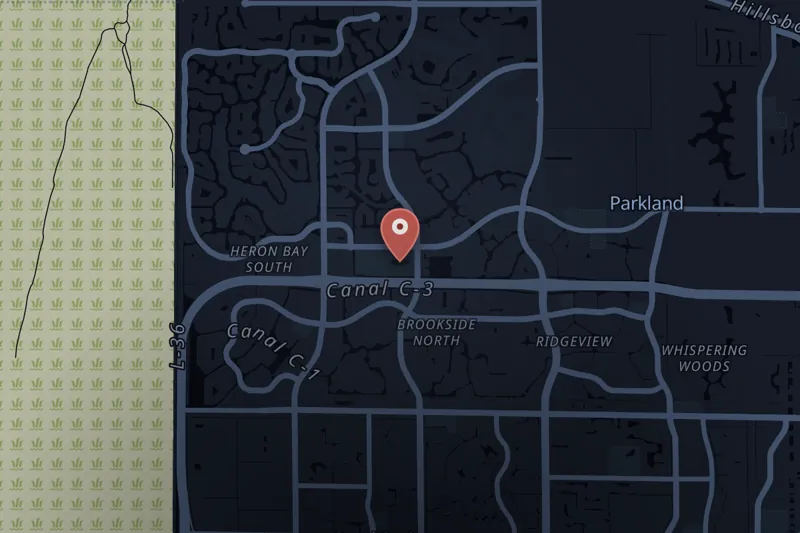
Seventeen people were killed at Marjory Stoneman Douglas High School; the survivors launched a national gun-reform movement.
 Tree of Life – Or L'Simcha synagogue facade — Credit: daveynin from United StatesCC BY 2.0Source
Eleven worshippers were killed during Shabbat services at the Tree of Life synagogue, the deadliest antisemitic attack in US history.
 View from the Foundation Room (24089601122) — Credit: Jennifer Morrow from San FranciscoCC BY 2.0Source
Sixty people were killed at the Route 91 Harvest festival — the deadliest mass shooting in modern American history; no motive was ever established.
 NRA Annual Meeting (33855757778) (cropped) — Credit: The White House from Washington, DCPublic domainSource
Twenty-six people were killed at a Sunday service in a small Texas church, after a records gap let the gunman buy firearms.
 San Francisco vigil for Orlando - 5 — Credit: Pax Ahimsa GethenCC BY-SA 4.0Source
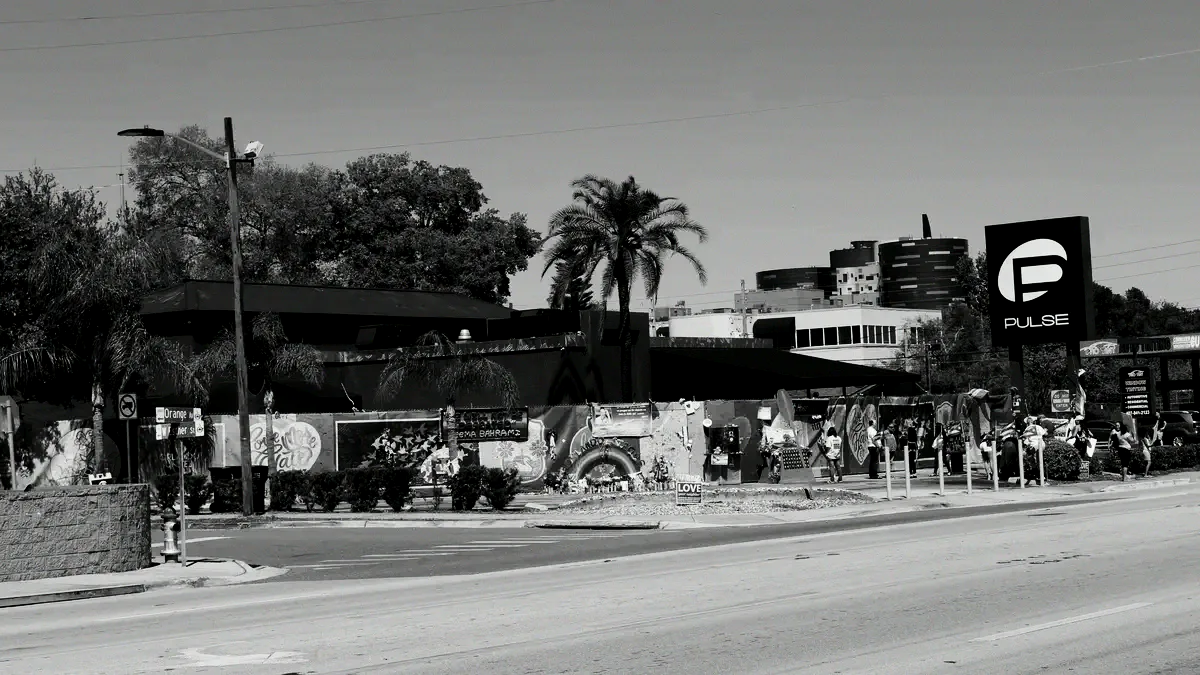
Forty-nine people were killed at a gay nightclub in Orlando during its weekly Latin Night.
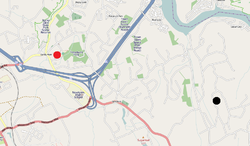 Map of Sandy Hook shooting — Credit: Canadaolympic989CC BY-SA 3.0Source
Twenty children aged six and seven and six educators were killed at a Newtown, Connecticut elementary school.
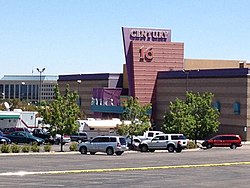 The Century 16 theater in Aurora CO - Shooting location — Credit: AlgrCC BY-SA 3.0Source
Twelve people were killed at a midnight film screening in Aurora, Colorado; the gunman was convicted on 24 counts of first-degree murder.
 Oslo after the terror (5988160220) — Credit: nrkbetaCC BY-SA 2.0Source
A car bomb in Oslo and a shooting at a youth summer camp on Utøya killed 77 people, most of them teenagers.
 VA Tech massacre aerial photo of referenced locations — Credit: D'Ranged 1Public domainSource
Thirty-two people were killed across a dormitory and a classroom building — then the deadliest school shooting in US history.
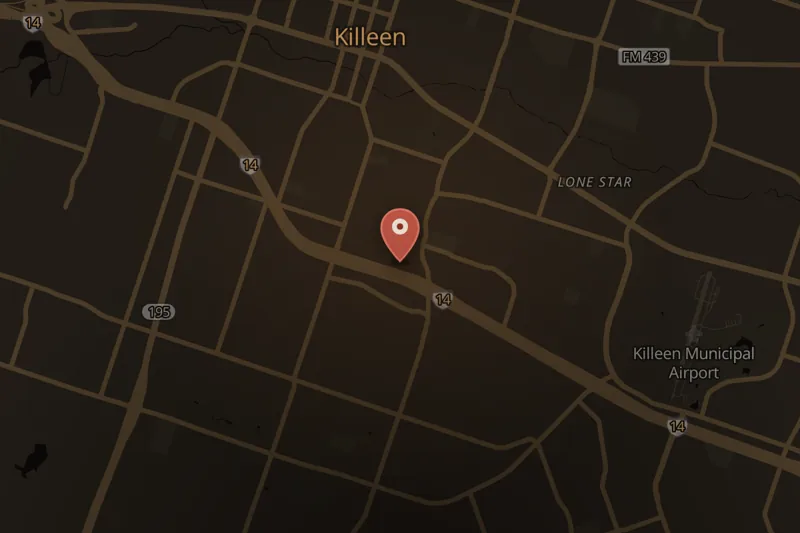
Twenty-three people were killed at a Luby's cafeteria in Killeen, Texas; a survivor's advocacy went on to reshape the state's concealed-carry law.
Cases whose aftermath rewrote a statute, a police procedure, or a citizen's rights.
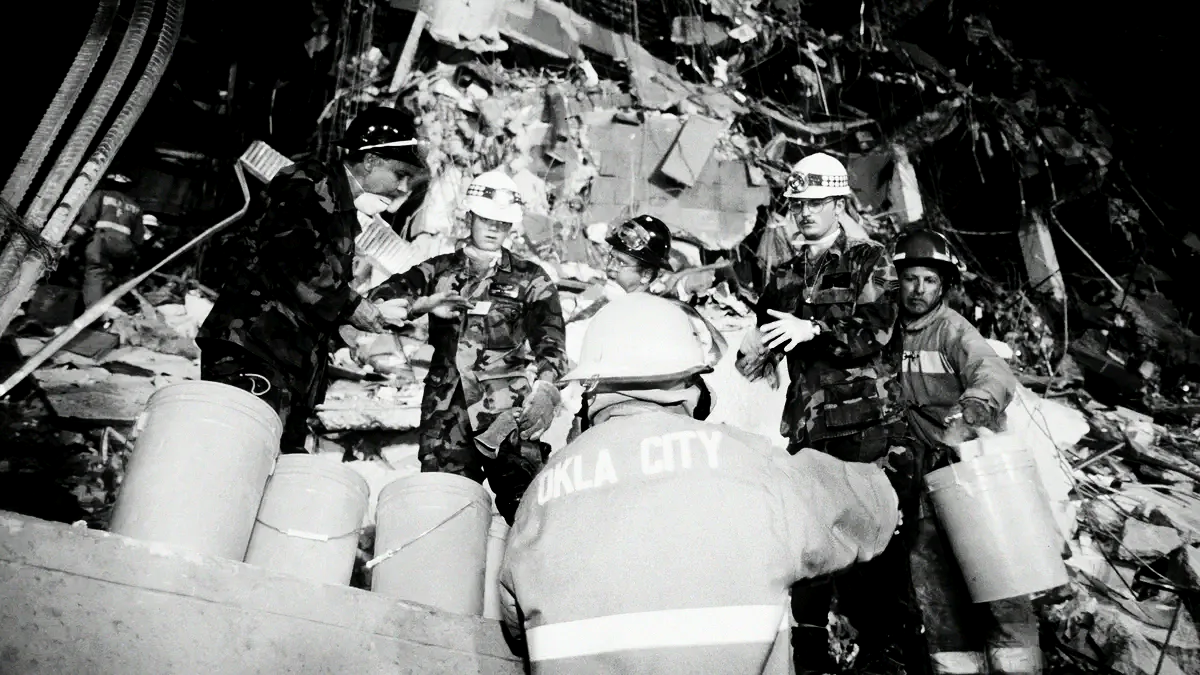
Bombings across public places, transit systems, campaigns, and conflicts — recorded through the people they were aimed at and the aftermath that followed.