Start here
VA Tech 10 Years Later WSLS Outstanding Newscast
The creator's telling of the case, the strongest entry point on file.
Watch on YouTubeBefore you continue
This case involves crimes against children. Casepin presents the record in neutral, non-graphic language. Choose whether to continue.
Solved case · 2007
Also known as Virginia Tech massacre · VTM
 VA Tech massacre aerial photo of referenced locationsCredit: D'Ranged 1·Public domain·Source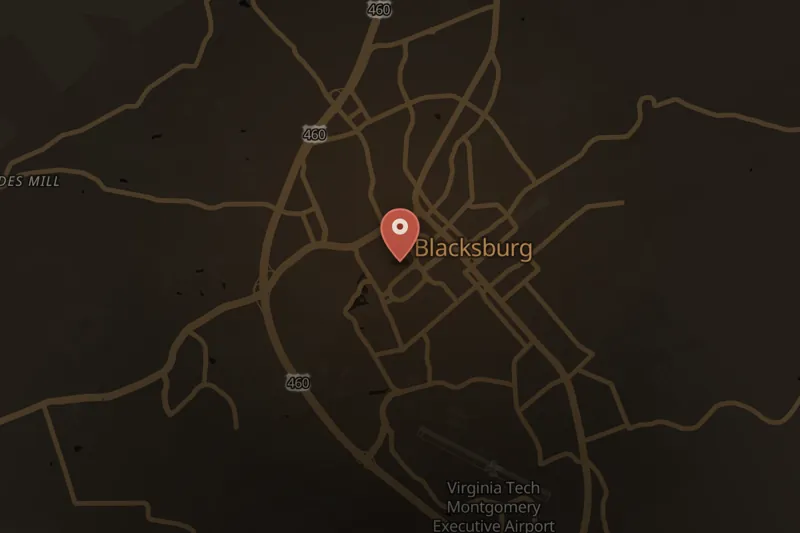
The short answer
On April 16, 2007, Seung-Hui Cho, an undergraduate at Virginia Tech, shot and killed 32 people and wounded 17 others in two separate attacks on campus before killing himself, making it the deadliest school shooting in U. S. history.
Start hereVA Tech 10 Years Later WSLS Outstanding NewscastThe coverage index
1 piece from 1 creator: ranked, with duplicates removed and short clips set aside.
Start here
Video · YouTube
The creator's telling of the case, the strongest entry point on file.
Watch on YouTubeTitles and descriptions are the creators’ own and may not reflect current legal status. The sourced facts are in the file below. Players load only when you press play. Suggest coverage we’re missing.
The case file
On the morning of April 16, 2007, Seung-Hui Cho, a 23-year-old senior at Virginia Polytechnic Institute and State University (Virginia Tech) in Blacksburg, Virginia, carried out two shooting attacks on campus. Around 7:15 a.m., Cho entered a dormitory room in West Ambler Johnston Hall and fatally shot 19-year-old freshman Emily Jane Hilscher. A resident assistant, 22-year-old Ryan C. Clark, responded to the gunshots and was also killed. Hilscher died at a Roanoke hospital roughly three hours later. Cho then returned to his own dorm room, changed clothes, deleted his computer files, and mailed a package of writings and video recordings to NBC News from a nearby post office.
Approximately two hours after the first attack, around 9:40 a.m., Cho entered Norris Hall, an academic building, carrying two semi-automatic pistols — a .22-caliber Walther P22 and a 9mm Glock 19 — along with nearly 400 rounds of ammunition. He chained the building's main entrance doors shut and left a note falsely warning of a bomb. He then moved through classrooms on the second floor, shooting students and faculty in several rooms over roughly ten minutes. Victims included professors G. V. Loganathan, Jamie Bishop, Kevin Granata, Jocelyne Couture-Nowak, and Liviu Librescu, a Holocaust survivor who held a classroom door shut so his students could escape through windows before he was fatally shot. Student Matthew La Porte was killed attempting to confront Cho. In total, 30 people were killed at Norris Hall in addition to Cho, who fatally shot himself as police reached the second floor of the building. Seventeen people were wounded by gunfire, and six others were injured jumping from windows to escape.
The Virginia Tech Review Panel, an eight-member state-appointed panel convened by then-Governor Tim Kaine, later documented Cho's history of selective mutism and severe depression diagnosed in eighth grade, his special education support through high school, and a 2005 finding by a Virginia special justice that declared him mentally ill and ordered outpatient treatment following stalking complaints from two female students. Because he was not involuntarily committed to inpatient care, existing law did not bar him from purchasing firearms. The panel's August 2007 report criticized university administrators and police for delays in warning the campus after the first shooting, and identified gaps in mental health law, privacy statutes, and information-sharing that left Cho's condition unaddressed while he was a student. The panel concluded that Cho bore ultimate responsibility for his actions.
The shooting prompted changes to Virginia law closing loopholes that had allowed people adjudicated mentally unsound to purchase handguns undetected, and led to federal legislation strengthening the National Instant Criminal Background Check System, signed by President George W. Bush on January 5, 2008. The incident drew international attention, including statements of condolence from numerous world leaders, and prompted widespread review of campus safety and mental health policies at universities in the United States and elsewhere.
9 dated entries · 2005–2008
A Virginia special justice declared Seung-Hui Cho mentally ill and ordered him to attend outpatient treatment following an investigation into stalking complaints from two female students.
Cho shot and killed Emily Jane Hilscher and Ryan C. Clark in West Ambler Johnston Hall at around 7:15 a.m.
Cho mailed a package of writings and videos to NBC News, postmarked 9:01 a.m.
Cho entered Norris Hall around 9:40 a.m., chained the entrance doors, and began shooting in classrooms, killing 30 people before fatally shooting himself as police arrived.
A memorial convocation was held at Cassell Coliseum, addressed by President George W. Bush; a candlelight vigil also took place at the University of Virginia.
NBC News received and later aired portions of the package Cho had mailed, including his manifesto and video recordings.
The Virginia Tech Review Panel released its report (the Massengill Report) detailing findings on Cho's history and institutional failures.
The U.S. Senate passed H.R. 2640, strengthening the National Instant Criminal Background Check System.
President George W. Bush signed H.R. 2640 into law.
13 named in this file
Victims first. Every legal label is set from public records and court outcomes, not from the prose.
19-year-old freshman fatally shot in her dormitory room in West Ambler Johnston Hall.[3]
Professor fatally shot while teaching an advanced hydrology engineering class in Norris Hall.[3]
Student fatally shot in Norris Hall room 211 while helping barricade the door.[3]
Instructor fatally shot while teaching Introductory German in Norris Hall.[3]
Professor fatally shot teaching Intermediate French in Norris Hall room 211.[3]
Professor fatally shot in a Norris Hall hallway after investigating the commotion.[3]
Engineering professor and Holocaust survivor fatally shot after blocking a classroom door to let students escape through windows.[3]
Student and Air Force ROTC cadet fatally shot after attempting to confront the gunman in room 211.[3]
Student fatally shot near the doorway of Norris Hall room 204.[3]
Student killed in Norris Hall classroom shooting.[3]
22-year-old resident assistant fatally shot while responding to gunshots in West Ambler Johnston Hall.[3]
Student fatally shot after being wounded in an earlier pass through the classroom.[3]
Perpetrator identified as responsible for the shootings; died by suicide at the scene before any criminal charges could be filed or adjudicated.[3]
3 cited
Coverage is not a source: every fact in this file rests on the records below.
PressThe Washington PostAccessed Jul 7, 2026
PressABC NewsAccessed Jul 7, 2026
EncyclopedicWikipediaAccessed Jul 7, 2026
Trust
Are you family of someone named in this file? Corrections and removal requests from victims’ families are prioritized.
Near this case
 SOLVEDListen
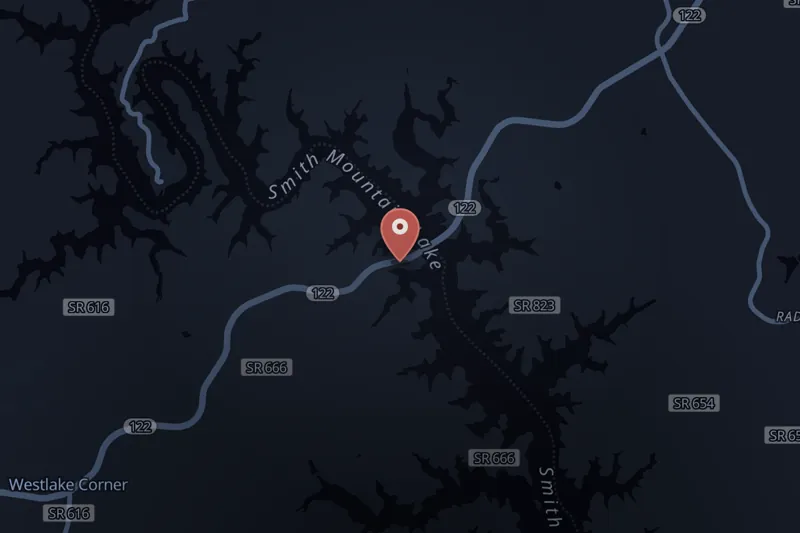
Bridgewater Plaza, Smith Mountain Lake, Moneta, Virginia · 2010s
On August 26, 2015, WDBJ reporter Alison Parker, 24, and photojournalist Adam Ward, 27, were shot and killed on live television during an interview near Smith Mountain Lake in Moneta, Virginia. Interviewee Vicki Gardner was also wounded but survived. The gunman, former WDBJ reporter Vester Lee Flanagan II, killed himself during a police pursuit hours later.
 SOLVEDListen
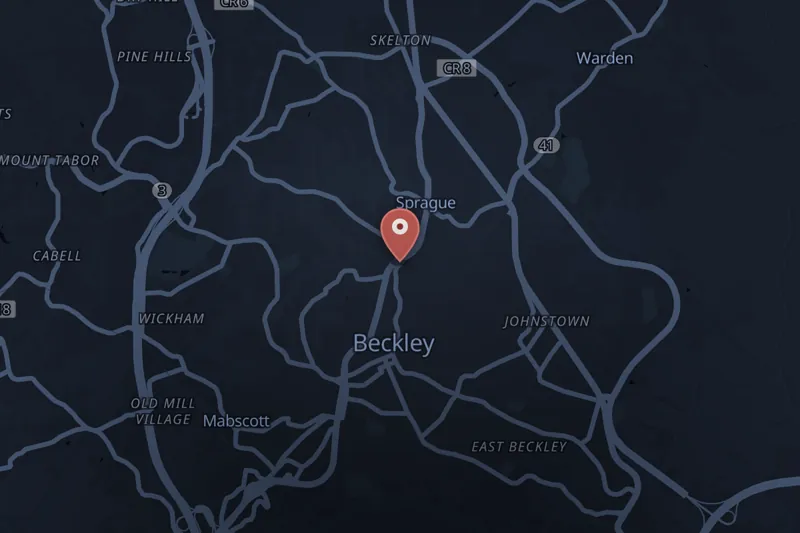
Raleigh County, West Virginia · 2010s
Natalie Cochran, a Raleigh County, West Virginia pharmacist, was convicted of first-degree murder for poisoning her husband, Michael Brandon Cochran, with insulin in February 2019, and separately convicted of running a $2.5 million Ponzi scheme.
 Credit: Unknown; edited slightly by Daniel Case prior to upload here·Public domain·SourceUNSOLVEDListen
Site of the former Sodder residence, near Fayetteville, West Virginia · 1940s
A Christmas Eve 1945 house fire in Fayetteville, West Virginia, killed or displaced five of the ten Sodder children; their bodies were never found, and the family spent decades disputing the official finding that they died in the blaze, believing instead they had survived and were taken.
 Credit: nrkbeta·CC BY-SA 2.0·SourceSOLVEDListen
Oslo and Utøya, Norway · 2011
On 22 July 2011, Anders Behring Breivik detonated a car bomb in Oslo's government quarter, killing 8, then carried out a mass shooting at a Workers' Youth League (AUF) summer camp on the island of Utøya, killing 69. He was convicted in 2012 and sentenced to 21 years of preventive detention, Norway's maximum sentence.
 Credit: Hwy43·CC BY-SA 3.0·SourceSOLVEDListen
James Roszko's farm near Rochfort Bridge, north of Mayerthorpe, Alberta · 2005
On March 3, 2005, James Roszko shot and killed four RCMP constables at his farm near Mayerthorpe, Alberta, before killing himself; two men who helped him return to the property later pleaded guilty to manslaughter.
 Credit: Benchill·CC BY-SA 3.0·SourceOVERTURNEDListen
65 Every Street, Andersons Bay, Dunedin · 2007
In June 1994, five members of the Bain family, parents Robin and Margaret and three of their children, Arawa, Laniet and Stephen, were shot dead at their home in Dunedin, New Zealand. Eldest son David Bain was convicted in 1995, but the Privy Council quashed his convictions in 2007 and he was acquitted on all counts at a 2009 retrial; the case remains publicly disputed.