
Start here
The Slippery Case of The Bain Family Massacre

Coffeehouse Crime's 25-minute breakdown, the fullest single telling on file.
Watch on YouTubeBefore you continue
This case involves sexual violence and crimes against children. Casepin presents the record in neutral, non-graphic language. Choose whether to continue.
Overturned conviction · 2007
Also known as David Bain case · Bain murders
 Bain family memorialCredit: Benchill·CC BY-SA 3.0·Source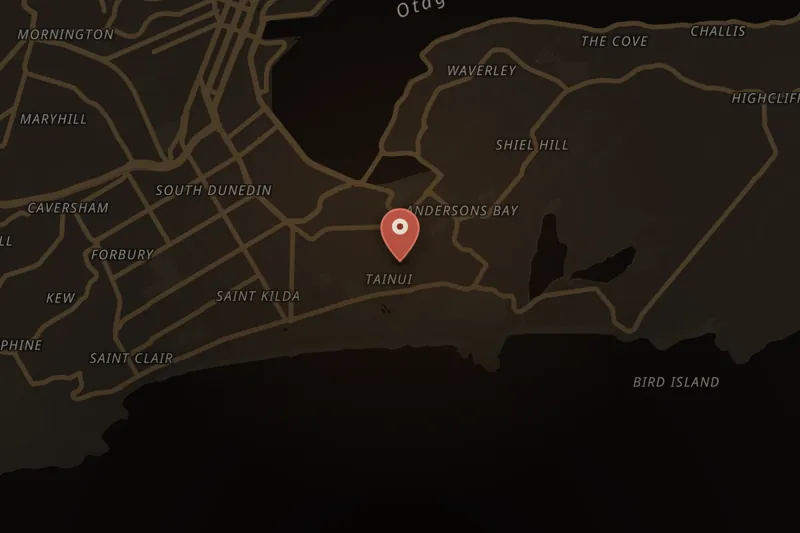
The short answer
In June 1994, five members of the Bain family, parents Robin and Margaret and three of their children, Arawa, Laniet and Stephen, were shot dead at their home in Dunedin, New Zealand. Eldest son David Bain was convicted in 1995, but the Privy Council quashed his convictions in 2007 and he was acquitted on all counts at a 2009 retrial; the case remains publicly disputed.
Start hereThe Slippery Case of The Bain Family MassacreCoffeehouse Crime · 25 minThe coverage index
1 piece from 1 creator: ranked, with duplicates removed and short clips set aside.
Start here
Video · YouTube · 25 min · 2022
Coffeehouse Crime's 25-minute breakdown, the fullest single telling on file.
Watch on YouTubeTitles and descriptions are the creators’ own and may not reflect current legal status. The sourced facts are in the file below. Players load only when you press play. Suggest coverage we’re missing.
The case file
On the morning of 20 June 1994, five members of the Bain family were found shot dead at their home at 65 Every Street in the Andersons Bay area of Dunedin, New Zealand. The dead were Robin Bain, aged 58, a primary school principal; his wife Margaret, aged 50; and three of their children, Arawa, 19, Laniet, 18, and Stephen, 14. All had been killed with a .22-calibre rifle. The only other person present was the eldest son, David Bain, then aged 22, who telephoned emergency services shortly after 7 a.m. He and his father were the two people ever identified as possible perpetrators.
Four days later, police charged David Bain with all five deaths. At a 1995 trial in the Dunedin High Court he was convicted on every count and sentenced to life imprisonment with a minimum of sixteen years. His case was subsequently championed by a prominent public campaigner, and after several unsuccessful appeals the Judicial Committee of the Privy Council in London quashed the convictions in 2007, ruling that a substantial miscarriage of justice had occurred, and ordered a new trial. David Bain was released on bail after nearly thirteen years in prison. At a 2009 retrial in the Christchurch High Court he pleaded not guilty and, after a trial lasting about three months, was acquitted on all five charges. He is therefore not guilty in the eyes of the law.
The case turned on two competing accounts. The prosecution argued that David Bain shot his mother, two sisters and brother, left on his early-morning paper round, returned home, and then shot his father. It pointed to evidence such as his connection to the rifle and a spectacle lens said to have been found in his brother's room. The defence argued instead that the father, Robin Bain, killed his wife and children and then took his own life, and it presented evidence about his deteriorating mental state and estrangement from the family. The defence further alleged that Robin was motivated by an incestuous relationship with one of his daughters that was about to be exposed. That murder-suicide account was a defence theory; Robin Bain was never charged and is counted among the victims.
After his acquittal, David Bain sought compensation for wrongful conviction and imprisonment. One government-commissioned review concluded he was innocent on the balance of probabilities, but that finding was disputed and a second reviewer reached the opposite conclusion. In 2016 the government made an ex gratia payment of NZ$925,000 in what it described as full and final settlement, without accepting that the compensation threshold had been met. Because the sole conviction was quashed and the retrial ended in acquittal, no one now bears legal responsibility for the deaths, and the case remains among the most debated in New Zealand's history.
13 dated entries · 1994–2016
Five members of the Bain family are found shot dead at the family home at 65 Every Street, Andersons Bay, Dunedin. Eldest son David Bain calls emergency services shortly after 7 a.m.
David Bain is charged with the five deaths.
David Bain is convicted on all five counts of murder after an 18-day trial at the Dunedin High Court.
He is sentenced to life imprisonment with a minimum non-parole period of 16 years.
The Court of Appeal dismisses his first appeal against conviction.
The Privy Council quashes the convictions, finding that a substantial miscarriage of justice had occurred, and orders a retrial.
David Bain is released on bail pending retrial, after nearly 13 years in prison.
The Solicitor-General announces that David Bain will be retried.
The retrial begins at the Christchurch High Court; David Bain pleads not guilty to all five charges.
David Bain is acquitted on all five counts of murder.
David Bain lodges a claim for compensation for wrongful conviction and imprisonment.
A government-commissioned review by retired Canadian Supreme Court justice Ian Binnie concludes that David Bain is innocent on the balance of probabilities; the report is subsequently disputed and peer-reviewed.
A second review by retired Australian High Court justice Ian Callinan finds that David Bain had not proved his innocence on the balance of probabilities; the government makes an ex gratia payment of NZ$925,000 in full and final settlement.
6 named in this file
Victims first. Every legal label is set from public records and court outcomes, not from the prose.
Daughter, aged 19, a teachers' training college student; one of the five family members shot dead at the home.[2]
Daughter, aged 18; one of the five family members shot dead at the home.[2]
Mother, aged 50; one of the five family members shot dead at the home.[2]
Father, aged 58, and principal of Taieri Beach School; one of the five family members shot dead at the home. At the 2009 retrial the defence advanced a theory that he killed the others and then took his own life, but this was an unproven defence theory; he was never charged and is recorded among the victims.[2]
Son, aged 14, a high school student and the youngest family member; one of the five family members shot dead at the home.[2]
Eldest son and the only survivor, aged 22 at the time. Convicted of all five murders in 1995; the Privy Council quashed those convictions in 2007, citing a substantial miscarriage of justice, and he was acquitted on all five counts at a 2009 retrial. He is not guilty in law and must not be described as responsible for the deaths.[1]
2 cited
Coverage is not a source: every fact in this file rests on the records below.
PressRNZ (Radio New Zealand)Accessed Jul 5, 2026
EncyclopedicWikipediaAccessed Jul 5, 2026
Trust
Are you family of someone named in this file? Corrections and removal requests from victims’ families are prioritized.
Near this case
 SOLVEDListen
Dunedin, New Zealand · 2000s
In January 2008, 22-year-old Sophie Elliott was fatally stabbed at her family home in Dunedin, New Zealand, by her former boyfriend, who was convicted of her murder in 2009.
 Credit: Benchill·CC BY-SA 3.0·SourceSOLVEDListen
Aramoana, near Dunedin, New Zealand · 1990s
A November 1990 mass shooting in the New Zealand township of Aramoana in which a local resident killed 13 people and wounded three others before police fatally shot him the next day.
 SOLVEDListen
Erba, Como, Italy · 2006
On 11 December 2006, four members of two neighbouring families were killed and a fifth severely injured in a knife-and-crowbar attack followed by arson at an apartment building in Erba, Italy. Neighbours Olindo Romano and Rosa Bazzi confessed, were convicted of aggravated multiple homicide, and are serving life sentences that Italy's courts and the Court of Cassation upheld through a final appeal rejected in March 2025.
Auckland, New Zealand (body found in Waitākere Ranges) · 2010s
British backpacker Grace Millane was murdered in Auckland, New Zealand on 2 December 2018 after meeting Jesse Shane Kempson on a Tinder date; Kempson was convicted of her murder in November 2019 and sentenced to life imprisonment with a 17-year minimum non-parole period.
 Credit: Brenton Tarrant·Public domain·SourceSOLVEDListen
Al Noor Mosque and Linwood Islamic Centre, Christchurch, New Zealand · 2019
On 15 March 2019, a gunman attacked worshippers at the Al Noor Mosque and the Linwood Islamic Centre in Christchurch, New Zealand, killing 51 people and injuring 89 others. Brenton Tarrant pleaded guilty to 51 murders, 40 attempted murders, and a terrorism charge, and was sentenced to life imprisonment without parole.
 Credit: stug.stug·CC BY-SA 3.0·SourceSOLVEDListen
Maungatapu track, near Nelson, South Island, New Zealand · 1866
In June 1866, five men were robbed and killed in two attacks on the Maungatapu track near Nelson, New Zealand; three men were convicted and hanged and a fourth was convicted after an accomplice turned informant.
Also covered by
 Credit: CBS News / Travis Alexander (personal photo)·Editorial use·SourceSOLVEDListen
Mesa, Arizona, United States · 2000s
Travis Alexander, 30, was stabbed, slashed, and shot to death in his Mesa, Arizona home on June 4, 2008. His ex-girlfriend, Jodi Arias, was convicted of first-degree murder in 2013 and sentenced to life without parole in 2015 after two juries deadlocked on the death penalty.
 Credit: Family/Instagram photograph, widely distributed in press coverage·Editorial use·SourceSOLVEDListen
Moscow, Idaho · 2022
Four University of Idaho students—Madison Mogen, Kaylee Goncalves, Ethan Chapin, and Xana Kernodle—were fatally stabbed inside an off-campus house in Moscow, Idaho, in the early morning hours of November 13, 2022. Bryan Kohberger, a criminology PhD student at nearby Washington State University, was arrested that December and pleaded guilty in 2025, receiving four consecutive life sentences.
 Image record·Editorial use·SourceSOLVEDListen
Austin, Texas · 2022
Moriah Wilson, a 25-year-old professional cyclist, was shot and killed at a friend's residence in Austin, Texas, on May 11, 2022, and Kaitlin Armstrong was later convicted and sentenced to 90 years in prison for the killing.
 Credit: Wikimedia Commons, photo by Glenn Francis (PacificProDigital.com)·Editorial use·SourceSOLVEDListen
Hollywood Hills, Los Angeles, California · 2014
Amie Harwick, a Los Angeles marriage and family therapist and author, was strangled and thrown from her third-floor Hollywood Hills balcony on February 15, 2020, by an ex-boyfriend who had a history of stalking her. He was convicted of first-degree murder in 2023 and sentenced to life without parole.
 Credit: BKA Germany/ Federal Criminal Police Office (Germany)·Public domain·SourceUNSOLVEDListen
Varna Airport, Varna, Bulgaria · 2014
German tourist Lars Mittank vanished after fleeing Varna Airport in Bulgaria on 8 July 2014 and has not been seen since.
 Credit: Haley Anderson·Editorial use·SourceSOLVEDListen
Oak Street, West Side, Binghamton, New York · 2018
Haley Anderson, a 22-year-old nursing student at Binghamton University, was strangled to death on March 8, 2018, by fellow student Orlando Tercero at his off-campus apartment. Tercero fled to Nicaragua, was captured days later, and was convicted of femicide there, receiving a 30-year sentence.
