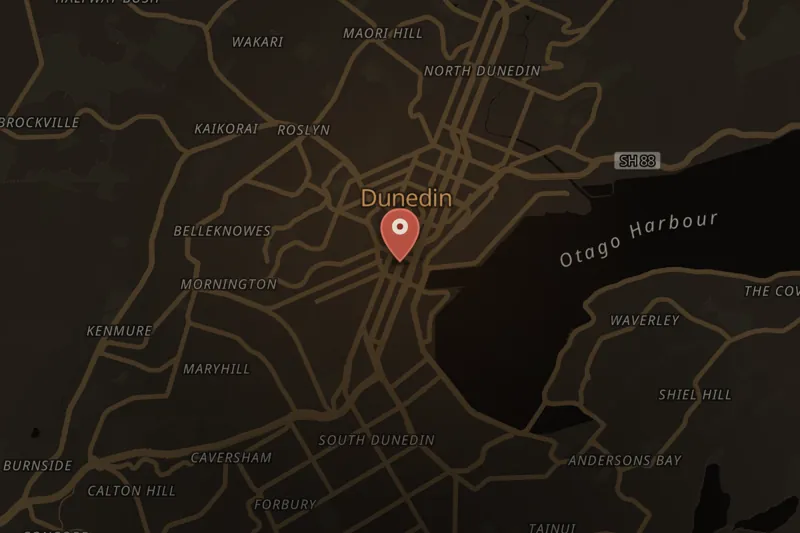
On 9 January 2008, Sophie Kate Elliott, a 22-year-old economics graduate, was fatally stabbed at her family home in Dunedin, New Zealand, by her former boyfriend, Clayton Robert Weatherston. Elliott had completed an honours degree in economics at the University of Otago, where Weatherston had worked as an economics lecturer and had also taught her. Their romantic relationship lasted around six months and had ended before her death; witnesses at the trial described it as troubled. On the day she died, Elliott was packing to move to Wellington to begin a job at the New Zealand Treasury.
At around 12:30 pm, Elliott and her mother, Lesley, were at the family home in the suburb of Ravensbourne when Weatherston arrived unannounced, saying he had brought a farewell present. Lesley soon heard her daughter screaming and telephoned emergency services. Constable John Cunningham found Weatherston locked in Sophie's bedroom, and when asked what he had done, he said that he had killed her; he was then arrested. A forensic pathologist, Martin Sage, conducted the autopsy the following day and found that Elliott had died from blood loss, having sustained 216 separate injuries, mostly stab wounds, along with seven blunt-force injuries and some defensive wounds.
Following a depositions hearing in the Dunedin High Court in May 2008, Weatherston pleaded not guilty and was committed for trial, which was relocated to the Christchurch High Court and scheduled to begin on 22 June 2009. His counsel argued a defence of provocation, and two psychiatrists testified that he had narcissistic personality disorder. After a five-week trial, the jury found Weatherston guilty on 22 July 2009. On 15 September 2009, Justice Judith Potter sentenced him to life imprisonment with a minimum non-parole period of 18 years, stating that she believed the killing was deliberate and controlled.
Weatherston's lawyers filed an appeal in October 2009. In April 2011, the Court of Appeal heard arguments on seven grounds, including a claim that widespread media coverage had denied him a fair trial, which the Crown opposed. On 17 June 2011, three judges denied the appeal on all grounds, and the Supreme Court rejected a further application on 13 September 2011. In January 2026, Weatherston was denied parole after telling the Parole Board that he was not seeking release at that time; he next becomes eligible to apply in November 2027.
The case received extensive news coverage and contributed to the New Zealand government's decision to abolish the partial defence of provocation in cases of murder. In October 2010, the Sophie Elliott Foundation was launched to warn and educate young women about the signs of abusive relationships, and in 2013 it worked with the New Zealand Police and the Ministry of Social Development to develop the Loves-Me-Not workshop for secondary school students. Lesley Elliott closed the foundation in 2019, and the New Zealand Police have continued to run the workshop.

 Credit: BenchillCC BY-SA 3.0SourceOVERTURNEDListen