Between 11 and 19 March 2012, a series of shooting attacks struck the French cities of Toulouse and Montauban, in the Midi-Pyrénées region, killing seven people and wounding eleven more. French investigators identified Mohammed Merah, a 23-year-old French citizen of Algerian descent who was born and raised in Toulouse, as the gunman behind all three attacks. In each case, witnesses described a helmeted rider arriving and leaving on the same scooter, which was later found to have been stolen, and investigators determined that the same .45 pistol and a 9mm pistol were used throughout.
The first attack came on 11 March, when Master Sergeant Imad Ibn-Ziaten, a 30-year-old off-duty paratrooper, was shot in the head at point-blank range outside a school in southeast Toulouse; investigators concluded the gunman had arranged to meet him under the pretext of buying his motorcycle. On 15 March, in Montauban, about 50 km north of Toulouse, two uniformed soldiers — 25-year-old Corporal Abdel Chennouf and 23-year-old Private Mohamed Legouad — were shot and killed, and a third, 27-year-old Loïc Liber, was seriously wounded and left tetraplegic, as the three withdrew cash from an ATM outside a shopping centre. On 19 March, the gunman rode up to the Ozar Hatorah Jewish school in Toulouse and opened fire in the schoolyard, killing 30-year-old rabbi and teacher Jonathan Sandler and Sandler's two young sons, 5-year-old Arié and 3-year-old Gabriel, as Sandler tried to shield them. Inside the school, he chased down 8-year-old Myriam Monsonego, the head teacher's daughter, and shot her at point-blank range after his first gun jammed; 17-year-old student Bryan Bijaoui was also shot and gravely injured.
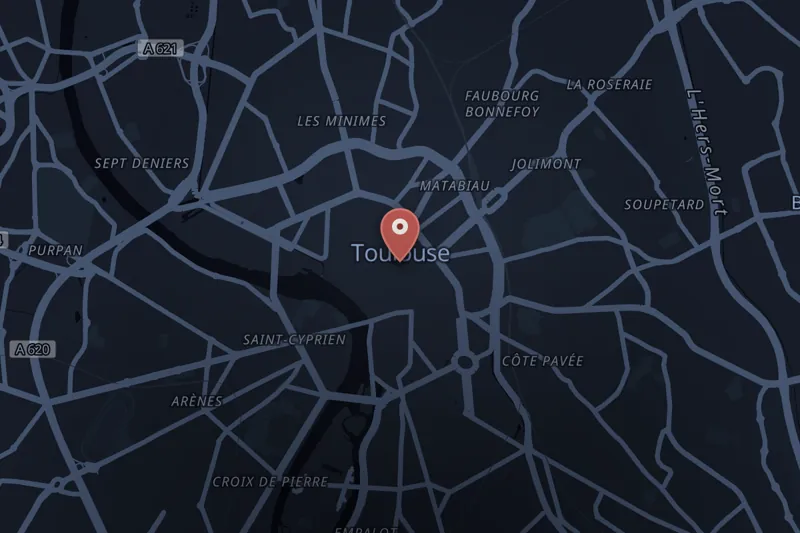
Police initially suspected neo-Nazi involvement because of the victims' ethnic and religious backgrounds, and Merah — who had not previously drawn significant police attention — was not identified until investigators traced the stolen scooter and a motorcycle mechanic reported his attempt to remove a GPS tracking device. Merah said he carried out the attacks because of France's military role in Afghanistan and its ban on Islamic face veils, and that he targeted the Jewish school because, in his words, "the Jews kill our brothers and sisters in Palestine"; he claimed affiliation with al-Qaeda, though French authorities said they found no evidence to substantiate it. On 22 March, police surrounded Merah's rented apartment in Toulouse's Côte Pavée neighbourhood; an hour earlier, Merah had called French television channel France 24 and told an editor there that his acts were intended to "uphold the honour of Islam." During the roughly 30-hour siege that followed, Merah exchanged gunfire with police, wounding several officers, and told negotiators he would not surrender without a fight. When a tactical unit entered the apartment on the morning of 22 March, Merah emerged firing and was shot dead by a police sniper after jumping from a window.
Merah's brother, Abdelkader Merah, was detained after the siege on preliminary charges of complicity in murder and terrorist conspiracy. In 2017, Abdelkader Merah and a second man, Fettah Malki, were found guilty of taking part in a criminal terrorist conspiracy connected to the attacks; Abdelkader Merah was sentenced to 20 years in prison and Fettah Malki to 14 years. The attacks led France to raise its Vigipirate terrorism alert to its highest level in the Midi-Pyrénées region and surrounding departments, drew condemnation from the United Nations and the French Council of the Muslim Faith, and were followed by a documented rise in antisemitic incidents: France's Jewish community monitoring group recorded 148 antisemitic incidents in March and April 2012, of which 43 were classified as violent.


 SOLVEDListen