
Start here
THE TULSA RACE MASSACRE | A HISTORY SERIES

Georgia Marie's 35-minute breakdown, the fullest single telling on file.
Watch on YouTubeBefore you continue
This case involves crimes against children. Casepin presents the record in neutral, non-graphic language. Choose whether to continue.
Solved case · 1921
Also known as Tulsa Riot · Tulsa Race Riot
 All That Was Left of His Home after the Tulsa Race Riot, 6-1-21 (Ag2013.0002)Credit: Unknown author·Public domain·Source
The short answer
Over two days in 1921, white mobs, including men deputized by city officials, attacked the Greenwood District of Tulsa, Oklahoma — then one of the wealthiest Black communities in the United States — burning more than 35 blocks, killing dozens by official count, and displacing thousands.
Start hereTHE TULSA RACE MASSACRE | A HISTORY SERIESGeorgia Marie · 35 minThe coverage index
1 piece from 1 creator: ranked, with duplicates removed and short clips set aside.
Start here
Video · YouTube · 35 min · 2021
Georgia Marie's 35-minute breakdown, the fullest single telling on file.
Watch on YouTubeTitles and descriptions are the creators’ own and may not reflect current legal status. The sourced facts are in the file below. Players load only when you press play. Suggest coverage we’re missing.
The case file
Between May 31 and June 1, 1921, white mobs in Tulsa, Oklahoma — some of whom had been armed and deputized by city officials — attacked Black residents and their homes and businesses in the Greenwood District, known as "Black Wall Street" for its concentration of Black-owned businesses and professionals. The attackers burned and destroyed more than 35 square blocks of the neighborhood. The Oklahoma Bureau of Vital Statistics officially recorded 36 deaths; a 2001 state commission identified 39 confirmed dead (26 Black, 13 white) based on contemporary records, while noting other estimates ranging up to around 300. More than 800 people were hospitalized, and as many as 6,000 Black residents were interned, some for several days.
The violence followed the arrest of 19-year-old Dick Rowland, a Black shoeshiner, after a 21-year-old white elevator operator, Sarah Page, reportedly screamed during an encounter with him in the Drexel Building on May 30, 1921. Police investigated and found the incident did not amount to assault, but rumors of a lynching spread after a Tulsa Tribune article. Several hundred white residents gathered outside the county courthouse that evening, and a group of armed Black men, many World War I veterans, arrived to help the sheriff defend Rowland. Accounts differ on the precise trigger, but a struggle over a firearm led to a shot being fired, followed by an exchange of gunfire that left 12 people dead — 10 white and two Black. A rolling gunfight and mob violence followed, with white rioters invading Greenwood overnight and into the next morning, burning and looting homes and businesses and shooting residents. Numerous eyewitnesses, including attorney Buck Colbert Franklin in a rediscovered 2015 manuscript, described airplanes used by white assailants to fire on and drop incendiary material over the neighborhood, though a later analysis for the state commission found no physical evidence of explosive damage.
Around noon on June 1, the Oklahoma National Guard, under Adjutant General Charles F. Barrett, declared martial law and suppressed the remaining violence. About 10,000 Black residents were left homeless; property losses were estimated at more than $1.5 million in real estate and $750,000 in personal property. By the end of 1922 most homes had been rebuilt, largely without compensation from the city or insurers, and many survivors left Tulsa permanently.
The massacre was largely omitted from local, state, and national histories for decades. In 1997 the Oklahoma legislature authorized a commission to study the event; its 2001 final report could not establish that the city had conspired with the mob but recommended reparations for survivors and descendants. The state subsequently created descendant scholarships and a memorial park, dedicated in 2010. Oklahoma schools have been required to teach the massacre since 2002, with it becoming a formal part of the state curriculum in 2020.
11 dated entries · 1921–2020
Dick Rowland, a Black shoeshiner, encounters Sarah Page, a white elevator operator, in the Drexel Building; a clerk reports a possible assault.
Rowland is arrested and moved to the Tulsa County Courthouse jail; the Tulsa Tribune publishes an account of the incident; a white crowd gathers at the courthouse; armed Black men arrive to help defend Rowland; a shot is fired and gunfire breaks out, leaving 12 dead.
White mobs, including men reportedly deputized by officials, burn and loot the Greenwood District; eyewitnesses report gunfire and incendiary attacks from private aircraft; the Oklahoma National Guard declares martial law around noon, ending the violence.
Martial law is withdrawn under Field Order No. 7.
By the end of the year, most destroyed homes in Greenwood had been rebuilt by residents, without compensation from the city or real estate companies.
Oklahoma legislature authorizes the Oklahoma Commission to Study the Tulsa Race Riot of 1921.
The Oklahoma Commission publishes its final report, identifying 39 confirmed deaths and recommending reparations.
Oklahoma schools are required to begin teaching about the massacre.
A memorial park for massacre victims is dedicated.
A previously unknown eyewitness manuscript by attorney Buck Colbert Franklin is discovered and obtained by the Smithsonian National Museum of African American History and Culture.
The Tulsa race massacre becomes a formal part of the Oklahoma school curriculum.
1 named in this file
Victims first. Every legal label is set from public records and court outcomes, not from the prose.
19-year-old Black shoeshiner arrested 31 May 1921 and indicted on a charge of assaulting Sarah Page in the Drexel Building elevator (the underlying incident is disputed and most historians believe it was innocuous); after Page told the county attorney she did not wish to prosecute, all charges against Rowland were dismissed in September 1921.[3]
3 cited
Coverage is not a source: every fact in this file rests on the records below.
Official / agencydigitalprairie.ok.govAccessed Jul 7, 2026
PressThe New York TimesAccessed Jul 7, 2026
EncyclopedicWikipediaAccessed Jul 7, 2026
Trust
Are you family of someone named in this file? Corrections and removal requests from victims’ families are prioritized.
Near this case
 SOLVEDListen
709 Magnolia Court, Broken Arrow, Oklahoma · 2010s
On July 22, 2015, teenage brothers Robert and Michael Bever fatally stabbed their parents and three younger siblings inside their Broken Arrow, Oklahoma home, and seriously injured another sister. Robert pleaded guilty and received life without parole; Michael was convicted at trial and sentenced to life with parole eligibility after 225 years.
 ONGOINGListen
Okmulgee, Oklahoma, United States · 2020s
Four men from Okmulgee, Oklahoma were reported missing after being last seen riding bicycles on October 9, 2022, and were later found fatally shot and dismembered in the Deep Fork River. A 67-year-old man was arrested after fleeing to Florida and was charged with first-degree murder.
 SOLVEDListen
Near Henryetta, Okmulgee County, Oklahoma, United States · 2010s
On May 1, 2023, Jesse McFadden shot and killed his wife, her three children, and two of the children's friends near Henryetta, Oklahoma, then killed himself; the victims were found hours before McFadden was due in court on separate sex-offense charges.
 Credit: W.H. Whitehead per image·Public domain·SourceUNSOLVEDListen
Rosewood, Levy County, Florida, United States · 1923
In early January 1923, white mobs in rural Levy County, Florida, killed at least six Black residents and destroyed the predominantly Black community of Rosewood after a white woman in nearby Sumner alleged she had been assaulted by a Black man; two white men were also killed in the resulting violence, and no one was ever prosecuted.
 Credit: Patrol of Armed Men In Streets Of Texas Town". The Bennington Evening Banner July 7…·Public domain·SourceSOLVEDListen
Lamar County Fairgrounds, Paris, Texas · 1920
Brothers Irving "Ervie" and Herman Arthur, African American sharecroppers and a World War I veteran, were burned alive by a mob of thousands at the Lamar County Fairgrounds in Paris, Texas, on July 6, 1920, after being accused of killing their landlord and his son during a dispute over debt and forced labor.
 Credit: The Pensacola journal May 19, 1922 The West Virginian May 23, 1922 The New York Times…·Public domain·SourceSOLVEDListen
Davisboro, Washington County, Georgia · 1922
Charles Atkins, a 15-year-old African-American boy, was tortured and lynched by a mob of about 2,000 people in Davisboro, Georgia, on May 18, 1922, after being accused of killing rural mail carrier Elizabeth "Billy" Kitchens.
Also covered by
 Credit: Family handout via Suffolk News·Editorial use·SourceCOLDListen
Bury St Edmunds, Suffolk, England · 2016
Royal Air Force gunner Corrie McKeague disappeared after a night out in Bury St Edmunds in September 2016, and a 2022 inquest concluded he died after climbing into a waste bin that was tipped into a bin lorry, though his remains were never found.
El Pianista trail, near Boquete, Panama · 2014
Two Dutch students, Kris Kremers and Lisanne Froon, disappeared while hiking a jungle trail in Panama in April 2014, and their remains were recovered along a riverbank months later, but no official cause of death has ever been established.
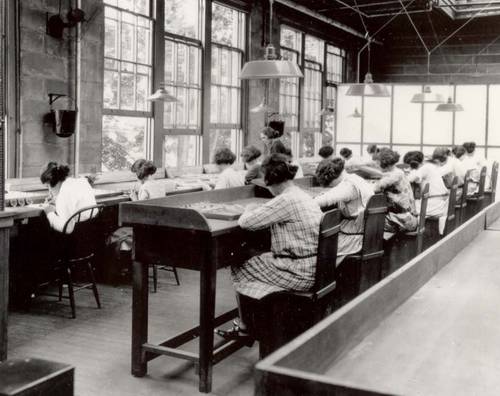 Credit: Argonne National Laboratory / Wikimedia Commons, c.1922–23·Public domain·SourceSOLVEDListen
Orange, New Jersey · 1917
Beginning in 1917, factory workers who came to be known as the Radium Girls were poisoned after being instructed to shape radium-paint brushes with their lips; the resulting illnesses, deaths, and lawsuits against the United States Radium Corporation and the Radium Dial Company reshaped U.S. occupational health and labor law.
