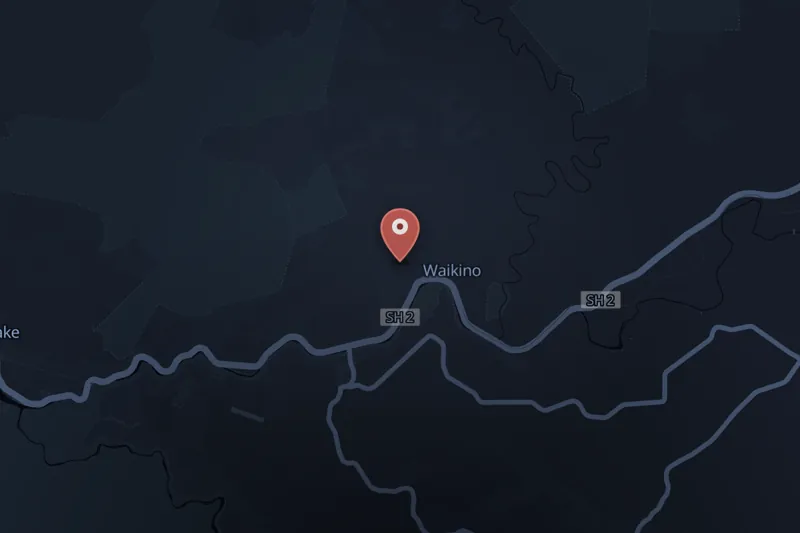
On the morning of 19 October 1923, John Christopher Higgins, a Canadian-born firewood dealer living near Waikino in New Zealand's Waikato district, entered Waikino School armed with a .32 calibre Colt automatic pistol. Higgins had lived in the area for 15 years and had accumulated a series of grievances against neighbors, including disputes over truancy fines, dead chickens, stolen bees, and a dead horse he believed had been killed by others. Coworkers reportedly called him "Mad John" for his belief that he was the target of a conspiracy.
Upon arriving at the school, Higgins told headmaster Robert Theodore Reid that he had "come for revenge." Reid attempted to de-escalate the situation and later tried to physically stop Higgins, but was shot through the jaw. Higgins proceeded to shoot Kelvin McLean, aged 13, and Charles Stewart, aged 9, both at close range; both boys died. Six other people were injured, including a student, Katie McGarry, who was left with a permanent limp. Teachers moved students to safety while Higgins barricaded himself in the study and fired at civilians and arriving police, wounding one officer. Higgins eventually threw his weapon out a window and was arrested. He was later found to be carrying a knife and gelignite explosives.
In the aftermath, the community held a funeral procession described as one of the largest in the area's history. A protest was held on 24 October 1923 against reopening the school, and that same evening the school building was destroyed by fire; no one was ever charged for the arson, and the identities of those responsible were reportedly protected by the local community. A new school was built in a different location in 1925. Reid resigned due to his injuries, which left him permanently paralyzed in the right shoulder, and moved into correspondence education before retiring to Auckland.
Higgins was charged on 14 December 1923 with two counts of murder and four of attempted murder. At trial, evidence emerged of his increasingly paranoid behavior, including building escape trapdoors on his property and surveilling neighbors through telescopes and holes cut in his walls. He pleaded not guilty by reason of insanity but was convicted on 15 February 1924 and sentenced to death. The Crown argued that despite his insanity, he understood the morality of his actions. His sentence was commuted to life imprisonment less than a month later after a finding of "chronic delusional insanity." Higgins died in Avondale Mental Hospital in Auckland in 1938. The case is described as the first and only mass school shooting in New Zealand's history.


 OVERTURNEDListen


