The Warrowen massacre refers to an apparent mass killing of Bunurong people, dated to the early 1830s, that took place near present-day Brighton, Victoria, Australia. It is recorded only in secondhand colonial-era sources: letters and reports by William Thomas, Assistant Protector of Aborigines of Port Phillip, and diary entries by George Augustus Robinson, both based on testimony from Aboriginal informants rather than direct European observation.
According to Robinson's account, the victims belonged to the Yowengerre (also spelled Yowenjerre), the easternmost clan of the Bunurong people, who occupied the Tarwin River watershed and parts of Wilsons Promontory. The perpetrators were identified as the Borro Borro willun, a clan of the Gunai (Kurnai) people whose traditional country was the Avon River area of Gippsland. Robinson recorded that the attack contributed to the effective end of the Yowengerre as a clan, after which the Borro Borro moved into and occupied former Yowengerre territory.
Thomas's accounts, given in an 1840 letter to Superintendent Charles La Trobe and a later 1849 report, give varying death tolls: one letter states 77 people were killed "at Little Brighton," while a subsequent report describes the deaths of "nearly a quarter of the Western Port blacks," and a separate description of a carved memorial tree gives a toll of "60 or 70." Thomas dated the event to approximately 1833 or 1834, describing it as a surprise attack carried out by Gippsland people before dawn. Robinson's 1844 diary entry, based on testimony from an informant named Munmunginna, whose father was from the Yowengerre clan, put the toll at 70.
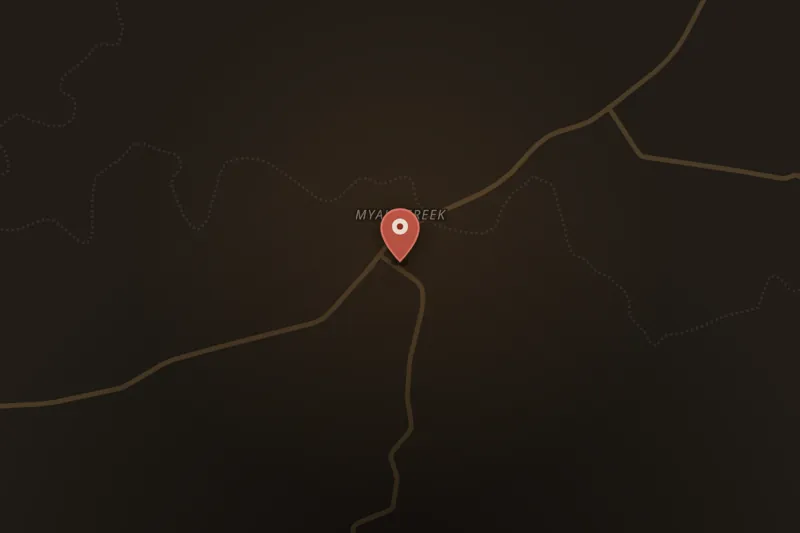
The location was recorded by Thomas as "Warrowen" (also spelled Warowen, Worawen, Worrowen or Woorroowen), meaning "place of sorrow" or "incessant weeping," and by both Thomas and Robinson as being at or near Brighton. Later historical research by Marie Hansen Fels (2011), drawing on settler accounts including John Butler Cooper's history of Brighton, situates the site at what are now Landcox Park and Hurlingham Park in Brighton East, where early settlers reported finding human bones and evidence of former campfires.
Thomas's letter to La Trobe also recorded two related incidents of killings of Bunurong people by Kurnai: one dated to about 1820 near Arthurs Seat, and another at Kunnung near Koo Wee Rup, the latter also recorded separately by James Maxwell Clow. Thomas additionally recorded a 1840 revenge expedition by the Bunurong resulting in nine deaths. Robinson's 1844 notes state that only two Yowengerre survivors, Munmungina and Kurburra, remained by that time, and that the Borro Borro had permanently relocated into former Yowengerre country, a move researchers Wilson and Ellender (2002) attribute partly to pressures including conflict with European settlers such as Angus McMillan.


 OVERTURNEDListen