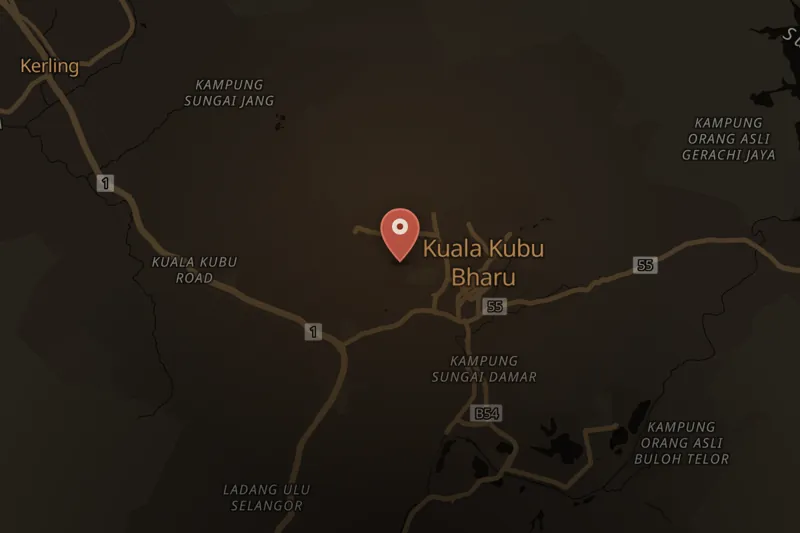
On 1 March 2015, Yashmin Fauzi, a 25-year-old nurse and wife of an auxiliary policeman, was found with multiple slash and stab wounds at her home in Kampung Batu Papan, near Gua Musang in the Malaysian state of Kelantan. Her husband, Mohd Azrul Isahak, returned home after feeling unwell and discovered her semi-naked and motionless outside their home in a pool of blood. She was taken to Gua Musang Hospital but pronounced dead at 6.40am. Investigators found stab and slash wounds on her hands and neck, and bloodstains in the couple's bedroom suggested the attack began there. Before she died, Yashmin left a written note identifying her attacker, and her five-year-old son, who witnessed the attack, told police he saw a "bad man" harming his mother. Her two younger sons, aged three years and six months, were asleep at the time.
A 22-year-old former sawmill worker and family friend, Mohammad Awari Ahmad, was arrested shortly afterward, and police recovered a parang believed to be the murder weapon. He was charged with murder on 11 March 2015. At trial in the Kota Bahru High Court, prosecutors said Mohammad Awari broke into the home to commit robbery and was confronted by Yashmin between 12.30am and 2am; he attacked her with a parang, including twice on the neck, and raped her during the assault. Yashmin's eldest son witnessed the attack. Mohammad Awari then stole a mobile phone and RM200 in cash before going to drink alcohol.
On 31 January 2018, Judicial Commissioner Datuk Ahmad Bache found Mohammad Awari guilty of both rape and murder, rejecting his claim that he lacked intent to kill. He was sentenced to death for murder and to 18 years' imprisonment with 12 strokes of the cane for rape. His appeal to the Court of Appeal was dismissed in 2019, and on 7 October 2020 the Federal Court, in a unanimous decision by a three-judge panel, upheld the murder conviction and death sentence, finding strong supporting evidence including eyewitness testimony from Yashmin's son and her dying note identifying her attacker.
Following Malaysia's 2023 abolition of the mandatory death penalty, Mohammad Awari applied for re-sentencing. On 7 August 2024, the Federal Court reduced his death sentence to 40 years' imprisonment and 12 strokes of the cane, citing his age of 22 at the time of the offence as a mitigating factor, while his 18-year sentence for rape was to run concurrently.
The case drew public attention to violence against women in Malaysia, with women's rights advocates calling for greater protections shortly after the murder. Yashmin's three sons received donations through a charitable orphan support scheme in 2015. Family members, including her father-in-law (who died in 2020) and her husband, spoke in later years about the children's ongoing grief and the family's financial struggles. The case also featured in broader public debate over capital punishment in Malaysia following the 2020 Federal Court ruling.


 Credit: Unknown authorPublic domainSourceUNSOLVEDListen