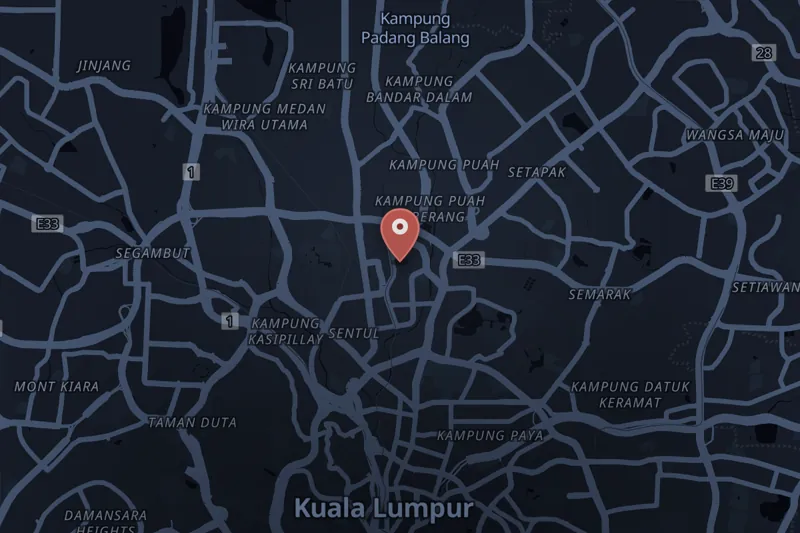
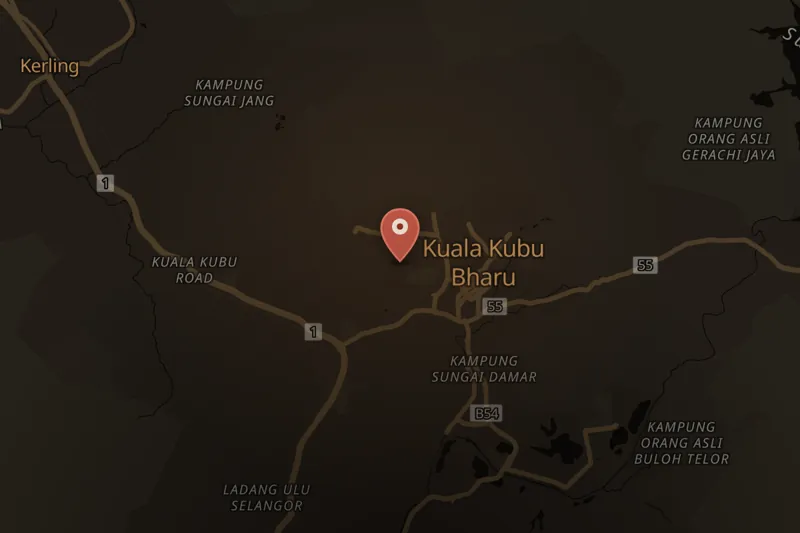
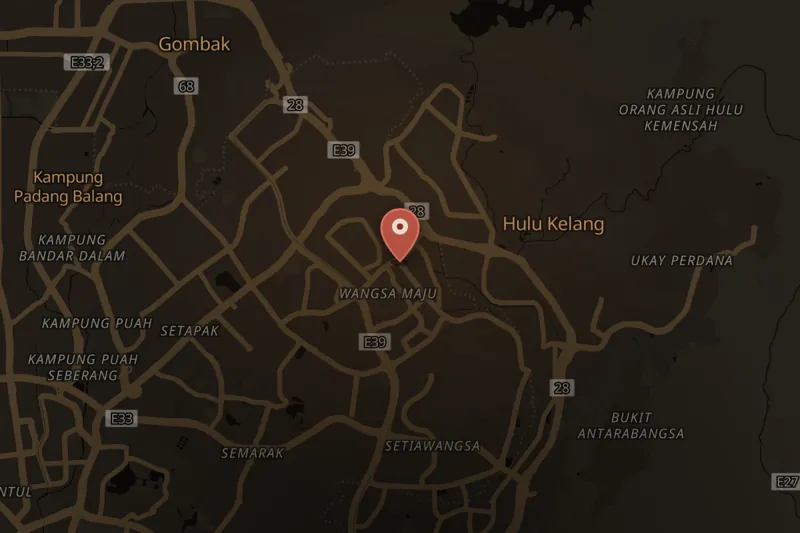
On 6 October 1951, at the height of the Malayan Emergency, Sir Henry Gurney, the British High Commissioner in Malaya, was killed in an ambush at Mile 56½ of Kuala Kubu Road while travelling to Fraser's Hill for a meeting. He was riding in his Rolls-Royce Silver Wraith accompanied by his wife, Lady Gurney, his private secretary D. J. Staples, and his Malayan chauffeur. The car was part of a convoy that also included an armoured scout car, a police wireless van, and a Land-Rover carrying six Malayan policemen in its open back.
Approximately eight miles before the ambush site, the wireless van suffered engine trouble. The convoy commander advised Gurney to wait for repairs, but Gurney chose to continue with the rest of the convoy. About 60 miles (97 km) north of Kuala Lumpur, as the convoy rounded a curve in the road, it was ambushed by a force of 38 Malayan Communist Party guerrillas armed with three Bren guns, Sten guns, and rifles.
During the initial burst of gunfire, Gurney and five of the six Malayan policemen in the Land-Rover were wounded, and Gurney's chauffeur was killed. Both vehicles were forced to a stop after their tyres were punctured by bullets. Gurney pushed his wife and private secretary down into the footwell of the car for protection, then exited the vehicle and walked toward the ambush position, apparently to draw the guerrillas' gunfire away from the car and toward himself. The guerrillas fired at him, and he was fatally struck.
The armoured scout car managed to push past the stalled vehicles, with some difficulty, to seek help from a nearby police station. The insurgents remained in the area for roughly ten more minutes, firing intermittently at anything that moved, before a bugle call signaled their withdrawal. Once the firing stopped, Lady Gurney emerged from the Rolls-Royce and found her husband's body in a roadside ditch. Reinforcements from the police station, led by the officer in charge of the armoured scout car, arrived at the scene about twenty minutes later.
According to Chin Peng, a Communist leader involved with the Malayan Communist Party, the ambush itself was a routine operation and the killing of Gurney was a matter of chance; he stated that the guerrillas only learned afterward, through news reports, that the High Commissioner had been among those killed.
This case remains associated with the broader history of the Malayan Emergency, a prolonged armed conflict between Commonwealth forces and the Malayan Communist Party.

 UNSOLVEDListen