
 SOLVEDListen
Old City, Jerusalem · 2020s
2021 Jerusalem shooting
On 21 November 2021, a gunman opened fire on people heading to prayer in Jerusalem's Old City, killing tour guide Eliyahu Kay and wounding four others before being shot dead by police.
Solved case · 1951
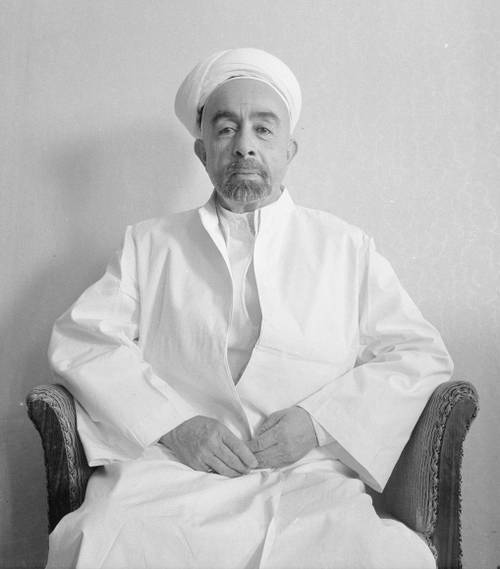 Abdullah I of JordanCredit: Cecil Beaton / Imperial War MuseumPublic domainSource
The short answer
King Abdullah I of Jordan was fatally shot at the Al-Aqsa Mosque in Jerusalem on 20 July 1951 by a 21-year-old Palestinian gunman, who was killed at the scene by the king's bodyguards. Ten men were later accused of plotting the killing, eight stood trial, and six were sentenced.
No one's coverage is attached to this file yet.
Know great coverage of this case?
A documentary, a podcast episode, a careful long-form video. Suggest it and an editor will review it before it appears here.
Suggest coverage for Assassination of Abdullah I of JordanOn 20 July 1951, King Abdullah I of Jordan was assassinated while visiting the Al-Aqsa Mosque in Jerusalem. He had traveled to the city to deliver a eulogy at the funeral of former Lebanese Prime Minister Riad Al Solh, who had himself been assassinated days earlier, and to hold a prearranged meeting with Reuven Shiloah, head of Mossad, and diplomat Moshe Sasson. Abdullah attended Friday prayers at the mosque with his grandson, Prince Hussein. As he approached the entrance, a gunman fired on him from behind the mosque's main gate at close range, striking him three times in the head and chest; the king died instantly. The gunman was shot dead immediately afterward by one of Abdullah's bodyguards.
The assassin was identified as Mustafa Shukri Ashshu, a 21-year-old Palestinian tailor linked to the exiled former Grand Mufti of Jerusalem, Amin al-Husseini, whom Abdullah had removed from his post in 1948 and barred from Jerusalem. Contemporary press accounts attributed the killing to a secret group referred to as "the Jihad," discussed in connection with the Muslim Brotherhood, while other reporting described Ashshu as a member of an armed force called the "Army of the Holy War" that sought an independent Palestinian Arab state. According to British Resident Alec Kirkbride, Ashshu was a "former terrorist" recruited for the assassination by Zakariyya Ukah, a livestock dealer and butcher. A revolver found on Ashshu's body was identified by a local coffee shop owner's son as belonging to his father, and a talisman bearing an Arabic inscription translating to "Kill, thou shalt be safe" was also found on him.
Jordan's government announced on 11 August 1951 that ten men would be tried in connection with the assassination; eight were ultimately sent to trial, including Colonel Abdullah at-Tell, a former Governor of Jerusalem, and Musa Ahmad al-Ayubbi, a Jerusalem merchant, both of whom had fled to Egypt and were tried and sentenced in absentia. General Abdul Qadir Pasha Al Jundi of the Arab Legion presided over the trial, which opened on 18 August 1951. Prosecutors alleged that at-Tell, living in Cairo since January 1950, had ordered that the assassin be killed immediately after the shooting to protect those who had organized the plot, and that at-Tell had maintained contact with the former Grand Mufti and his followers in Egypt and Gaza. At-Tell, a member of the Husseini family named Musa Abdullah Husseini, and three co-conspirators from Jerusalem were sentenced to death; on 28 August 1951 six men, two of them in absentia, received death sentences. On 6 September 1951, Musa Ali Husseini, 'Abid, Zakariyya Ukah, and Abd-el-Qadir Farhat were executed by hanging.
The assassination triggered a succession crisis in Jordan. Abdullah's elder son Talal, who had a troubled history with his father and was reported to suffer from mental illness, succeeded him as king, while younger son Prince Nayef briefly served as regent and was later linked to a failed attempt to seize the throne. Talal's son, Prince Hussein, who had witnessed the assassination, became the country's effective ruler as King Hussein at age sixteen.
Abdullah officially removed Mustafa Shukri Ashshu, later his assassin, from his post and banned him from entering Jerusalem.
Colonel Abdullah at-Tell, later accused as an instigator, was living in Cairo (context predating the assassination).
Former Lebanese Prime Minister Riad Al Solh was assassinated in Amman, Jordan.
King Abdullah I of Jordan was fatally shot at the Al-Aqsa Mosque in Jerusalem; the gunman was killed by the king's bodyguards.
Jordan's Prime Minister Tawfik Abu Al-Huda announced that ten men would be tried in connection with the assassination.
Trial of eight accused suspects began, presided over by General Abdul Qadir Pasha Al Jundi.
Six men, two in absentia, were sentenced to death for planning the assassination.
Musa Ali Husseini, 'Abid, Zakariyya Ukah, and Abd-el-Qadir Farhat were executed by hanging; King Talal returned to Jordan to assume full duties as successor.
Victims first. Every legal label is set from public records and court outcomes, not from the prose.
King of Jordan, fatally shot at the Al-Aqsa Mosque on 20 July 1951[3]
Sentenced to death and executed by hanging on 6 September 1951[3]
Former Governor of Jerusalem; tried and sentenced to death in absentia for alleged role in planning the assassination[3]
Member of the Husseini family; sentenced to death for role in planning the assassination[3]
Jerusalem vegetable merchant who fled to Egypt; tried and sentenced in absentia[3]
Sentenced to death and executed by hanging on 6 September 1951[3]
Livestock dealer and butcher who reportedly recruited the assassin; sentenced to death and executed by hanging on 6 September 1951[3]
21-year-old Palestinian tailor identified as the gunman; shot dead at the scene by the king's bodyguards before any trial[3]
From the record
Coverage is not a source: every fact in this file rests on the records below.
Are you family of someone named in this file? Corrections and removal requests from victims’ families are prioritized.
SOLVEDListenOld City, Jerusalem · 2020s
On 21 November 2021, a gunman opened fire on people heading to prayer in Jerusalem's Old City, killing tour guide Eliyahu Kay and wounding four others before being shot dead by police.
 SOLVEDListen
Temple Mount, Jerusalem · 2010s
On 14 July 2017, three Arab-Israeli gunmen opened fire on Israeli Border Police officers near the Gate of the Tribes at the Temple Mount in Jerusalem, killing two officers and wounding two more before being shot dead by police.
 Credit: Berthold WernerPublic domainSourceSOLVEDListen
Lions' Gate, Old City, Jerusalem · 2010s
On 3 October 2015, a Palestinian man from Al-Bireh attacked the Benita family near the Lions' Gate in Jerusalem's Old City, killing Aaron Benita and Rabbi Nehemia Lavi, who tried to help, and wounding Aaron's wife Adele and their 2-year-old son. The attacker was shot and killed by police, and the attack was followed by several copycat stabbings at the same location.
 Credit: State of FloridaPublic domainSourceCOLDListen
Mims, Florida, United States · 1951
On Christmas night 1951, a dynamite bomb planted beneath the bedroom floor of civil rights activists Harry T. Moore and Harriette V.S. Moore's home in Mims, Florida, killed them both, making them the first martyrs of the Civil Rights Movement.
 Credit: Masako Kawasaki at English WikipediaCC BY-SA 3.0SourceSOLVEDListen
Tintagel, Rosmead Place, Colombo, Ceylon (now Sri Lanka) · 1959
S. W. R. D. Bandaranaike, Prime Minister of Ceylon, was shot at his private residence Tintagel in Colombo on September 25, 1959, by Buddhist priest Talduwe Somarama Thero and died the next day; a wider conspiracy trial led to convictions and one execution.
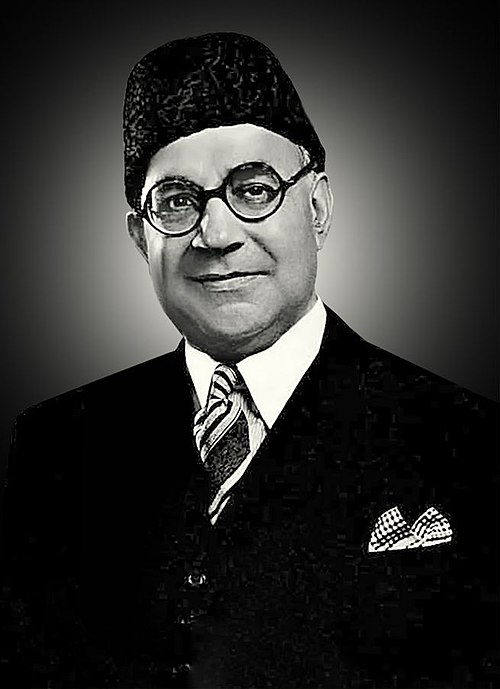 Credit: Unknown author - but due to age, image in public domainPublic domainSourceUNSOLVEDListen
Liaquat Bagh (formerly Company Bagh), Rawalpindi, Pakistan · 1951
Pakistan's first prime minister, Liaquat Ali Khan, was shot and killed while addressing a public gathering in Rawalpindi on 16 October 1951; his alleged assailant was shot dead by police at the scene, and the full circumstances behind the killing remain unresolved.