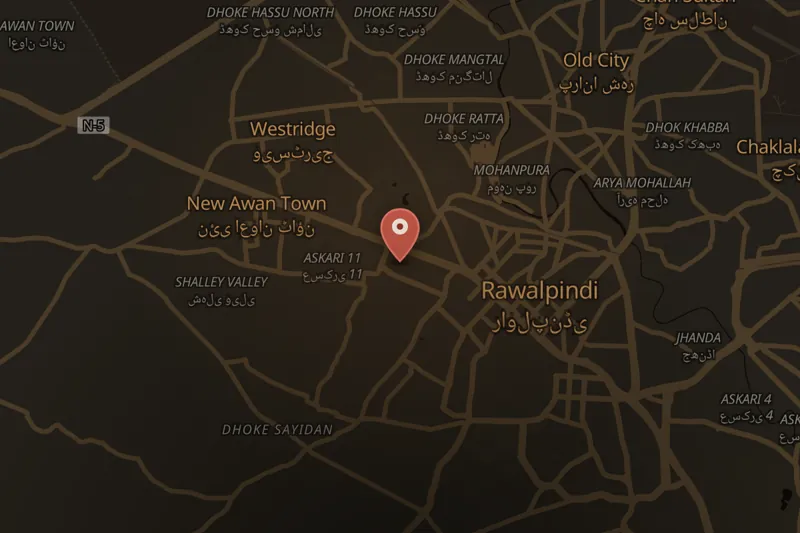
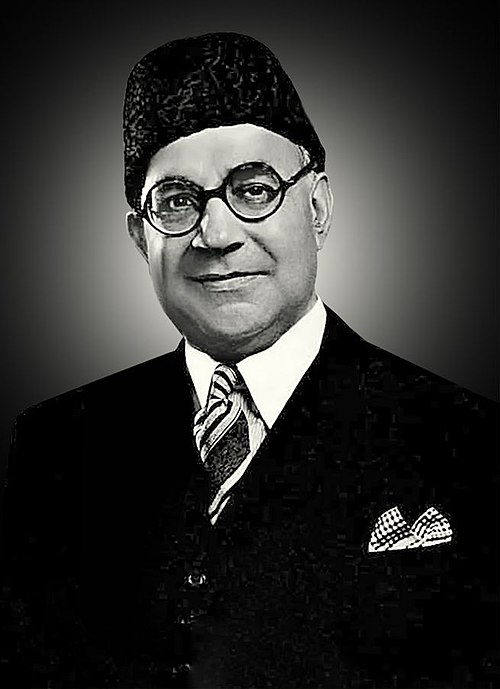
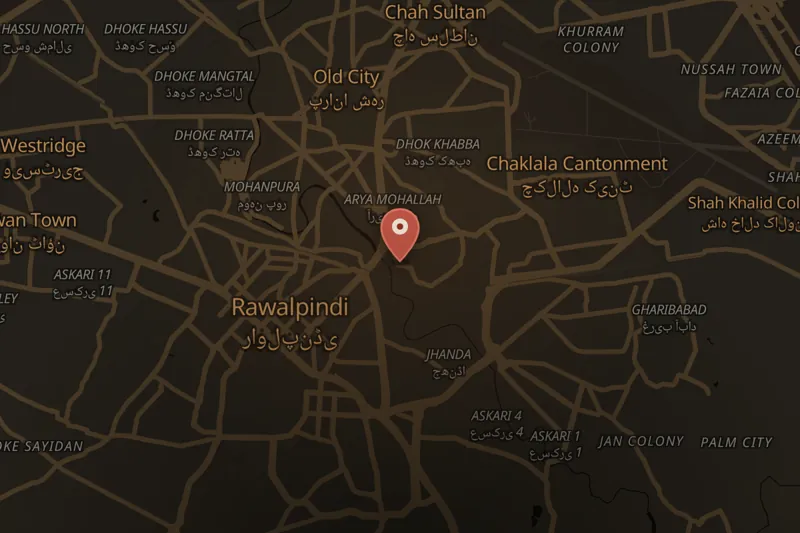
On 16 October 1951, at approximately 4:30 pm, Liaquat Ali Khan, the prime minister of Pakistan, was shot while addressing a gathering of an estimated 100,000 people at Company Bagh (Company Gardens) in Rawalpindi. He was shot twice in the chest. Police at the scene immediately shot and killed the man identified as the shooter, Sayyid Akbar, who was later identified as an Afghan national. Khan had served as Pakistan's first prime minister since the country's creation in 1947 and was a central figure in its early political and economic development, including efforts to stabilize the nation, promote economic reforms, and manage relations with the United States and the Soviet Union during the Cold War.
Following the shooting, Khan was rushed to a nearby hospital, where doctors performed a blood transfusion in an attempt to save his life. He died of his injuries shortly afterward. The location of the assassination, Company Bagh, was subsequently renamed Liaquat Bagh in his honor; the site later became notable as the location of the 2007 assassination of former prime minister Benazir Bhutto.
Investigators identified Sayyid Akbar as the shooter, but according to available reporting, little was established about his background beyond the fact that he was known to Pakistani authorities, had a prior history of criminal activity, and had links to extremist groups; his precise motivations were not conclusively determined. Because Akbar was killed at the scene, no trial or conviction followed, and the case is regarded as one of the most significant unresolved political murders in Pakistan's history.
Multiple theories have circulated regarding a possible broader conspiracy, none of which have been conclusively proven. These include speculation that Khan's foreign policy alignment with the West during the Cold War may have been a factor, with an Urdu-language daily in Bhopal, India, at one point suggesting a possible role for American intelligence agencies. Other theories point to domestic political rivalries, including opposition from military and feudal elites, as possible contributing factors. In a 1972 interview, Akbar's brother, identified as Mazrak Zadran, denied that his brother had killed the prime minister.
Khan was posthumously given the title "Shaheed-e-Millat" ("Martyr of the Nation") and was buried at Mazar-e-Quaid in Karachi, near the tomb of Muhammad Ali Jinnah. His death is described as having created a political power vacuum in Pakistan, contributing to subsequent political instability and increased military influence in the country's governance. No individual or group has been definitively established as having ordered or organized the assassination, and the case remains formally unresolved.

 Credit: From the Imperial Gazetteer of India, Hunter, William Wilson, Sir, (1840-1900), Cotton…Public domainSourceUNSOLVEDListen