
Start here
Who killed Benazir Bhutto? | ASSASSINS
The creator's telling of the case, the strongest entry point on file.
Watch on YouTubeSolved case · 2007
Also known as Benazir Bhutto assassination · Benazir Bhutto's assassination
 Benazir BhuttoCredit: Oliver MarkCC BY-SA 4.0Source
The short answer
Former Pakistani Prime Minister Benazir Bhutto was killed on 27 December 2007 in Rawalpindi following a shooting and suicide bombing after a political rally, an attack that also killed 23 other people.
Who killed Benazir Bhutto? | ASSASSINS1 piece from 1 creator: ranked, with duplicates removed and short clips set aside.
Start here
The creator's telling of the case, the strongest entry point on file.
Watch on YouTubeTitles and descriptions are the creators’ own and may not reflect current legal status. The sourced facts are in the file below. Players load only when you press play. Suggest coverage we’re missing.
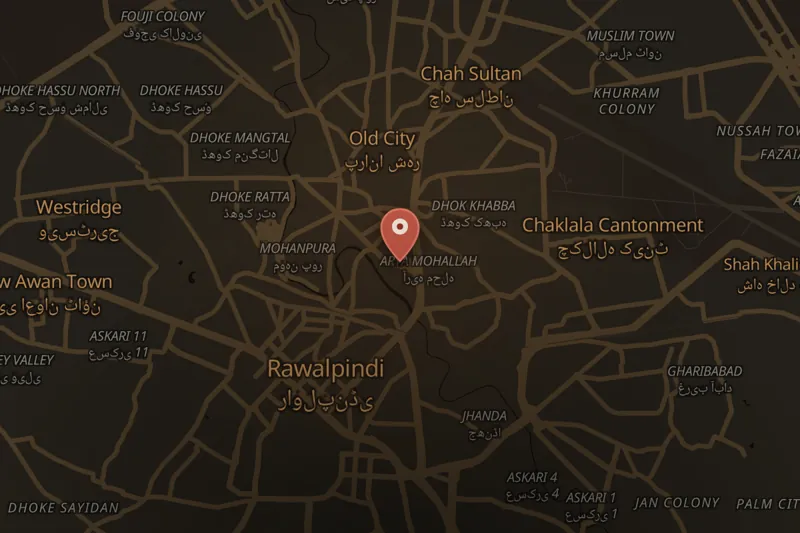
Benazir Bhutto, former Prime Minister of Pakistan and leader of the opposition Pakistan People's Party (PPP), was killed on 27 December 2007 in Rawalpindi after addressing a campaign rally at Liaquat National Bagh ahead of elections scheduled for January 2008. Witnesses and video footage indicated an assailant fired shots at her as she stood through the sunroof of her vehicle, followed immediately by a suicide bomb blast beside the vehicle. Twenty-three other people were killed by the bombing. Bhutto was taken to Rawalpindi General Hospital, where doctors attempted resuscitation before she was declared dead at 18:16 local time. This came two months after she survived a separate suicide bombing attack in Karachi on 18 October 2007, upon her return from years of self-imposed exile, which killed at least 139 people.
The precise cause of Bhutto's death became the subject of significant dispute. Pakistani officials initially cited gunshot wounds, then said she died from a skull fracture sustained when the force of the blast threw her head against the vehicle's sunroof, a version her aides and party rejected as false. No formal autopsy was performed before her burial; her husband, Asif Ali Zardari, declined to authorize one. A subsequent UN Commission of Inquiry found that Pakistani police had hosed down the crime scene shortly after the attack and failed to properly collect evidence, actions the Commission said went "beyond mere incompetence." Scotland Yard investigators later concluded she died from head trauma caused by the bomb blast rather than a gunshot, though this finding was reached without autopsy evidence.
The UN Commission, headed by Chilean diplomat Heraldo Muñoz, concluded that security measures provided to Bhutto by federal, provincial, and local police were "fatally insufficient and ineffective," and that police failed to clear the rally route, coordinate with PPP security, or protect her vehicle as tasked. It found that Rawalpindi police chief Saud Aziz did not act independently in ordering the crime scene hosed down or in preventing a post-mortem examination.
Responsibility for the attack was widely attributed to militant networks linked to al-Qaeda and Pakistani Taliban leader Baitullah Mehsud, a claim Mehsud's spokesman denied. Bhutto herself had named several Pakistani officials in a letter to President Pervez Musharraf as posing a threat to her life prior to her death.
Legal proceedings followed for years. In November 2011, a Pakistani court indicted two police officers, including the former Rawalpindi police chief, along with five men described as affiliated with Baitullah Mehsud. In August 2013, Musharraf was indicted on charges including murder and conspiracy to murder over an alleged failure to provide adequate security. In August 2017, an anti-terrorism court acquitted the five Taliban-linked suspects for lack of evidence, sentenced two police officers to 17 years in prison, and declared Musharraf a fugitive. Musharraf was separately sentenced to death in absentia in December 2019 on unrelated treason charges concerning suspension of the constitution. In February 2023, a Lahore High Court bench heard appeals in the case, dismissing the appeal against Musharraf following his death.
Bhutto returns to Karachi from exile; a suicide bombing targeting her motorcade kills at least 139 people, though she is unharmed.
In a letter to President Pervez Musharraf, Bhutto names individuals she alleged posed a threat to her life.
Bhutto is shot at and a suicide bomb detonates after her rally at Liaquat National Bagh in Rawalpindi; she is declared dead at 18:16 local time at Rawalpindi General Hospital. Twenty-three others are killed.
Pakistan's Interior Ministry revises its account of Bhutto's cause of death; her funeral is held, and she is buried beside her father in Larkana.
Rawalpindi General Hospital officials release clinical notes on Bhutto's treatment and cause of death.
Pakistan's Interior Ministry backtracks on its sunroof-latch explanation, saying it will await forensic investigation.
Scotland Yard investigators conclude Bhutto died from head injury caused by the bomb blast, not gunshot.
UN Secretary-General Ban Ki-moon announces a UN commission will investigate the assassination at Pakistan's request.
The three-member UN Commission of Inquiry arrives in Islamabad.
A Pakistani court indicts two police officers and five men allegedly affiliated with Baitullah Mehsud in connection with the assassination.
Former President Pervez Musharraf is indicted on charges of murder, conspiracy to murder, and facilitation of murder.
An anti-terrorism court acquits five Taliban-linked suspects, sentences two police officers to 17 years in prison, and declares Musharraf a fugitive.
Musharraf is sentenced to death in absentia in Pakistan on separate charges of high treason.
A Lahore High Court bench hears appeals in the case and dismisses the appeal against Musharraf following his death.
Victims first. Every legal label is set from public records and court outcomes, not from the prose.
Former Prime Minister of Pakistan and PPP leader, killed in the 27 December 2007 attack.[3]
Former President of Pakistan charged in 2013 with murder, criminal conspiracy to murder, and facilitation of murder over Benazir Bhutto's December 2007 assassination, related to an alleged failure to provide her adequate security. He left Pakistan in 2016 for medical treatment and remained in self-imposed exile in Dubai; a Pakistani anti-terrorism court declared him a fugitive from justice in August 2017 and ordered his property seized. He died on 5 February 2023, still uncharged-to-verdict, and the pending appeal in the case was dismissed as a result of his death; he was never tried or convicted.[3]
Former Rawalpindi police chief indicted for alleged conspiracy and abetment in the murder and for changing the security plan; found by the UN Commission not to have acted independently in ordering the crime scene hosed down or preventing a post-mortem.[3]
Coverage is not a source: every fact in this file rests on the records below.
Are you family of someone named in this file? Corrections and removal requests from victims’ families are prioritized.
 Credit: From the Imperial Gazetteer of India, Hunter, William Wilson, Sir, (1840-1900), Cotton…Public domainSourceUNSOLVEDListen
Rawalpindi Division, Punjab Province, British India (present-day Punjab, Pakistan) · 1940s
In March 1947, Muslim League-affiliated mobs carried out large-scale massacres, rapes, and forced conversions against Hindus and Sikhs across the Rawalpindi Division of Punjab, killing an estimated 7,000–8,000 people and triggering the mass exodus of 80,000 residents by the end of April.
 Credit: Unknown author - but due to age, image in public domainPublic domainSourceUNSOLVEDListen
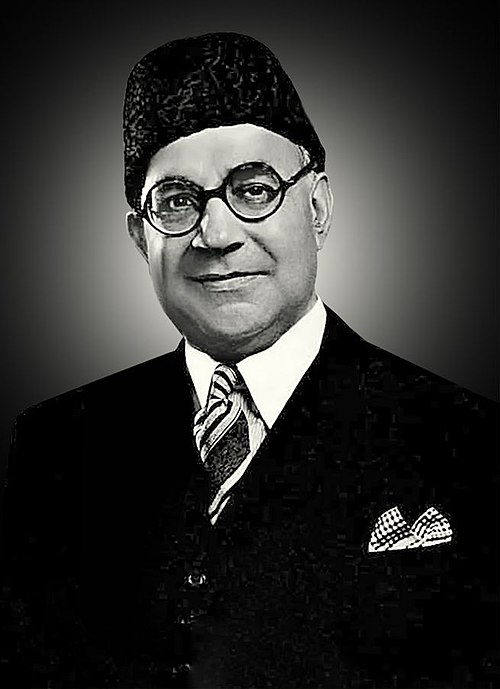
Liaquat Bagh (formerly Company Bagh), Rawalpindi, Pakistan · 1950s
Pakistan's first prime minister, Liaquat Ali Khan, was shot and killed while addressing a public gathering in Rawalpindi on 16 October 1951; his alleged assailant was shot dead by police at the scene, and the full circumstances behind the killing remain unresolved.
 SOLVEDListen
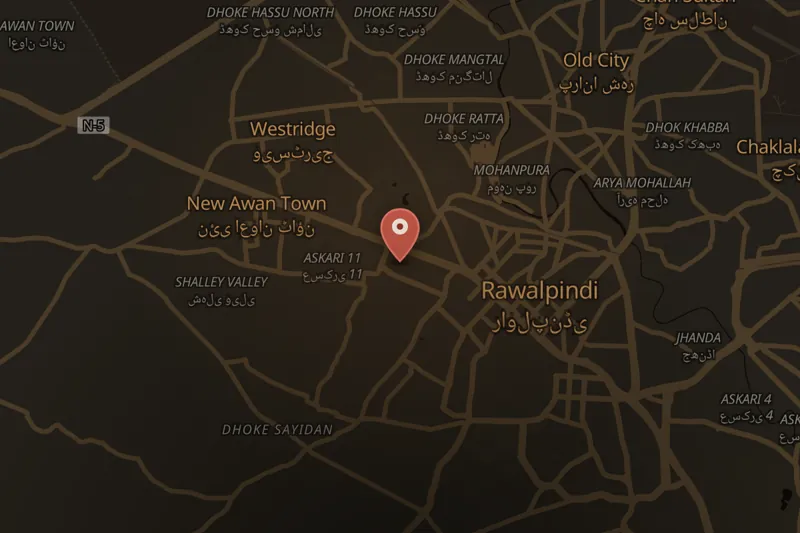
Mosque on Parade Lane, near Pakistan Army headquarters, Rawalpindi, Pakistan · 2000s
On 4 December 2009, five armed suicide attackers stormed a mosque near Pakistan Army headquarters in Rawalpindi during Friday prayers, killing approximately 37 people and injuring 61 others, many of them military personnel and their family members.
Apartment block, central Moscow, Russia · 2006
Russian journalist and human rights activist Anna Politkovskaya, a prominent critic of the Second Chechen War and of Vladimir Putin, was shot dead in her Moscow apartment building elevator on 7 October 2006. After a lengthy and repeatedly stalled investigation, six people were eventually convicted of crimes related to her murder, though the identity of whoever ordered the killing was never conclusively established in court.
 Credit: MiradaCC BY-SA 3.0SourceSOLVEDListen
Şişli, Istanbul, Turkey · 2007
Turkish-Armenian journalist Hrant Dink, editor of the newspaper Agos, was shot dead outside his office in Istanbul on 19 January 2007. Ogün Samast was convicted of the killing; Yasin Hayal and Erhan Tuncel were convicted for their roles in inciting and orchestrating the assassination, with dozens of others later tried over the broader plot.
 Credit: BekmawCC BY-SA 4.0SourceSOLVEDListen
Hyatt Regency Hotel (later Dan Jerusalem Hotel), Jerusalem · 2001
Israeli tourism minister Rehavam Ze'evi was shot dead at a Jerusalem hotel on 17 October 2001 by a Popular Front for the Liberation of Palestine (PFLP) squad, in what the group said was revenge for Israel's killing of PFLP leader Abu Ali Mustafa. The four assassins were eventually convicted in Israel and given long prison terms.
 Bombings and their aftermathBombings across public places, transit systems, campaigns, and conflicts — recorded through the people they were aimed at and the aftermath that followed.Read the collection
  The assassinations that redirected historyThe killings of presidents, prime ministers, dissidents, and reformers — each one a hinge a nation's history turned on.Read the collection