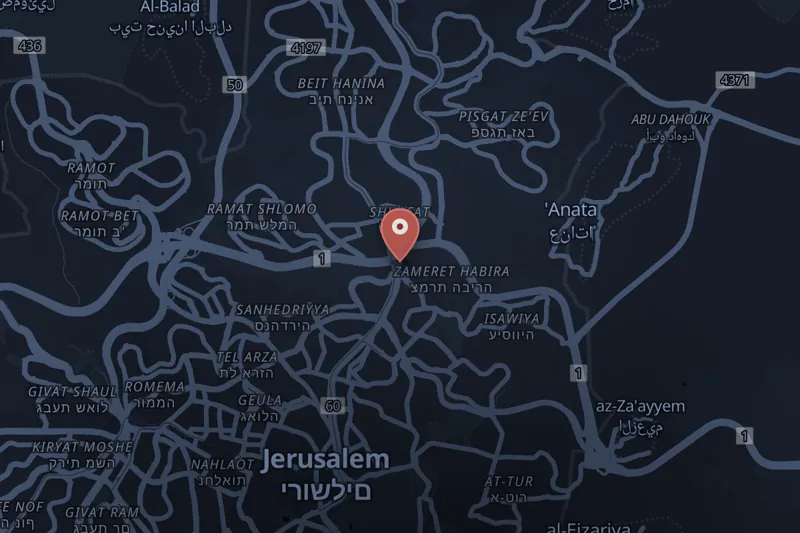
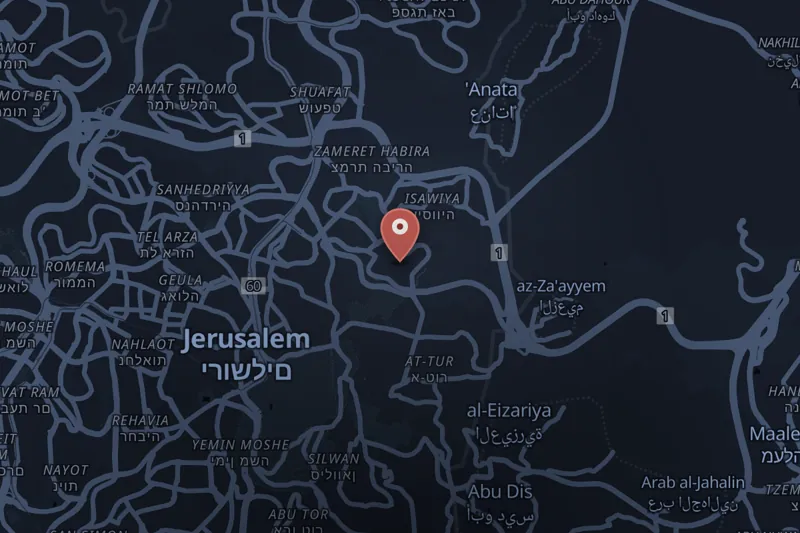
Rehavam Ze'evi, Israel's tourism minister, was shot and killed shortly before 7:00 am on 17 October 2001 at the Hyatt Regency Hotel (later the Dan Jerusalem Hotel) in Jerusalem. He was staying in room 816 without bodyguards, having declined protection despite threats. According to the account of events, an assassin identified as Hamdi Quran confirmed Ze'evi's presence in the dining room that morning, after which two assailants retrieved silenced pistols from a car in the hotel's parking garage and waited near a fire escape close to Ze'evi's room. When Ze'evi stepped out of the elevator on the 8th floor, Quran called out to him and, when Ze'evi turned, shot him in the head three times at close range. Two bullets struck his head; one caused fatal brain damage. Ze'evi was found bleeding in the corridor by his wife, Yael Ze'evi, and his driver, Adi Maman, minutes later. He was taken to Hadassah Medical Center in critical condition and was pronounced dead at 10:00 am.
The Popular Front for the Liberation of Palestine (PFLP) claimed responsibility, stating the attack was retaliation for Israel's assassination of PFLP leader Abu Ali Mustafa in August 2001. A PFLP official was quoted criticizing Ze'evi's right-wing positions, including his advocacy for the deportation of Palestinians.
Ze'evi was the first Israeli minister assassinated since Yitzhak Rabin and reportedly the most senior Israeli figure killed by Palestinian militants during the Arab–Israeli conflict. His funeral, held the following day at Mount Herzl cemetery in Jerusalem, drew thousands of mourners and eulogies from President Moshe Katsav and Prime Minister Ariel Sharon, who held Palestinian Authority leader Yasser Arafat personally responsible. The Palestinian Authority condemned the killing while calling on Israel to end its policy of targeted killings; Arafat said he would seek the assassins' arrest. UK Prime Minister Tony Blair and US President George W. Bush also condemned the attack.
The assassins fled to Arafat's Mukataa compound in Ramallah. During Operation Defensive Shield in 2002, Israeli forces besieged the compound, leading to the "Ramallah Agreement," under which the assassins were transferred to a Jericho prison guarded by British and American personnel. After Hamas won the 2006 Palestinian legislative elections and signaled intent to release the men, the foreign guards withdrew in March 2006. Israel then launched Operation Bringing Home the Goods, besieging the Jericho prison for roughly ten and a half hours before the four men—identified as Ahed Abu Gholma, Majdi Rahima Rimawi, Hamdi Quran, and Bassel al-Asmar—surrendered. Israel also captured Ahmed Saadat and Fuad Shubaki during the raid.
All four men were tried and convicted in Israel, receiving lengthy sentences: Quran 125 years, Asmar 45 years, Rimawi life plus 80 years, and Abu Gholma 30 years. Ahmed Saadat was separately sentenced in December 2008 to 30 years for leading the PFLP. In 2013, the French city of Bezons named Rimawi an "honorary resident," a decision criticized by Israeli officials and Jewish organizational leaders.


 SOLVEDListen