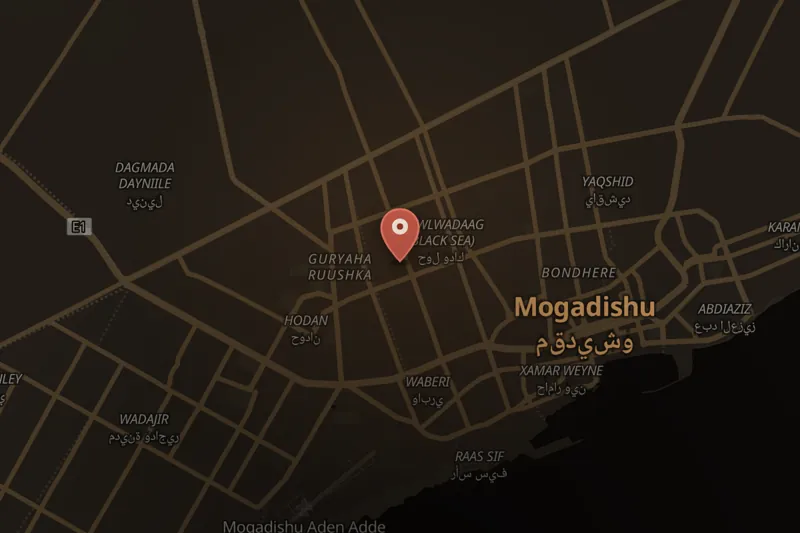
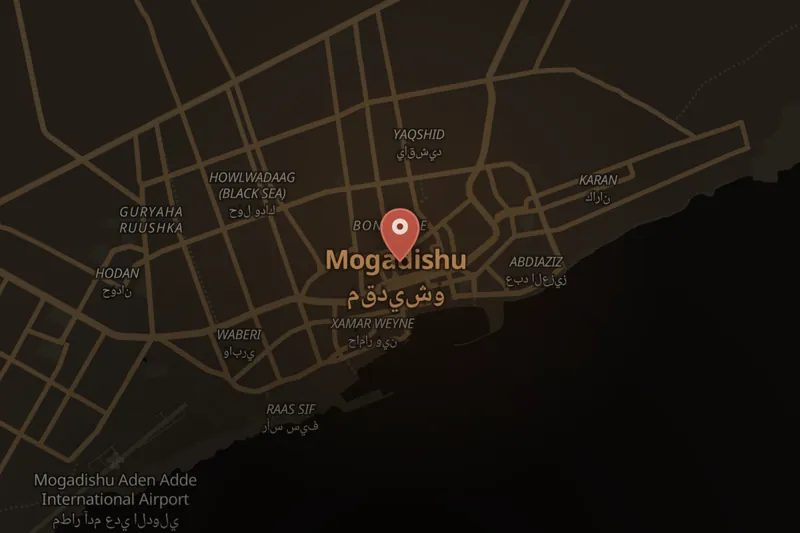
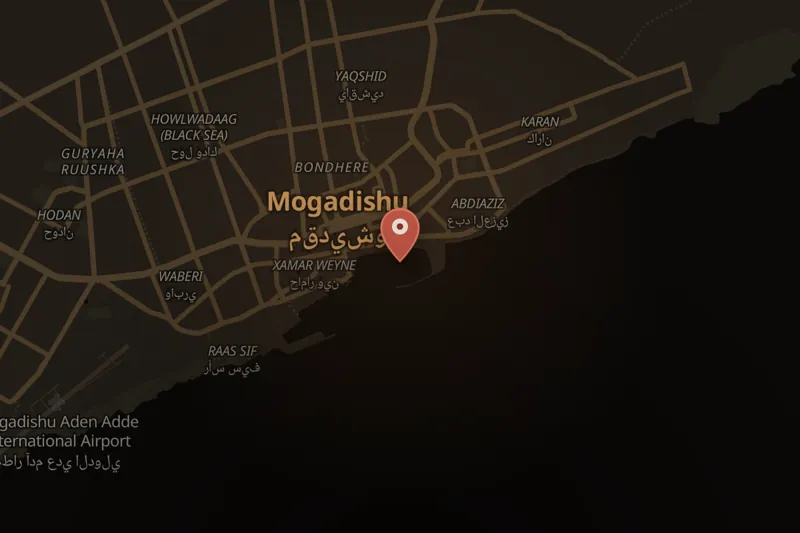
On 14 October 2017, two truck bombings occurred in Mogadishu, the capital of Somalia, killing at least 587 people and injuring 316 others. Nearly all casualties resulted from one truck that detonated in the Hodan District after the driver, attempting to flee security officials, crashed through a barrier near the Safari Hotel. The blast was intensified by a nearby fuel tanker, which caused a massive fireball. The Safari Hotel collapsed, trapping victims under rubble, and the nearby Qatari embassy was severely damaged. A second, smaller blast occurred roughly 30 minutes later and less than 300 metres away in the Medina district, killing two additional people. A third explosives-laden vehicle, a Toyota Noah minivan, was intercepted by police and later detonated without causing casualties.
According to officials, the intended target of the attack was a heavily guarded compound near Mogadishu airport housing the United Nations, most foreign embassies, and the headquarters of the 22,000-strong African Union Mission in Somalia (AMISOM). The plan reportedly involved using the minivan to breach the Medina Gate entrance so the larger truck could enter and detonate inside the compound. The first truck had been stopped at checkpoints en route to Mogadishu but was allowed to proceed after a local businessman and tribal leader vouched for it, prompting an investigation into possible complicity by security personnel.
Victims included senior civil servants, five paramedic volunteers, a journalist, an American-Somali man, a medical student, and 15 children. Because of intense heat at the scene and the rapid burial of remains under Islamic custom, the full death toll may never be precisely known. Approximately 160 unidentified bodies were buried by the government the day after the attack, and over a hundred injured were treated at Madina hospital, one of six hospitals that became overcrowded.
No organization formally claimed responsibility, but officials said a key member of the cell, a veteran militant previously involved in attacks in Mogadishu, told investigators that al-Shabaab was responsible. Investigators suggested the attack may have been retaliation for a U.S.-led raid on the militant's hometown earlier in August 2017. In February 2018, a military court in Mogadishu sentenced two people to death for their roles in the bombings: Hassan Aden Isak, convicted of driving a truck intended for a second bombing, and Ibrahim Hassan Absuge, sentenced in absentia and also accused of masterminding a November 2016 Mogadishu car bombing. Hassan Aden Isak was executed by firing squad on 14 October 2018, the first anniversary of the bombings.
Somali president Mohamed Abdullahi Mohamed declared three days of national mourning and donated blood along with hundreds of citizens. The U.S. State Department condemned the attack as "senseless and cowardly" and expressed support for Somalia against extremism.


 SOLVEDListen