
 SOLVEDListen
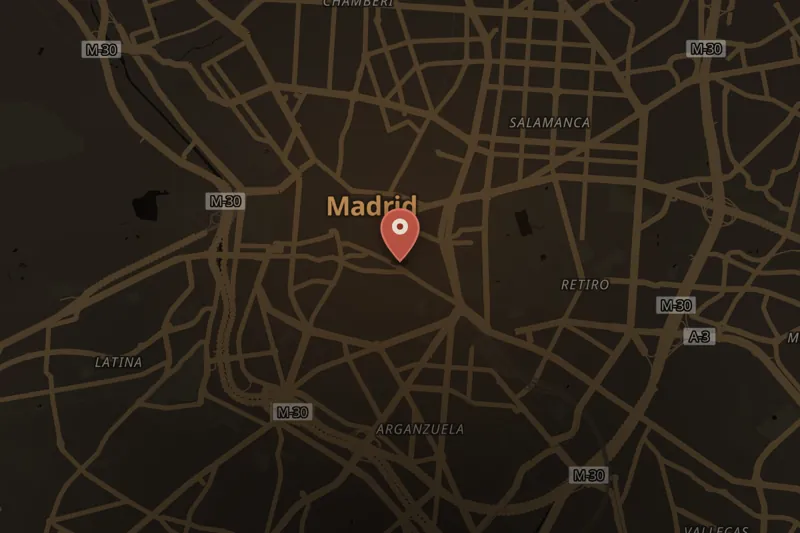
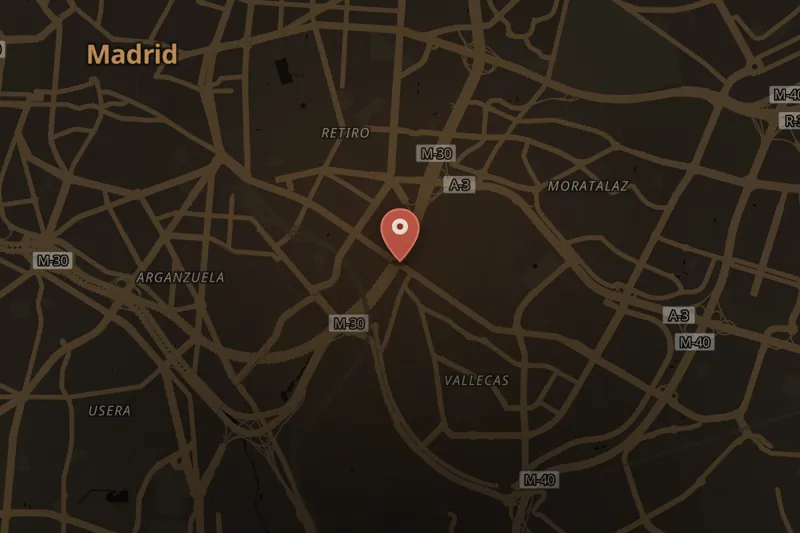
Puente de Vallecas, Madrid · 1990s
1995 Vallecas bombing
A car bomb planted by the Basque separatist group ETA in Madrid's Puente de Vallecas district killed six people and injured nineteen on 11 December 1995.
Solved case · 1977
Also known as Atocha massacre
 Lola González RuizCredit: Unknown authorCC BY-SA 4.0Source
The short answer
Five labour activists were killed and four gravely wounded when right-wing gunmen attacked a workers' legal office on Atocha Street in Madrid on 24 January 1977; the main perpetrators were later convicted.
No one's coverage is attached to this file yet.
Know great coverage of this case?
A documentary, a podcast episode, a careful long-form video. Suggest it and an editor will review it before it appears here.
Suggest coverage for 1977 Atocha massacreOn the evening of 24 January 1977, three men entered a legal aid office for workers run by the Communist Party of Spain (PCE) at 55 Atocha Street in central Madrid and opened fire on those present. Five people were killed: labour lawyers Enrique Valdelvira Ibáñez, Luis Javier Benavides Orgaz and Francisco Javier Sauquillo; law student Serafín Holgado de Antonio; and administrative assistant Ángel Rodríguez Leal. Four others — Miguel Sarabia Gil, Alejandro Ruiz-Huerta Carbonell, Luis Ramos Pardo and Dolores González Ruiz — were gravely wounded but survived. González Ruiz, the wife of Sauquillo, was pregnant and lost the child as a result of the attack.
The gunmen's intended target was the general secretary of the workers' federation Comisiones Obreras, who had been leading a transport strike in Madrid but had left the office shortly before. Not finding him, the attackers lined the remaining staff against a wall and shot them. The killings took place amid a far-right reaction to Spain's transition to constitutional democracy following the November 1975 death of dictator Francisco Franco, and were intended to provoke a violent left-wing response that might legitimise a right-wing counter-coup. The attack instead generated mass public revulsion toward the far right.
In the days that followed, calls for work stoppages were heeded by upwards of half a million workers across Spain, and between 50,000 and 100,000 people watched in silence as several victims' coffins were carried for burial in Madrid. The PCE, which had promoted a peaceful response, was legalised on 9 April 1977, ending a ban in place since 1939, and independent unions gained legal recognition that spring. These developments are generally credited with helping Spain's first elections in four decades proceed peacefully in June 1977.
On 15 March 1977, José Fernández Cerrá, Carlos García Juliá and Fernando Lerdo de Tejada were arrested as the perpetrators; a Francoist transport-union official was arrested for having ordered the killings, and two others for supplying weapons. All had links to neo-fascist organisations opposed to the democratic transition. At the trial in February 1980, the defendants were sentenced to a combined 464 years, with Fernández Cerrá and García Juliá each receiving 193 years. The terms were later sharply reduced. Fernández Cerrá was released in 1992; Lerdo de Tejada fled before trial and the statute of limitations for his case expired in 1997; García Juliá absconded while on parole and, after more than two decades at large, was rearrested in Brazil in 2018 and extradited to Spain in February 2020.
Doubts remain over whether everyone responsible was brought to justice; a lawyer who worked on the original prosecution later stated that the masterminds were never identified. The events are widely regarded as a turning point in Spain's return to democracy, and the victims are memorialised annually and through 25 streets and squares dedicated to them across Madrid.
Death of dictator Francisco Franco; Spain's transition to constitutional democracy begins.
Three gunmen attack a PCE workers' legal office at 55 Atocha Street, Madrid, killing five people and gravely wounding four.
José Fernández Cerrá, Carlos García Juliá and Fernando Lerdo de Tejada are arrested as perpetrators; others are arrested for ordering the attack and supplying weapons.
The Communist Party of Spain (PCE) is legalised, ending a ban in place since 1939.
Spain holds its first democratic elections in four decades.
At trial, the defendants are sentenced to a combined total of 464 years in prison.
Francisco Albadalejo Corredera, convicted of ordering the attack, dies in prison.
José Fernández Cerrá is released after 15 years in prison.
The statute of limitations expires in the case of Fernando Lerdo de Tejada, who had fled before trial.
Carlos García Juliá, long a fugitive, is rearrested in Brazil.
Carlos García Juliá is extradited to Spain to serve the remainder of his sentence.
Victims first. Every legal label is set from public records and court outcomes, not from the prose.
Gravely wounded in the attack but survived.[3]
Administrative assistant; the first person killed in the attack.[3]
Survivor gravely wounded in the attack; wife of Francisco Javier Sauquillo, she was pregnant and lost the child as a result.[3]
Labour lawyer killed in the attack.[3]
Labour lawyer who died shortly after being taken to hospital.[3]
Labour lawyer killed in the attack.[3]
Gravely wounded in the attack but survived.[3]
Gravely wounded in the attack but survived.[3]
Law student who died shortly after being taken to hospital.[3]
Convicted as one of the two main perpetrators; sentenced to 193 years; absconded while on parole, rearrested in Brazil in 2018 and extradited to Spain in 2020.[3]
Provincial secretary of the Francoist transport labour union; convicted of ordering the attack and sentenced to 63 years; died in prison in 1985.[3]
Convicted as an accomplice; sentenced to one year.[3]
Convicted as one of the two main perpetrators; sentenced to 193 years and released in 1992 after 15 years.[3]
Convicted of supplying weapons; sentenced to four years.[3]
Charged with acting as lookout in the 1977 Atocha massacre by Spanish investigating authorities in March 1977; he fled the country in 1979 before trial and was never tried, as the statute of limitations on the charge expired in 1997.[3]
From the record
Coverage is not a source: every fact in this file rests on the records below.
Are you family of someone named in this file? Corrections and removal requests from victims’ families are prioritized.
SOLVEDListenPuente de Vallecas, Madrid · 1990s
A car bomb planted by the Basque separatist group ETA in Madrid's Puente de Vallecas district killed six people and injured nineteen on 11 December 1995.
 SOLVEDListen
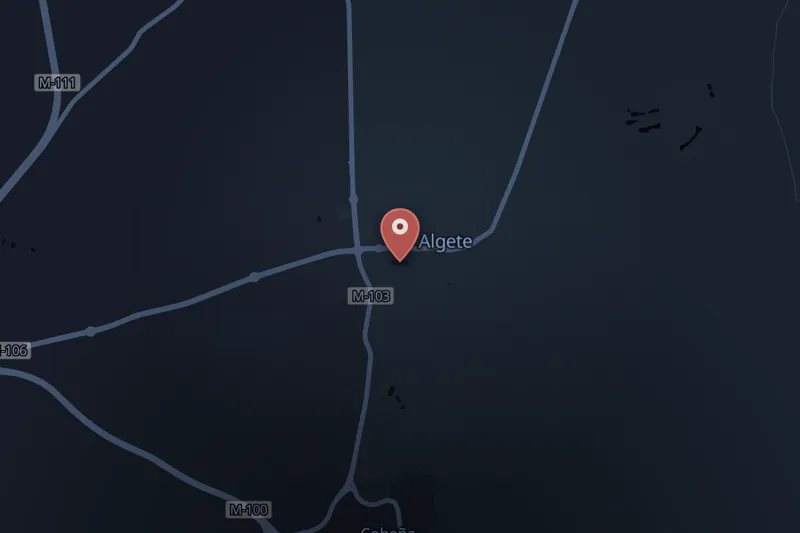
Algete, Madrid, Spain · 2010s
Eva Blanco Puig, a 16-year-old high school student, was abducted and murdered while walking home in Algete, Madrid on the night of 19–20 April 1997. The case remained unsolved for over 18 years until genealogical DNA research identified Ahmed Chelh Gerj, who was arrested in France in 2015 and died by suicide in a Spanish prison in 2016 before trial concluded.
 OVERTURNEDListen
Tresjuncos, Cuenca, Spain · 1910s
In 1910, a shepherd named José María Grimaldos disappeared from the Spanish village of Tresjuncos; two men were tortured into confessing to his murder and served over 12 years in prison before Grimaldos reappeared alive in 1926, leading Spain's Supreme Court to void their convictions.
 Credit: Santa Barbara County Sheriff’s OfficePublic domainSourceSOLVEDListen
Sacramento, California (crimes spanned multiple California counties) · 1970s
Across California between 1974 and 1986, at least 13 people were murdered in a crime series that also included more than 50 rapes, burglaries, kidnappings, and assaults. Forensic genetic genealogy identified former police officer Joseph James DeAngelo in 2018; he pleaded guilty in 2020 to murder and kidnapping charges.
 Credit: United States Air ForcePublic domainSourceSOLVEDListen
Wichita and Park City, Kansas · 1974
Dennis Rader, a Wichita-area man who worked as an ADT security installer and later a Park City compliance officer, murdered at least ten people in Wichita and Park City, Kansas, between 1974 and 1991, taunting police and media with letters as "BTK." He was identified through DNA and computer metadata and arrested in February 2005, later pleading guilty to ten counts of first-degree murder.
 Credit: Unknown authorPublic domainSourceSOLVEDListen
Hollywood, Florida (abduction site: Sears, Hollywood Mall) · 1981
Adam Walsh, a six-year-old boy, was abducted from a Hollywood, Florida department store in July 1981 and found killed weeks later; police named drifter Ottis Toole as the perpetrator and closed the case in 2008, though he died in prison in 1996 without ever being tried or convicted for it.