

 SOLVEDListen
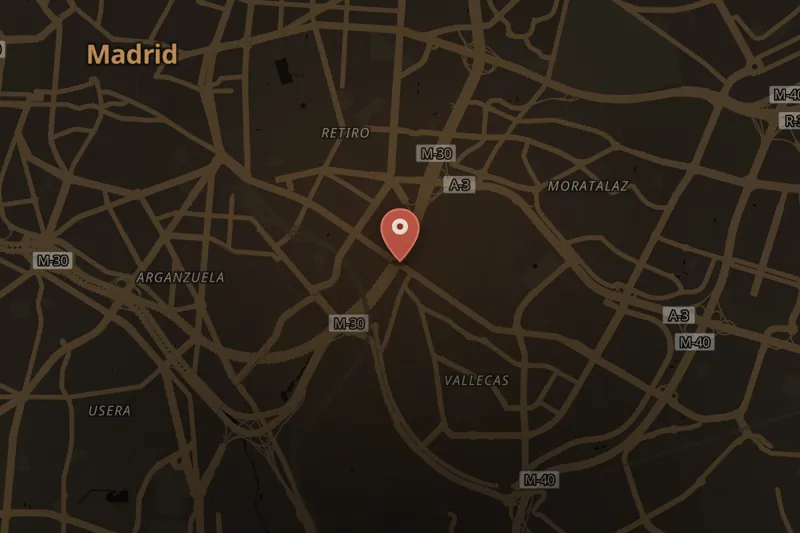
Puente de Vallecas, Madrid · 1990s
1995 Vallecas bombing
A car bomb planted by the Basque separatist group ETA in Madrid's Puente de Vallecas district killed six people and injured nineteen on 11 December 1995.
Overturned conviction · 1910
Also known as El crimen de Cuenca
The short answer
In 1910, a shepherd named José María Grimaldos disappeared from the Spanish village of Tresjuncos; two men were tortured into confessing to his murder and served over 12 years in prison before Grimaldos reappeared alive in 1926, leading Spain's Supreme Court to void their convictions.
No one's coverage is attached to this file yet.
Know great coverage of this case?
A documentary, a podcast episode, a careful long-form video. Suggest it and an editor will review it before it appears here.
Suggest coverage for Crime of CuencaIn August 1910, José María Grimaldos López, a 28-year-old shepherd from Tresjuncos in Spain's Cuenca province who was known locally as "El Cepa," disappeared after selling a number of sheep he owned. He worked on the farm of Francisco Antonio Ruiz, where he was frequently mocked by farm manager León Sánchez and security guard Gregorio Valero. Unknown to the village at the time, Grimaldos had traveled to La Celadilla, a shallow lagoon about four kilometres away in the municipality of El Pedernoso where bathers covered themselves in mud believed to have curative properties. When weeks passed without word from him, rumors spread that he had been murdered for the money from the sheep sale. His family filed a complaint with the court of Belmonte accusing Sánchez and Valero, and the two men were arrested and tried. In September 1911 the court dismissed the case for lack of evidence and released them.
In 1913, at the family's insistence, a new judge, Emilio Isasa Echenique, reopened the case, and Sánchez and Valero were arrested again. The Civil Guard tortured and mistreated the two men to extract confessions and to learn what had allegedly become of Grimaldos's body. On November 11, 1913, a judge in Osa de la Vega, acting on the Belmonte court's order, certified that Grimaldos had died on August 21, 1910, murdered by Valero and Sánchez — the record itself noted in the margin that "the body could not be identified because it has not been found."
After more than four years in pretrial detention, the two men went to trial in 1918 on a case file described as contradictory and unclear. A twelve-member jury deliberated for thirty minutes before finding them responsible for Grimaldos's death, and the Provincial Court sentenced each to 18 years in prison, sparing them the era's death penalty by garrote. Valero was imprisoned at San Miguel de los Reyes in Valencia and Sánchez at the prison in Cartagena. On July 4, 1925, both men were released under two pardon decrees after serving 12 years and two months.
The case collapsed in February 1926, when the parish priest of Tresjuncos received a request from a priest in the town of Mira, about 113 kilometres away, for Grimaldos's baptism certificate ahead of his upcoming marriage. Grimaldos, alive and unaware of the scandal his disappearance had caused, traveled back to Tresjuncos, where the judge of Belmonte ordered his arrest and the press reported the story nationally. Spain's Minister of Grace and Justice ordered the Supreme Court prosecutor to seek revision of the conviction; the resulting order found "reasonable grounds to believe" that Valero and Sánchez's confessions, the central evidence against them, had been extracted "under exceptional continuous violence." The Supreme Court subsequently voided the 1918 ruling, formally established the two men's innocence, and nullified Grimaldos's death certificate.
The state was ordered to compensate Sánchez and Valero, and in 1935 each was granted a lifetime pension of 3,000 Spanish pesetas per year along with five years of retroactive payments. A separate trial was held to determine responsibility for the miscarriage of justice, and the two men relocated to Madrid, where they were given jobs as security guards for the city hall. The case became one of Spain's best-known examples of a coerced confession and wrongful conviction, and has since been retold in a 1939 novel and a 1979 feature film, among other works.
José María Grimaldos López, a 28-year-old shepherd from Tresjuncos known as "El Cepa," sold a number of sheep he owned and disappeared afterward.
The court of Belmonte dismissed the case against farm manager León Sánchez and security guard Gregorio Valero, whom Grimaldos's family had accused of murdering him, citing lack of evidence, and released them.
At the Grimaldos family's request the case was reopened under new judge Emilio Isasa Echenique; Sánchez and Valero were arrested again, and the Civil Guard tortured and mistreated the two men to extract confessions.
A judge in Osa de la Vega, acting on the Belmonte court's order, certified that Grimaldos had died on August 21, 1910, murdered by Gregorio Valero and León Sánchez, though the certifying record noted his body had never been found.
A twelve-member jury found Sánchez and Valero responsible for Grimaldos's death after a trial on a contradictory case file, and the Provincial Court sentenced each to 18 years in prison.
Sánchez and Valero were released from prison under two pardon decrees after serving 12 years and two months of their sentences.
The parish priest of Tresjuncos received a request from a priest in Mira for Grimaldos's baptism certificate ahead of his marriage, revealing that Grimaldos was alive.
Spain granted Sánchez and Valero a lifetime pension of 3,000 pesetas per year, including five years of retroactive payments, as compensation for their wrongful convictions.
Victims first. Every legal label is set from public records and court outcomes, not from the prose.
Shepherd from Tresjuncos whose 1910 disappearance triggered the prosecution of León Sánchez and Gregorio Valero; he was alive throughout and reappeared in Tresjuncos in 1926.[3]
Security guard convicted in 1918, based on a confession the Civil Guard extracted under torture, of murdering José María Grimaldos; the Supreme Court voided the conviction and established his innocence after Grimaldos reappeared alive in 1926.[3]
Farm manager convicted in 1918, based on a confession the Civil Guard extracted under torture, of murdering José María Grimaldos; the Supreme Court voided the conviction and established his innocence after Grimaldos reappeared alive in 1926.[3]
Judge of Belmonte whose arrival in town in 1913 led the Grimaldos family to reopen the case, resulting in the second arrest of Sánchez and Valero.[3]
Coverage is not a source: every fact in this file rests on the records below.
Are you family of someone named in this file? Corrections and removal requests from victims’ families are prioritized.
SOLVEDListenPuente de Vallecas, Madrid · 1990s
A car bomb planted by the Basque separatist group ETA in Madrid's Puente de Vallecas district killed six people and injured nineteen on 11 December 1995.
 SOLVEDListen
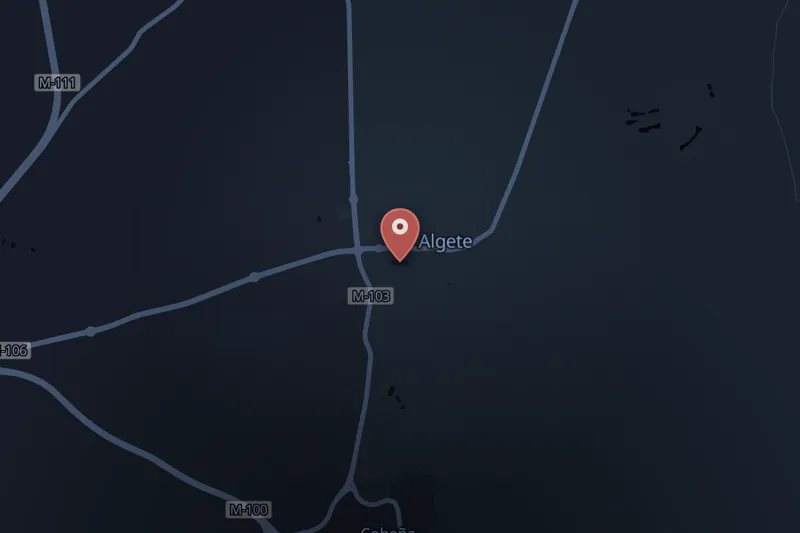
Algete, Madrid, Spain · 2010s
Eva Blanco Puig, a 16-year-old high school student, was abducted and murdered while walking home in Algete, Madrid on the night of 19–20 April 1997. The case remained unsolved for over 18 years until genealogical DNA research identified Ahmed Chelh Gerj, who was arrested in France in 2015 and died by suicide in a Spanish prison in 2016 before trial concluded.
 Credit: Unknown authorCC BY-SA 4.0SourceSOLVEDListen
55 Atocha Street, central Madrid · 1970s
Five labour activists were killed and four gravely wounded when right-wing gunmen attacked a workers' legal office on Atocha Street in Madrid on 24 January 1977; the main perpetrators were later convicted.
 Credit: derivative work: Escarlati (talk) [[:Image:Basilica_del_Pilar_ZaragozaAragon(Spain).jpg|B…CC BY-SA 3.0SourceSOLVEDListen
Guardia Civil barracks, Avenida de Cataluna, Zaragoza · 1987
A 1987 ETA car bombing at a Guardia Civil barracks in Zaragoza, Spain, killed 11 people, including five children, and injured 88.
 Credit: National Human Rights Council of the Kingdom of MoroccoPublic domainSourceUNSOLVEDListen
Melilla border fence, near Nador, Morocco/Spain · 2022
On 24 June 2022, at least 23 migrants and asylum seekers died in a crowd crush at the Melilla border fence during a confrontation between a group of roughly 2,000 migrants and Moroccan and Spanish security forces.
 Credit: GoldorakCC BY-SA 4.0SourceSOLVEDListen
Road near Ispaster, Biscay, Basque Country, Spain · 1980
An ETA gun and grenade ambush on a Civil Guard convoy near Ispaster, Spain, on 1 February 1980 killed six Civil Guards and two of the attackers.