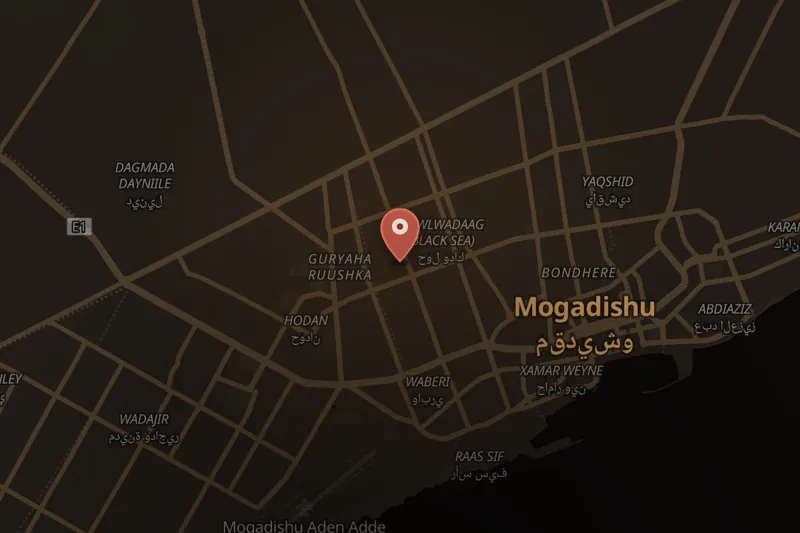
On 13 June 1993, a unit of the Pakistani contingent serving with UNOSOM II opened fire with a belt-fed machine gun on a crowd of 3,000 to 4,000 Somalis marching in Mogadishu to protest UN military operations in the city. Witnesses, including foreign journalists, reported that troops fired without warning from a sandbagged rooftop position more than a block from the crowd, discharging hundreds of rounds. At least 20 people were killed and more than 50 were wounded. Among the dead were a woman reportedly leading the march, who was shot in the leg and then shot again as she lay wounded, a 10-year-old struck in the head, and a 2-year-old boy, Hussein Ali Ibrahim, killed by gunfire while half a mile from the crowd. The New York Times reported that at least five people were killed while hiding behind vehicles.
The shooting followed a week of escalating violence. On 5 June 1993, 25 Pakistani peacekeepers were killed in clashes with Somali militia and citizens near Radio Mogadishu, described as the deadliest single loss of UN forces since the Congo in 1961. The following day, Pakistani forces fired on a minibus of civilians, reportedly killing four. On 12 June, Pakistani troops shot into a crowd of protestors on Afgoy road, killing a man and a woman after a demonstrator threw stones and a child made a gesture toward the soldiers. Academic Alex de Waal criticized UNOSOM command for failing to withdraw the Pakistani unit after the 5 June casualties and for not investigating the 12 June killings.
Commander of Pakistani forces Brig. Gen. Ikram ul-Hasan stated that Somali gunmen had fired on his troops from within the crowd and suggested women and children may have been used as human shields; he said warning shots had been fired first. UN Secretary-General's special representative Jonathan Howe publicly defended the Pakistani troops' actions in a BBC interview, repeating the claim of human shields and warning shots. According to the Washington Post, this account was "disputed by virtually all witnesses to the incident." Reporters at the scene, including Paul Watson of the Toronto Star, said they did not hear shots fired before the Pakistani unit opened fire.
In the aftermath, journalists Scott Peterson and Mark Huband helped transport dead and wounded to Banadir Hospital, where a young man and a pregnant woman were reported to have died after being shot in the chest. Doctors Without Borders issued a press release the next day denouncing the use of force as excessive, with its president calling the incident "monstrous." US Ambassador to the UN Madeleine Albright defended the Pakistani troops' actions as self-defense. Days later, President Bill Clinton publicly criticized Somali militia leader Mohamed Farrah Aidid for the killing of UN soldiers but did not condemn the killing of Somali civilians. The events intensified anti-UN sentiment in Somalia and increased public support for the Somali National Alliance in its opposition to UNOSOM II.

 UNSOLVEDListen