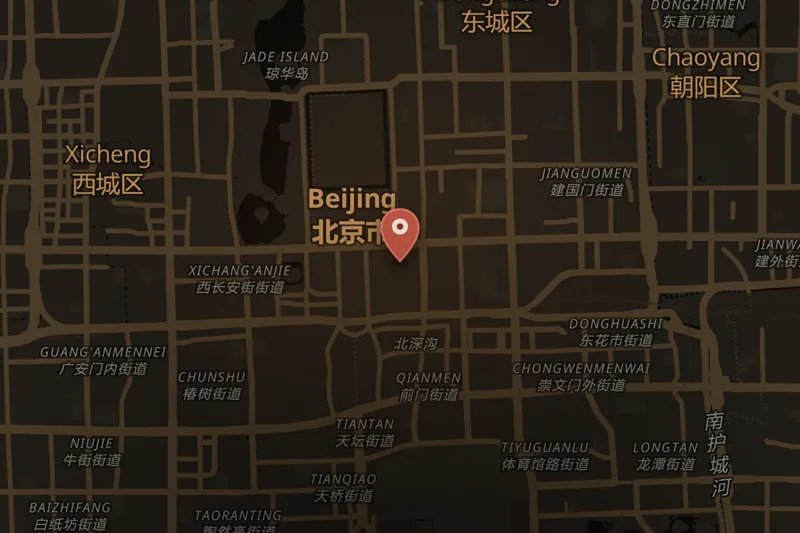
On 28 October 2013, a 4×4 vehicle crashed into a crowd of pedestrians near the portrait of Mao Zedong at Tiananmen Square in Beijing before bursting into flames. All three occupants of the vehicle were killed, along with two bystanders—a Filipino woman and a male Chinese citizen from Guangdong. Thirty-eight other people were injured. Witnesses reported that the driver had been honking the horn at pedestrians before the crash.
Police identified the driver as Usmen Hasan, and the two other occupants of the vehicle as his wife, Gulkiz Gini, and his mother, Kuwanhan Reyim. Chinese authorities described the incident as a "major incident" and characterized it as the first terrorist attack in Beijing's recent history.
In the days following the attack, Chinese police issued a notice to Beijing hotels seeking information about two individuals from China's Xinjiang Uyghur Autonomous Region, describing a vehicle and four Xinjiang license plates. Hotels were instructed to report all guests who had registered since 1 October, along with the vehicles they had driven, and to watch for "suspicious" guests. Police subsequently arrested five people, all Uyghurs from Xinjiang, who said they knew Hasan. One suspect was reported to be from the town of Lukun in Shanshan County, the site of a June 2013 attack in which 30 people were killed. Three of the arrested individuals—Huseyin Guxur, Yusup Wherniyas and Yusup Ehmet—were convicted of masterminding the attack and were executed in August 2014.
Top Chinese security official Meng Jianzhu stated that the East Turkestan Islamic Movement (ETIM) was responsible for the attack, though Uyghur exile groups and some Western observers disputed this claim. On 24 November 2013, the Turkistan Islamic Party—which has since been absorbed by ETIM—declared that it was responsible for the attack.
Reaction to the incident included the brief detention of a BBC camera crew by police after they filmed footage of the attack. Chinese state media coverage largely downplayed the incident, publishing only brief reports; English-language media made associations to Xinjiang that were not made in Chinese-language publications. Chinese internet users nonetheless reposted and circulated photographs of the incident. Six days after the attack, General Peng Yong, commander of the Xinjiang Military District, was removed from the Regional Party Standing Committee, the Communist Party's governing body in Xinjiang, and replaced by Liu Lei, the political commissar of the Xinjiang Military District. Then–U.S. State Department spokesperson Jen Psaki said the United States supported China's investigation into the matter but declined to characterize it as a terrorist attack, while reiterating American support for Uyghur human rights.


 COLDListen


