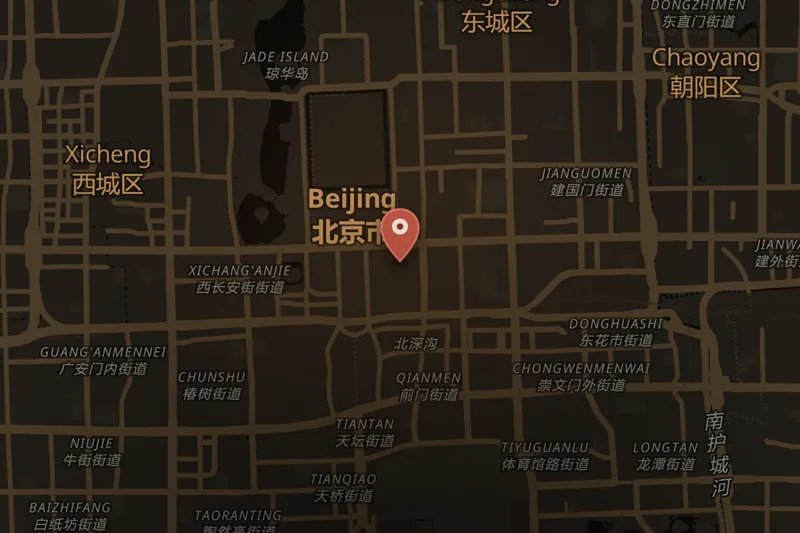
On 23 January 2001, the eve of Chinese New Year, five people set themselves on fire in Tiananmen Square in Beijing after pouring gasoline over their clothes. A CNN film crew present for a routine check on possible Falun Gong activity witnessed and began filming the events before being intercepted and detained by military police, who confiscated their equipment. Police extinguished the flames; one man was taken away by police van, and the other four were later collected by ambulance roughly 25 minutes later. Chinese state media, via Xinhua, named seven individuals from Henan province as involved, describing five as "avid practitioners" of Falun Gong who had traveled to Beijing to immolate themselves. Liu Chunling reportedly died at the scene, and her 12-year-old daughter, Liu Siying, died on 17 March 2001 in hospital after treatment for severe burns.
The Chinese government used the incident as a central justification for its ongoing persecution of Falun Gong, which it had banned in 1999 following a crackdown ordered after mass practitioner protests at Zhongnanhai. State media conducted an extensive propaganda campaign, including television footage, posters, and school programs, which analysts and Time magazine say significantly eroded prior public sympathy for the group. Human Rights Watch described the incident as one of the most difficult stories for Beijing-based reporters to cover due to a lack of independent access; international journalists and family members were barred from contacting survivors, with only state media outlets like CCTV and Xinhua permitted access until foreign journalists were allowed supervised interviews in April 2002.
The identities and Falun Gong affiliations of victims were challenged by Washington Post reporter Philip Pan, who found that residents of Liu Chunling's hometown said no one had ever seen her practice Falun Gong, despite state media claims of her devotion to the practice. Falun Gong's Falun Dafa Information Center denied that genuine practitioners were involved, alleging that the event was staged with actors and pointing to inconsistencies in official footage, including a claim that Liu Chunling was struck and killed by a person in a military coat rather than dying from burns. Observers, including historian David Ownby, scholar James R. Lewis, and Sinologist Barend ter Haar, offered a range of competing interpretations — from the possibility of a genuine but unauthorized protest by "new or unschooled" practitioners, to the hypothesis that the event was staged by authorities.
Five participants were tried and sentenced in mid-2001: Liu Yunfang received a life sentence (later reduced to 19 years), Wang Jindong received 15 years (later reduced), and two others who reportedly assisted received prison terms. Liu Baorong avoided punishment due to cooperation with authorities. Following the incident, Chinese authorities intensified the campaign against Falun Gong, and according to Freedom House and The Washington Post, incidents of imprisonment, torture, and deaths of practitioners in custody increased significantly in the following year. In 2014, two of the injured women underwent reconstructive surgery in the United States funded by a Chinese businessman, and publicly denounced Falun Gong at a related event in New York.

 SOLVEDListen


