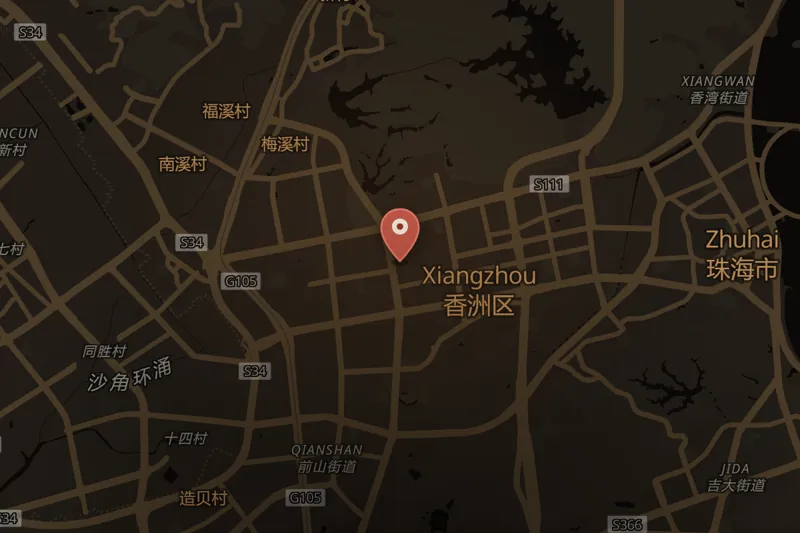
On the evening of 11 November 2024, at about 19:48 local time, a man drove a Beijing BJ40 SUV at 70–80 km/h into a crowd of roughly 300 people exercising at the running track of the Zhuhai Sports Center in Zhuhai, Guangdong, China. Witnesses said the driver looped the vehicle around the track, striking many of the victims, most of whom were middle-aged or elderly people participating in local exercise groups. The attack occurred the night before Zhuhai was scheduled to host the China International Aviation & Aerospace Exhibition (Zhuhai Airshow), a major civil and military event that had already prompted heightened security in the city.
Zhuhai Police initially reported 35 deaths and 43 injuries on 12 November; the toll was later revised in December to 38 deaths and 48 injuries. China's Ministry of Foreign Affairs said no foreign nationals were among the victims.
The suspect, identified by police as 62-year-old Fan Weiqiu, was arrested at the scene while attempting to flee. He was found with self-inflicted wounds to his neck and chest and was taken to a hospital in a coma. Police and early reporting indicated the attack may have stemmed from Fan's anger over the financial settlement of a recent divorce; journalists also noted broader discussion linking such attacks to economic pressures in China. The BJ40 used in the attack had been purchased on loan about a week before the attack and collected by Fan the day prior. On 27 December 2024, the Zhuhai Intermediate People's Court publicly tried and sentenced Fan Weiqiu to death for endangering public safety through dangerous methods. He was executed on 20 January 2025.
In the aftermath, local residents queued overnight at hospitals and blood banks to donate blood. A makeshift memorial of wreaths and candles formed at the attack site, but authorities moved quickly to remove items and cordon off the area, telling visitors of alleged "hostile foreign forces." Senior CCP and government officials, including General Secretary Xi Jinping and Premier Li Qiang, issued directives calling for treatment of the injured, punishment of the perpetrator, and measures to reduce societal risk.
Chinese authorities restricted reporting and censored footage and search terms related to the attack for roughly the first 24 hours, a delay that drew criticism on Chinese social media. Foreign journalists, including BBC News' Stephen McDonell and a TBS Television reporter, described being obstructed or pressured by individuals believed to be officials while covering the story. A researcher on Chinese censorship said such information control is typical in China following high-casualty incidents, intended to limit panic and deter copycat attacks. The attack is described as the deadliest in China since the 2014 Ürümqi attack.


 Credit: GeographerCC BY-SA 3.0SourceONGOINGListen


