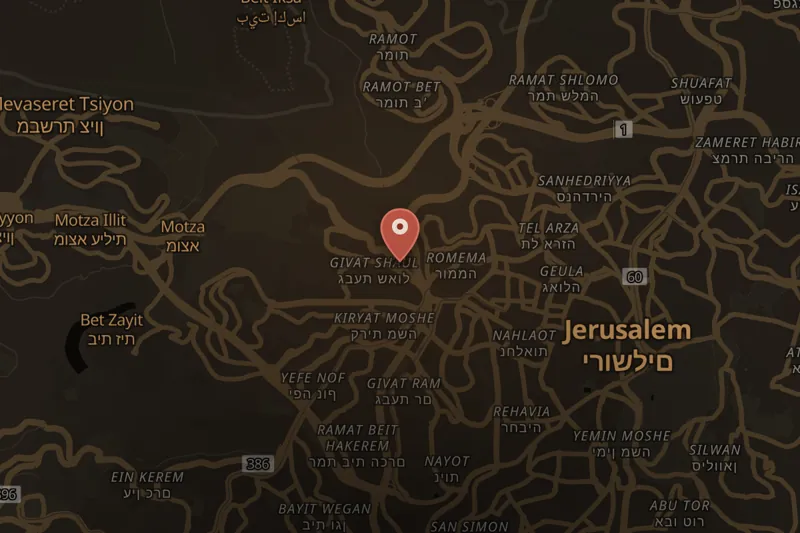
On the morning of 18 November 2014, at approximately 07:00, two Palestinian men from East Jerusalem entered Kehilat Bnei Torah synagogue in the Har Nof neighborhood of Jerusalem during weekday Shacharit morning prayers. Armed with axes, meat cleavers, and a gun, the attackers assaulted congregants as they recited the silent amidah prayer, shouting "Allahu Akbar!" during the assault.
Four dual-national worshippers were killed in the attack: Rabbi Moshe Twersky (59), an American-Israeli and head of the Toras Moshe kollel; Rabbi Kalman Levine (55), an American-Israeli; Rabbi Aryeh Kupinsky (43), an American-Israeli; and Rabbi Avraham Shmuel Goldberg (68), a British-Israeli. Seven other male worshippers were wounded, two seriously. One of the injured, Howard (Chaim) Rotman, remained in a vegetative coma from multiple cleaver wounds and died of his injuries on 23 October 2015, nearly a year after the attack.
Two traffic policemen responded to gunfire and engaged the attackers, followed shortly by a third officer who shot both attackers dead. The first responder, Master Sergeant Zidan Saif, a Druze Israeli police officer from Yanuh-Jat and father of a four-month-old daughter, was critically wounded by a gunshot to the head and later died of his injuries.
The perpetrators were identified as cousins Uday Abu Jamal (22) and Ghassan Muhammad Abu Jamal (32), from the Jabel Mukaber neighborhood of East Jerusalem, who worked at a grocery store near the synagogue. They were relatives of a PFLP affiliate previously sentenced to prison for attempted murder and later released as part of 2013–14 peace talks. The Popular Front for the Liberation of Palestine initially issued statements claiming responsibility, but accounts of these claims were inconsistent, and Israeli authorities stated it appeared the attackers had acted alone. Family members gave differing accounts of any organizational affiliation.
Two relatives of the attackers said the attack was motivated by perceived threats to Al-Aqsa and the death of a Palestinian bus driver, Youssef al-Ramouni, which an Israeli autopsy attributed to suicide but which a Palestinian pathologist later suggested might indicate an "organized killing."
In response, Israeli authorities demolished the attackers' homes, revoked residency status of near relatives, and withheld the attackers' bodies from their families. The synagogue reopened the following day. The attack drew widespread international condemnation, including from the UN Security Council, and was described as the deadliest terror attack in Jerusalem since the 2008 Mercaz HaRav massacre. It occurred amid a broader wave of violence in 2014 sometimes referred to by media as an intifada, though no Palestinian organization formally declared one.


 ONGOINGListen