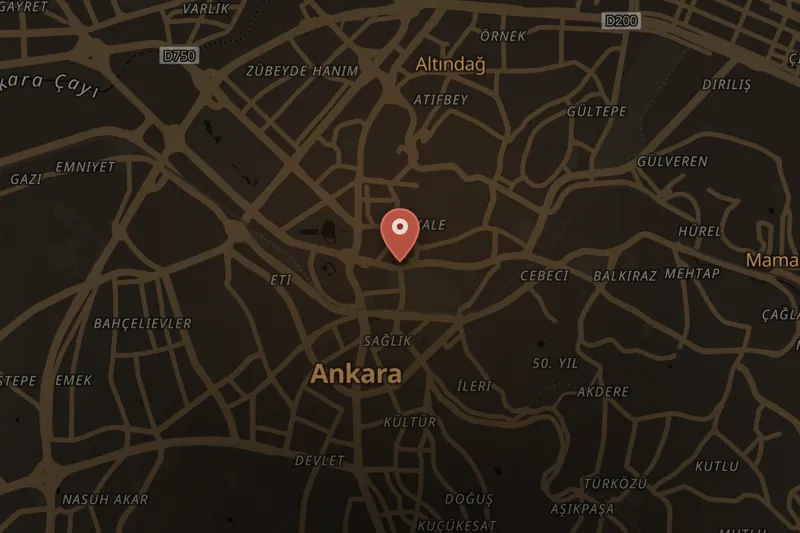
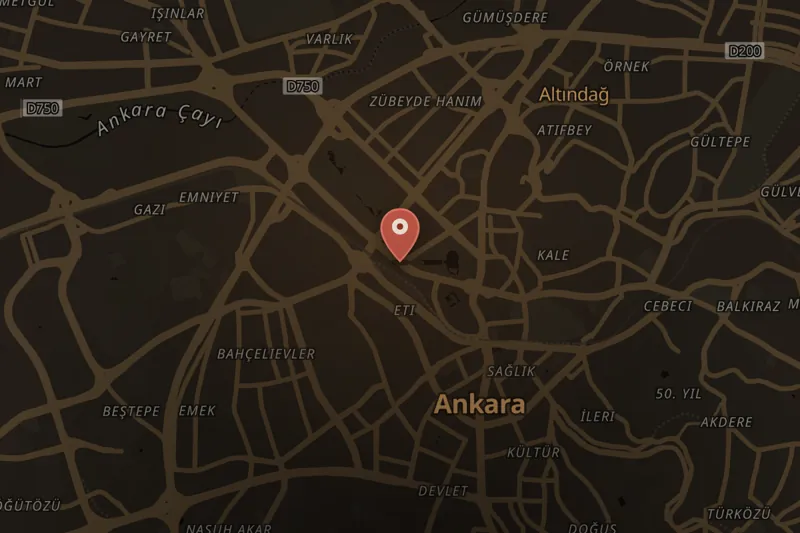
On 10 October 2015, at around 10:04 local time, two bombs exploded seconds apart outside Ankara Central railway station in Turkey's capital. The blasts struck crowds gathered ahead of a "Labour, Peace and Democracy" rally organised by a coalition of trade unions, professional associations and the Peoples' Democratic Party (HDP), held to protest the escalating conflict between the Turkish Armed Forces and the Kurdistan Workers' Party (PKK). With 109 civilians killed and roughly 500 people injured, the attack surpassed the 2013 Reyhanlı bombings to become the deadliest terrorist attack in Turkish history. The precise death toll was reported inconsistently in the days following the attack, with figures from Turkish officials, the Turkish Medical Association, and international media ranging between 97 and 109.
The bombing occurred 21 days before Turkey's scheduled 1 November general election and amid heightened political tension following the collapse of a ceasefire between the Turkish state and the PKK. The Ankara Attorney General opened an investigation into the possibility of twin suicide bombings. No organisation ever claimed responsibility for the attack. On 19 October 2015, one of the two suicide bombers was officially identified as Yunus Emre Alagöz, the younger brother of the man who carried out the July 2015 Suruç bombing; both brothers were suspected to have links to the Islamic State of Iraq and the Levant (ISIL) and an ISIL-affiliated cell known as the Dokumacılar group. A second suspect, identified in media reports as Ömer Deniz Dündar, was also linked to the attack through DNA evidence from the blast site.
In the immediate aftermath, Turkish authorities imposed a temporary press-coverage ban and Twitter and Facebook were subject to nationwide slowing, which the monitoring group Turkey Blocks documented and Human Rights Watch characterised as an "extrajudicial" restriction on independent coverage. Witnesses reported that police used tear gas at the scene and that ambulances faced obstruction. Prime Minister Ahmet Davutoğlu declared three days of national mourning, and political parties across the spectrum, including the governing AK Party, the CHP and the MHP, condemned the bombing, while the HDP directly accused the AK Party government of responsibility. The PKK announced a ceasefire roughly an hour after the bombings to allow the November election to proceed peacefully.
The attack prompted protests in Istanbul, Izmir, Diyarbakır, Batman and other cities, with demonstrators calling for the resignation of government officials, and the Confederation of Public Workers' Unions and allied organisations called two days of industrial action. In August 2018, a Turkish court sentenced nine defendants to life in prison in connection with the bombing, with 36 suspected ISIL members having faced charges during the trial.


 Credit: Yıldız Yazıcıoğlu (VOA)Public domainSourceSOLVEDListen