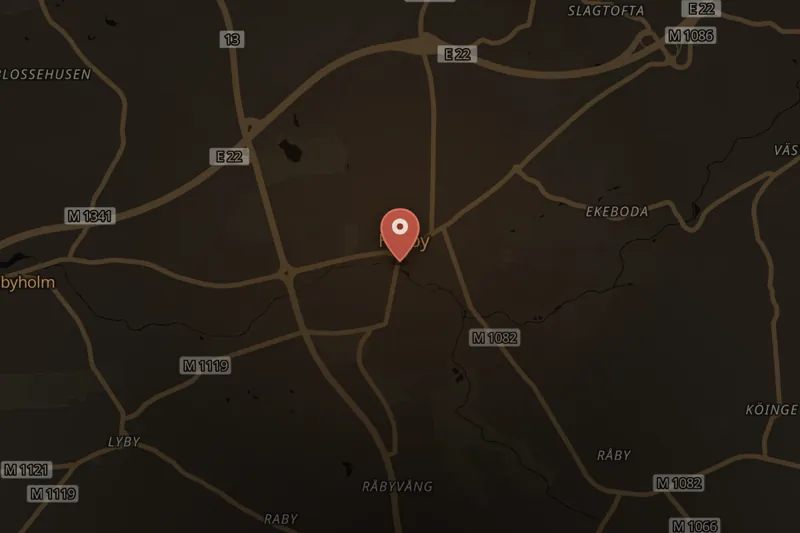
On 14–15 February 2015, a gunman carried out two shootings in Copenhagen, Denmark, hours apart, before police shot and killed him early the following morning. One civilian was killed in each attack — a film director at a free-speech seminar, and a volunteer security guard outside the city's Great Synagogue — and five police officers were wounded across the two scenes.
The first shooting took place at about 15:00 on 14 February at Krudttønden, a cultural centre at Østerfælled Torv in Copenhagen's Østerbro district, during a seminar titled "Art, Blasphemy and Freedom of Expression." The event, organized partly around discussion of the previous month's attack on the French satirical weekly Charlie Hebdo, featured Swedish artist Lars Vilks, known for his cartoons of Muhammad, and was opened by French Ambassador François Zimeray. An armed man tried to enter the building through a side door; at 15:33 he was confronted by 55-year-old Danish film director Finn Nørgaard, whom he shot and killed with a single round from a stolen rifle. The gunman then fired at least 27 more rounds into the building, wounding three police officers, before escaping in a hijacked car that was later found abandoned a few kilometres away.
Just after midnight, in the early hours of 15 February, the gunman approached Copenhagen's Great Synagogue on Krystalgade, where about 80 people were attending a bat mitzvah celebration. He fatally shot Dan Uzan, a 37-year-old volunteer security guard, in the head, and wounded two more police officers before fleeing without entering the building. Uzan, the son of a Danish mother and an Israeli father, was an active member of Copenhagen's Jewish community. He was buried at the city's Jewish Western Cemetery on 18 February, with Prime Minister Helle Thorning-Schmidt among the mourners.
Police tracked the gunman through CCTV footage to an apartment building in the Nørrebro neighborhood that he had visited between the two attacks and that was already under police surveillance. When officers called out to him early on 15 February, he opened fire, and they shot and killed him at around 04:50 near Nørrebro station; a chief police inspector confirmed he was responsible for both shootings. He had been released from prison on 30 January 2015, roughly two weeks earlier, after serving about a year in connection with a 2013 knife attack; prison officials had reported concerns to Danish intelligence the previous September about his erratic and increasingly religious behavior. In the weeks that followed, four men — 26-year-old Bhostan Hussain, 31-year-old Mahmoud Rabea, 23-year-old Ibrahim Abbas and 20-year-old Liban Salesian Elmi — were charged under Denmark's anti-terrorism legislation over their alleged assistance to the gunman between the two attacks, including helping dispose of the rifle used at Krudttønden and providing him with clothing, a backpack and internet access. Their trial began at Copenhagen Municipal Court in March 2016.
Danish police investigated the shootings as an act of terrorism and a possible assassination attempt targeting Vilks, though they said they did not know the gunman's motive. Jens Madsen of the Danish Security and Intelligence Service resigned in May 2015, shortly before the release of a government report on the police response; the report found that it took about four hours after the first shooting for police protection to reach the synagogue, a delay Justice Minister Mette Frederiksen called unsatisfactory. Danish and international leaders condemned the attacks, and the synagogue's rabbi, Jair Melchior, urged Danish Jews not to leave the country out of fear.


 Credit: Hans Jørn Storgaard AndersenCC BY-SA 3.0SourceSOLVEDListen