Skip to content
Casepin

Solved case · 2015

2015 Kuwait Mosque Bombing

Also known as Atentado de Kuwait de 2015 · Imam Ja'far as-Sadiq Mosque bombing

SOLVEDCONVICTEDCHARGED
Updated
Updated Jul 7, 2026
Al-Imam As-Sadiq Mosque Dome and MinerateAl-Imam As-Sadiq Mosque Dome and MinerateCredit: Kuwaity26CC BY-SA 4.0Source

The short answer

2015 Kuwait Mosque Bombing in brief

A suicide bomber killed 27 people and wounded 227 at the Imam Ja'far as-Sadiq Shia mosque in Kuwait City during Friday prayers on 26 June 2015. ISIL claimed responsibility; 29 suspects were tried, 15 convicted, and 7 sentenced to death, with the sole defendant present in Kuwait executed in 2023.

Key facts

Year
2015
Place
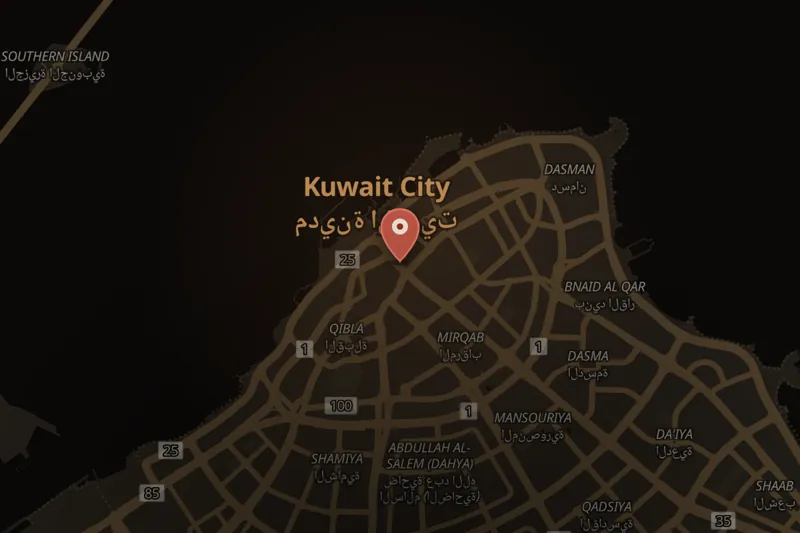
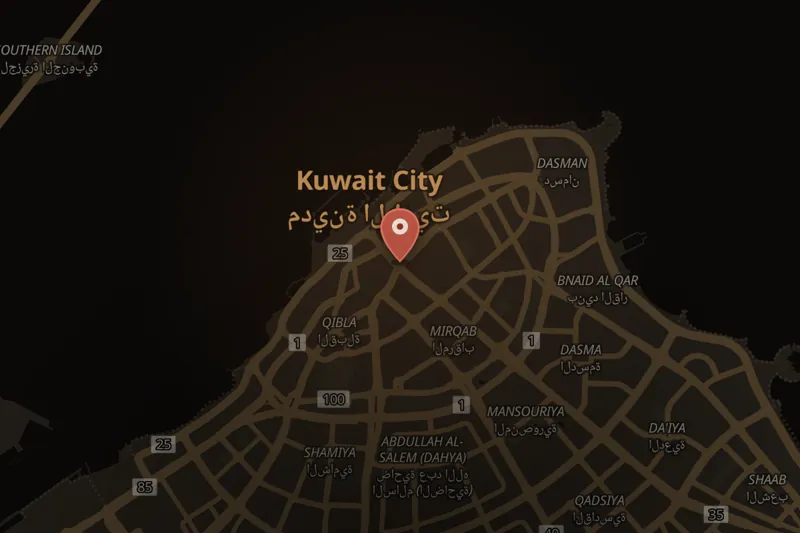
Imam Ja'far as-Sadiq Mosque, Sawabir, Kuwait City
Status
SOLVEDSolved
Outcome
Convicted: Majid az-Zahrani, Fahad Muharib, Adel Eidan and Mohammed az-Zahrani; Charged: Fahd Suleiman al-Qabba

The coverage index

Where to watch & listen

No one's coverage is attached to this file yet.

Know great coverage of this case?

A documentary, a podcast episode, a careful long-form video. Suggest it and an editor will review it before it appears here.

Suggest coverage for 2015 Kuwait Mosque Bombing

The case file

What happened

On 26 June 2015, a suicide bomber detonated an explosive device inside the Imam Ja'far as-Sadiq Mosque, a Shia mosque in the Sawabir district of Kuwait City, during crowded Friday prayers held during Ramadan. More than 2,000 people were praying at the time, and a witness who was a member of parliament described the bomber entering the last row of worshippers before detonating the device, which severely damaged the building's ceiling and walls. Twenty-seven people were killed — including 19 Kuwaitis, three Iranians, two Indians, one Saudi, one Pakistani, and one Bedoon — and 227 were wounded, with 40 still hospitalized two days later.

The Islamic State of Iraq and the Levant (ISIL) claimed responsibility, identifying the bomber as Abu Suleiman al-Muwahhid and describing the mosque as a "temple of the rejectionists." Kuwaiti authorities later identified the bomber as Fahd Suleiman al-Qabba, a Saudi citizen born in 1992, who had entered Kuwait by commercial flight the day of the attack. Investigators said the attackers had been instructed roughly 20 days earlier to carry out an operation to "shake Kuwait up," and that explosives were delivered by associates from Saudi Arabia. Within days, Kuwaiti authorities arrested several people, including the driver who transported the bomber to the mosque and the owner of the house where the bomber had stayed. Saudi authorities separately arrested three brothers suspected of involvement.

On 14 July 2015, the public prosecutor charged 29 people, seeking the death penalty for 11. After roughly ten mostly public court sessions, the Criminal Court ruled on 14 September 2015 that 15 of the 29 defendants were guilty, with seven receiving death sentences, five of them in absentia. Adel Eidan — who admitted driving the bomber to the mosque and brought explosives from Saudi associates, claiming he wanted to bomb the mosque itself but not kill people — had his death sentence upheld on appeal and by the Cassation Court, making him the only defendant present in Kuwait facing execution; the sentence of an ISIS leader in Kuwait, Fahad Muharib, was reduced to 15 years on appeal. On 27 July 2023, Eidan, described as a stateless man involved in the attack's logistics, was executed by hanging at Kuwait's Central Prison alongside a group of other people.

The Emir, Sheikh Sabah al-Sabah, arrived at the scene shortly after the bombing and later ordered the mosque's reconstruction; it reopened in June 2016. Funeral processions drew large crowds, including at least 35,000 mourners at Ja'fari Cemetery. A subsequent lawsuit accused the Kuwaiti government of negligence in failing to protect the mosque; an appeals court found the government liable, but Kuwait's Supreme Court later ruled the government not guilty, citing "sufficient measures" taken. The bombing occurred alongside two other Islamist attacks the same day, in France and Tunisia, and an attack in Somalia, following an ISIS call to attack during Ramadan, though no definitive link between the attacks was established.

12 dated entries · 2015–2023

Timeline

  1. Following mosque bombings in Qatif and Dammam, ISIL released a message calling for the Arabian Peninsula to be cleared of its Shia population.

  2. A suicide bomber detonated a device inside the Imam Ja'far as-Sadiq Mosque in Kuwait City during Friday prayers, killing 27 and wounding 227.

  3. Condolence gathering held at the Grand Mosque in Kuwait City; large funeral procession held at Ja'fari Cemetery in Sulaibikhat.

  4. Kuwait's Ministry of Interior identified the bomber as Fahd Suleiman al-Qabba, a Saudi citizen born in 1992.

  5. The public prosecutor charged 29 people in connection with the attack, seeking the death penalty for 11.

  6. Eleven suspects were released following a court session; trial deferred to assign new lawyers.

  7. A court session addressed a torture claim by a suspect, which was refuted by Forensic Medicine doctors.

  8. The Criminal Court ruled that 15 of 29 suspects were guilty, with seven sentenced to death, five in absentia.

  9. The renovated mosque reopened, with the Emir and other officials attending a prayer there.

  10. An exhibition documenting the attack was opened on its second anniversary.

  11. Surveillance footage of the bomber entering the mosque and detonating the device was released, three years after the attack.

  12. Adel Eidan, whose death sentence had been upheld through appeal and cassation, was executed by hanging at the Central Prison.

5 named in this file

People

Victims first. Every legal label is set from public records and court outcomes, not from the prose.

  • Adel Eidan

    CONVICTED

    Drove the bomber to the mosque and brought explosives from Saudi associates; convicted and sentenced to death, upheld on appeal and by the Cassation Court; executed by hanging on 27 July 2023.[3]

  • Fahad Muharib

    CONVICTED

    Identified as an ISIS leader in Kuwait; convicted, with sentence reduced to 15 years in prison on appeal.[3]

  • Majid az-Zahrani

    CONVICTED

    Convicted in absentia of delivering explosives to the terrorists in Kuwait; arrested by Saudi authorities.[3]

  • Mohammed az-Zahrani

    CONVICTED

    Convicted in absentia of delivering explosives to the terrorists in Kuwait; arrested by Saudi authorities.[3]

  • Fahd Suleiman al-Qabba

    CHARGED

    Identified by Kuwaiti authorities as the suicide bomber, a Saudi citizen born in 1992; died in the attack.[3]

From the record

Quick answers

Who were convicted?
Majid az-Zahrani: Convicted in absentia of delivering explosives to the terrorists in Kuwait; arrested by Saudi authorities. Fahad Muharib: Identified as an ISIS leader in Kuwait; convicted, with sentence reduced to 15 years in prison on appeal. Adel Eidan: Drove the bomber to the mosque and brought explosives from Saudi associates; convicted and sentenced to death, upheld on appeal and by the Cassation Court; executed by hanging on 27 July 2023. Mohammed az-Zahrani: Convicted in absentia of delivering explosives to the terrorists in Kuwait; arrested by Saudi authorities.

3 cited

Sources

Coverage is not a source: every fact in this file rests on the records below.

  • 2 Press
  • 1 Encyclopedic
  1. Contemporaneous coverage — The Guardian

    PressThe GuardianAccessed Jul 7, 2026

  2. Contemporaneous coverage — Reuters

    PressReutersAccessed Jul 7, 2026

  3. 2015 Kuwait mosque bombing

    EncyclopedicWikipediaAccessed Jul 7, 2026

Trust

Record history

First published
Jul 7, 2026
Corrections
None

Are you family of someone named in this file? Corrections and removal requests from victims’ families are prioritized.