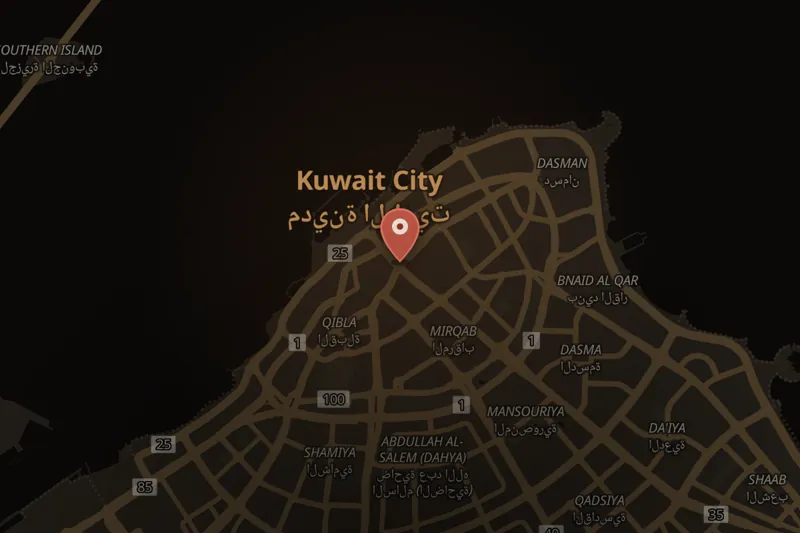
On 6 February 1974, an unknown number of Palestinian militants identifying themselves as members of the Popular Front for the Liberation of Palestine (PFLP) occupied the Japanese embassy in Kuwait City. The militants took the Japanese ambassador to Kuwait and several members of his staff hostage, for a total of eleven hostages.
The attack was carried out in support of Japanese Red Army members and other Palestinian militants who were holding hostages aboard a Singaporean ferry named the Laju, an episode known as the Laju incident. That earlier incident began after a failed attempt to destroy a Royal Dutch Shell refinery in Singapore, following which four guerrillas hijacked the Laju ferry and were trapped aboard it for seven days before surrendering their weapons and releasing their hostages.
In coordination with a third group calling itself the Sons of Occupied Arab Territories, the parties involved claimed joint responsibility for the Laju incident and demanded that the Japanese government dispatch a plane to Singapore to retrieve the guerrillas holding hostages there and fly them to Kuwait. On 7 February 1974, the Japanese government appealed to the Kuwaiti government for permission to land a special Japan Airlines plane carrying the Laju guerrillas, but Kuwait initially refused this request.
The identities of the militants who seized the Japanese embassy are not known, nor is the exact number involved, though they were reported to belong to the PFLP, a secular left-wing Marxist–Leninist revolutionary socialist group founded by George Habash in 1967. The PFLP had previously carried out plane hijackings, including the TWA Flight 840 hijacking in 1969, and was known to be allied with the Japanese Red Army and other far-left groups.
The attack marked the first time Palestinian guerrillas had struck within Kuwait, notable because the Kuwaiti royal family, headed by Sheikh Sabah Al-Salim Al-Sabah, funded the Palestinian resistance movement and Kuwait had long served as a landing point for hijacked planes and had considered itself relatively insulated from such attacks.
On 7 February 1974, the Japanese government relented and provided the demanded plane for the Laju perpetrators. The militants holding the Japanese embassy in Kuwait City then released their hostages unharmed and were flown, together with the Laju perpetrators, to Aden, Yemen, resolving the crisis without reported casualties.

 Credit: Kuwaity26CC BY-SA 4.0SourceSOLVEDListen