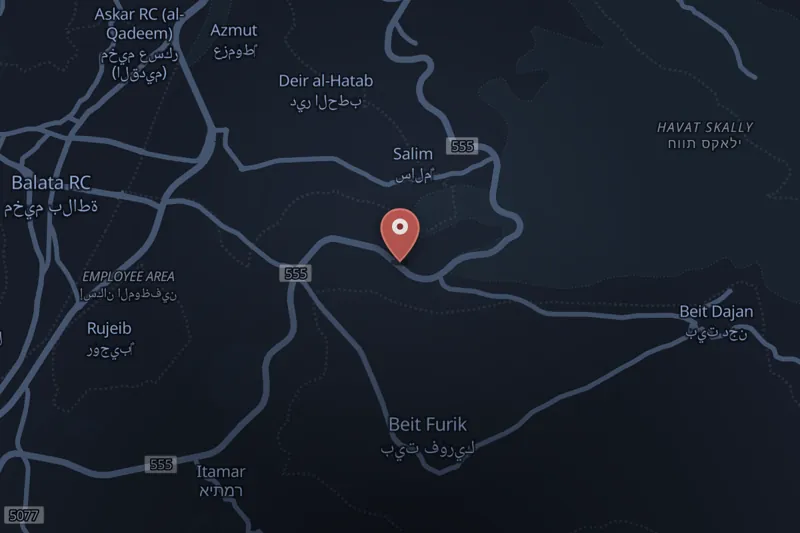
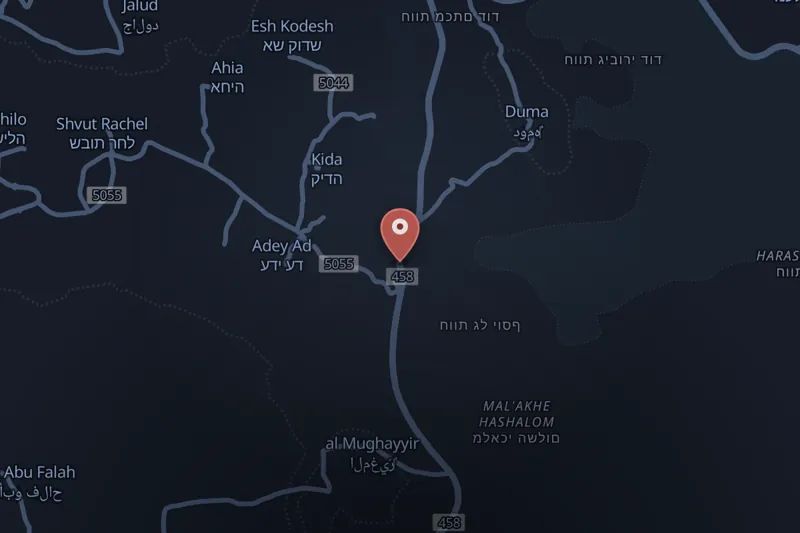
On the evening of Monday, 29 June 2015, gunmen opened fire on a civilian car traveling along the Allon Road (part of Israeli Route 60), south of Duma in the West Bank. The four occupants were recreational basketball players returning home from a game. They attempted to flee, but automatic weapons fire disabled the vehicle. All four were wounded and taken to hospital, first to Shaare Zedek Medical Center and Hadassah Hospital, Ein Kerem. Malachi Rosenfeld, a student in a joint philosophy and economics program at the Hebrew University, died of his wounds at Shaare Zedek. Yair Hooper sustained injuries to his torso and lower body; two other occupants were also injured. All four victims resided in Kokhav HaShahar, and Rosenfeld was buried there on 1 July 2015.
Israeli security services linked the attack to a militant cell that had, two days earlier, fired on several vehicles, including an ambulance, near Beitin without causing casualties. Multiple Palestinian militant groups — Fatah al-Intifada, the Popular Front for the Liberation of Palestine, and the Izz ad-Din al-Qassam Brigades (Hamas's military wing) — each claimed responsibility.
Seven Palestinians were arrested on suspicion of involvement with the Hamas network behind the attack, six from Silwad and one from Qusra; some arrests were carried out by Palestinian Authority security forces. Those named among the suspects included Amjad Najar, Maad Hamad (suspected shooter), Abdallah Atzhak (suspected getaway driver), Faaz Hamad (who reportedly confessed), and Jamal Younes (who reportedly confessed to disposing of the cell's vehicle and helping acquire weapons). Security officials stated that Ahmed Najar, a Hamas militant living in Jordan who had previously been convicted of murdering six Israelis and was released in the 2011 Gilad Shalit prisoner exchange, was accused of funding and helping direct the operation from Jordan. Saleh al-Arouri, a Hamas operative based in Turkey, was accused of being the overall coordinator of the attack.
Abdallah As'hak and Faiz Ahmed were indicted for the murder. Amjad Hamad was convicted and sentenced to life in prison as leader of the four-man cell that carried out the shooting; in January 2025, his release was agreed as part of a phased Gaza ceasefire deal tied to the release of Israeli hostages.
The attack had wider political effects in Israel, including a temporary restriction on Muslim access to the Temple Mount by Defense Minister Moshe Ya'alon, the demolition in November 2015 of the home of Maad Hamed of Kfar Silwad under an Israeli court order, and debate among Israeli lawmakers over new housing permits near Shvut Rachel. The case also featured in Israeli political debate over the practice of releasing convicted militants in prisoner exchanges.

 ONGOINGListen