Casepin
Back to cases

Solved case

2016 Saudi Arabia bombings

On 4 July 2016, four suicide bombers struck three Saudi Arabian cities in a single day, killing at least four security officers at the Prophet's Mosque in Medina and injuring others, in attacks that drew condemnation from governments and religious leaders worldwide.

Illustrative

On 4 July 2016, four suicide bombs detonated at three separate locations in Saudi Arabia. The most significant attack occurred in the parking lots of Al-Masjid an-Nabawi (the Prophet's Mosque) in Medina, one of Islam's holiest sites, killing at least four security officers and injuring five others. It was the first suicide bombing to take place in Medina. A second and third bomber targeted a Shia mosque near the Mias market in Qatif but did not harm anyone other than themselves. A fourth attacker detonated his explosives after police attempted to arrest him near the U.S. consulate in Jeddah; two Saudi police officers were injured in that incident.

According to a statement from the Saudi Press Agency, security personnel became suspicious of a man approaching the Prophet's Mosque through a vacant parking lot before Maghrib prayers; when intercepted, he detonated an explosive belt, killing himself and four security men and injuring five others. The same evening, a suicide bombing occurred at a mosque near the Mias market in Qatif, where human remains believed to belong to three people were recovered and were being identified.

The attacks followed a pattern of Ramadan 2016 mass-casualty attacks attributed to suspected Islamic State–affiliated militants, including earlier attacks in Istanbul, Dhaka, and Baghdad in the preceding days. Saudi Arabia had also experienced a series of ISIL-claimed attacks in 2015, including mosque bombings in Qatif and Dammam and an attack in Abha.

No group claimed responsibility for the 4 July 2016 attacks, though the Islamic State was initially suspected. Saudi Arabia's interior ministry stated that a man named Abdullah Gulzar Khan carried out the bombing near the U.S. consulate in Jeddah; he had reportedly lived in Jeddah for 12 years working as an immigrant driver, along with his family. A 26-year-old Saudi man, Naer Moslem Hammad Al Balawi, described as having a "history of drug use," was identified as the perpetrator of the Medina attack. Saudi authorities separately said Taie bin Salem bin Yaslam al-Saya'ari, a Saudi citizen who had lived and studied in New Zealand between 2008 and 2013, is thought to have planned the Medina attack; he was killed by Saudi security forces in January 2017. Following the attacks, Saudi authorities arrested 19 people, including 12 Saudi nationals.

The attempted attack on the Prophet's Mosque, coming just before Eid al-Fitr, drew widespread condemnation from Sunni and Shia religious leaders and governments, including Egypt, Pakistan, the United Arab Emirates, and Indonesia, as well as from other groups such as Hezbollah and the Taliban. Commentators characterized the attack on the non-denominational site, predating the Sunni-Shia schism, as an attack against all Muslims. The Organization of Islamic Cooperation, headquartered in Saudi Arabia, said the attacks represented an attempt to destabilize the kingdom.

Key facts

Victims
On file
Date
2016
Location
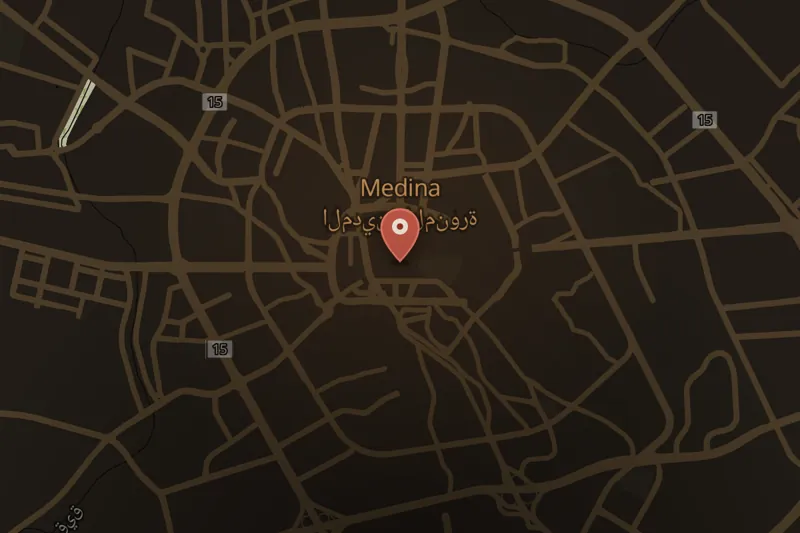
Al-Masjid an-Nabawi, Medina, Saudi Arabia
Case status
solved

Case timeline

  1. 2015-05-22

    Qatif mosque bombing, part of a series of ISIL-claimed attacks in Saudi Arabia.

  2. 2015-05-29

    Dammam mosque bombing; combined with the 22 May attack, 26 killed and 106 injured.

  3. 2015-08-06

    Abha mosque bombing kills 15.

  4. 2016-06-28

    Suicide bombing attack in Istanbul, Turkey, part of a wave of Ramadan 2016 attacks.

  5. 2016-07-01

    Attack in Dhaka, Bangladesh.

  6. 2016-07-03

    Bombings in Baghdad, Iraq.

  7. 2016-07-04

    Four suicide bombs explode in three Saudi Arabian locations: Al-Masjid an-Nabawi in Medina, a Shia mosque in Qatif, and near the U.S. consulate in Jeddah.

  8. 2017-01

    Taie bin Salem bin Yaslam al-Saya'ari, thought to have planned the Medina attack, is killed by Saudi security forces.

Best coverage

No coverage has been attached to this file yet.

People

  • Taie bin Salem bin Yaslam al-Saya'ari

    CHARGED

    Saudi citizen who lived and studied in New Zealand from 2008 to 2013; thought by authorities to have planned the Al-Masjid an-Nabawi attack. Killed by Saudi security forces in January 2017.

  • Abdullah Gulzar Khan

    CHARGED

    Identified by Saudi Arabia's interior ministry as the perpetrator of the bombing near the U.S. consulate in Jeddah; had lived in Jeddah for 12 years working as an immigrant driver.

  • Naer Moslem Hammad Al Balawi

    CHARGED

    26-year-old Saudi man with a reported history of drug use, identified as the perpetrator of the Medina (Al-Masjid an-Nabawi) attack.

Roles reflect public records and court outcomes at the time of writing — supporting citations are on file under Sources.

Places

Common questions

What happened to the victim?
On 4 July 2016, four suicide bombers struck three Saudi Arabian cities in a single day, killing at least four security officers at the Prophet's Mosque in Medina and injuring others, in attacks that drew condemnation from governments and religious leaders worldwide.
Where did the crime happen?
Al-Masjid an-Nabawi, Medina, Saudi Arabia.
What is the current status of the case?
Status: solved.

Sources

  1. ENCYCLOPEDIC2016 Saudi Arabia bombingsWikipedia · 2026-07-07
  2. PRESSBombings Hit Saudi Arabia's Holiest City and U.S. ConsulateThe New York Times · 2026-07-07
  3. PRESSThe Latest: Suicide bombing in Saudi, no injuriesThe Washington Post · 2026-07-07

Record history

First published
JUL 07, 2026

When a file you follow changes — a new development, a correction, fresh coverage — the Dispatch is how you hear about it.

The Casepin Dispatch

A calm weekly briefing from the archive — one case worth understanding, meaningful updates to files you follow, and the best new coverage. You’ll also get the one-time note when the apps land. No gore, no rumor, no drip.