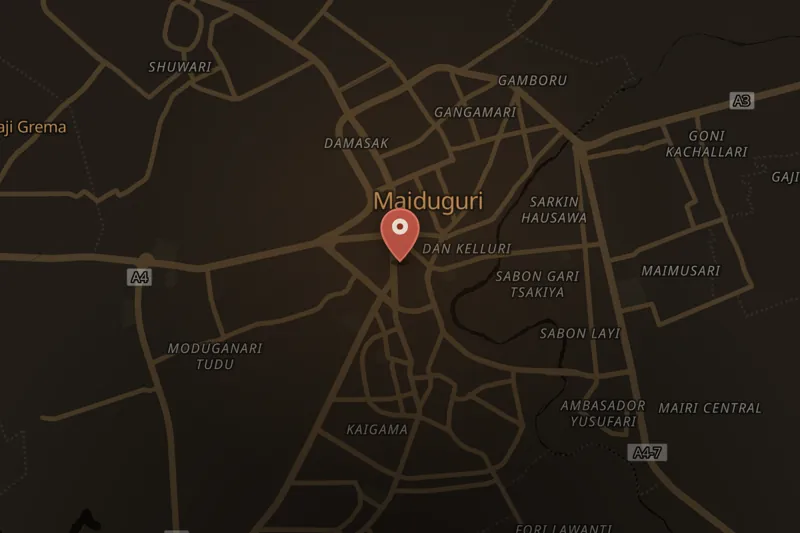
On the evening of 16 June 2019, three suicide bombers attacked Konduga village in Borno State, Nigeria, killing 30 people and wounding more than 40 others. According to the account of the attack, the first bomber attempted to enter a hall where residents were watching a football match on television. The owner of the venue blocked him from entering, and a heated argument followed, during which the bomber detonated his explosives. Shortly afterward, two other bombers — both female — detonated their own explosives nearby. This attack was described as the most deadly suicide bombing recorded in Nigeria in 2019.
No group formally claimed responsibility for the Konduga bombings. However, the attack was noted to bear the hallmarks of Boko Haram, the Islamist militant group whose activity has been concentrated in Borno State, including a base in nearby Maiduguri. Boko Haram has been reported to regard football viewing as un-Islamic and as a corrupting Western influence, which was cited as a possible motive given that the attack targeted people watching a football broadcast.
Konduga had a history of prior violent attacks preceding the June 2019 bombings. These included massacres in January 2014 and February 2014, a triple suicide bombing in February 2018, and a suicide bombing at a mosque in July 2018.
Separately, on 27 July 2019, a group of people returning from a funeral in Nganzai, also in Borno State, were targeted in a mass shooting in which at least 65 people were killed. As with the Konduga bombings, no group claimed responsibility for the Nganzai shooting, though it was noted that Boko Haram frequently carries out massacres, most often within Borno State.
As of the available reporting, no individual or group has been formally charged, convicted, or otherwise identified in connection with the Konduga bombings, and the case remains without a claim of responsibility or identified perpetrators.

 UNSOLVEDListen