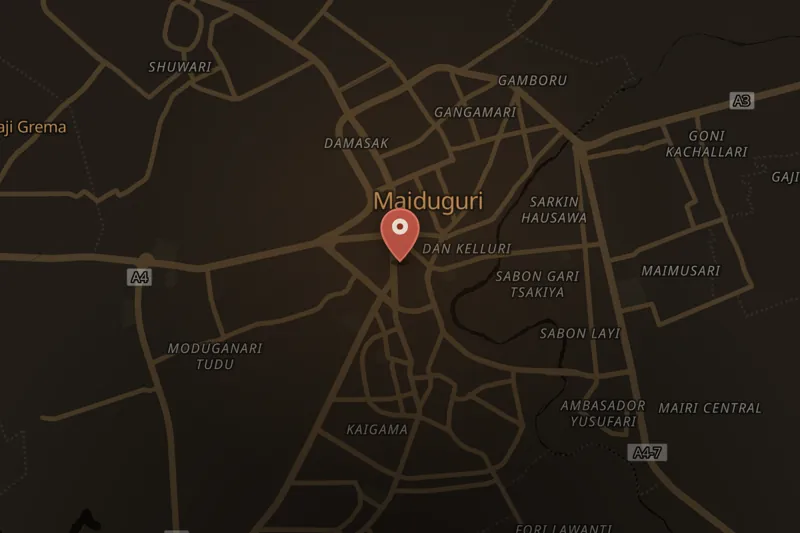
Maiduguri, Borno State, Nigeria · 2010s
March 2015 Maiduguri Suicide Bombings
On March 7, 2015, a series of five suicide bombings struck markets and a security office in Maiduguri, Nigeria, killing at least 58 people and wounding over 143.
Before you continue
This case involves crimes against children. Casepin presents the record in neutral, non-graphic language. Choose whether to continue.
Unsolved case · 2014

The short answer
Between 20 and 23 June 2014, suspected Boko Haram militants carried out a series of attacks across Borno State, Nigeria, kidnapping 91 women and children and killing more than 70 people.
The coverage index
No one's coverage is attached to this file yet.
Know great coverage of this case?
A documentary, a podcast episode, a careful long-form video. Suggest it and an editor will review it before it appears here.
Suggest coverage for June 2014 Borno State attacksThe case file
Boko Haram, an Islamic terrorist group opposed to what it considers the Westernization of Nigeria, had killed thousands of people in Nigeria by mid-2014. The Nigerian federal government declared a state of emergency in Borno State in May 2013 in response to the insurgency, but the resulting military crackdown failed to stabilize the region.
Attacks by the group intensified through 2014. In February, more than 100 Christian men were killed in the villages of Doron Baga and Izghe, and 59 boys were killed in an attack on the Federal Government College in Yobe State. By mid-April, Boko Haram was blamed for nearly 4,000 deaths that year. In April, militants attacked a school in Chibok and kidnapped 276 girls, 57 of whom escaped; this drew international attention and pledges of assistance from Western nations, though negotiations for the girls' release stalled. Further attacks followed in May and early June, including bombings in Jos, a raid on a village, a bombing in Mubi, and what has been called the Gwoza massacre, in which no fewer than 300 villagers were reportedly killed across three communities.
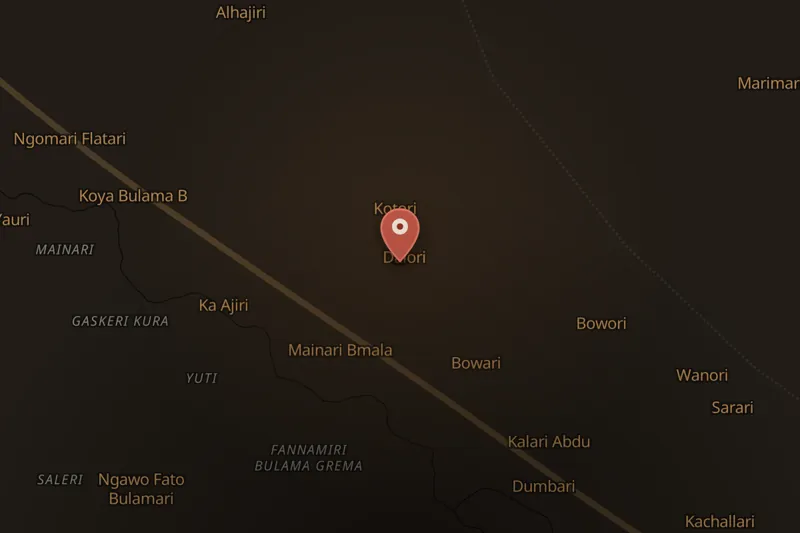
Around the weekend of 21–22 June 2014, suspected Boko Haram militants attacked the village of Kummabza and three other villages in the Damboa district of Borno State. According to eyewitnesses, the attackers abducted 60 women and girls and 31 boys, some of the women married and some children as young as three. A vigilante leader said four villagers who attempted to escape were shot, and an eyewitness reported around 30 men had been killed. Elderly villagers walked 15 miles to report the attack and seek help. Borno governor Kashim Shettima ordered an official probe, but the national government initially denied any abductions had occurred, a claim contradicted by a local politician, multiple eyewitnesses speaking to Agence France-Presse, and an anonymous Nigerian intelligence officer who told the Associated Press an attack had occurred, though he placed the abduction a week earlier, between 13 and 15 June.
On 21 and 22 June, suspected militants attacked the villages of Chuha A, Chuha B, and Korongilim near Chibok. Military and vigilante forces resisted, and the villages were destroyed; at least 40 villagers, six vigilantes, and about 25 militants were killed. On 23 June, a bomb at a college in Kano killed 8 people and injured about 20. On the night of 28 June, a bombing at a brothel in Bauchi killed 11 people and injured 28.
Analysts suggested the attacks demonstrated stalled international counter-efforts against Boko Haram, and that the new kidnappings may have been intended to divert attention from the Chibok kidnappings and increase pressure for a hostage exchange. On 7 July 2014, it was reported that more than 60 of the kidnapped women had escaped from Boko Haram captivity.

11 dated entries · 2013–2014
Nigerian federal government declares a state of emergency in Borno State amid the Boko Haram insurgency.
More than 100 Christian men killed in Doron Baga and Izghe; 59 boys killed in the Federal Government College attack in Yobe State.
Boko Haram militants attack a school and kidnap 276 girls in Chibok; 57 later escape.
118 people killed in a pair of bombings in Jos.
Around 40 people killed in a bombing in Mubi.
Gwoza massacre: no fewer than 300 villagers reportedly killed in three communities around Gwoza local government area.
An anonymous intelligence source reported the Kummabza-area abductions may have actually occurred around this date, a week before the widely reported weekend attack.
Suspected Boko Haram militants attack Kummabza and three other villages in Damboa district, abducting 60 women/girls and 31 boys; attacks also occur on Chuha A, Chuha B, and Korongilim near Chibok, with at least 40 villagers, six vigilantes, and about 25 militants killed.
A bomb explosion at a college in Kano kills 8 people and injures about 20.
A bomb explodes at a brothel in Bauchi, killing 11 and injuring 28.
It is reported that more than 60 of the kidnapped women have escaped from Boko Haram.
2 named in this file
Victims first. Every legal label is set from public records and court outcomes, not from the prose.
3 cited
Coverage is not a source: every fact in this file rests on the records below.
PressThe GuardianAccessed Jul 7, 2026
PressThe TelegraphAccessed Jul 7, 2026
EncyclopedicWikipediaAccessed Jul 7, 2026
Trust
Are you family of someone named in this file? Corrections and removal requests from victims’ families are prioritized.
Near this case
Maiduguri, Borno State, Nigeria · 2010s
On March 7, 2015, a series of five suicide bombings struck markets and a security office in Maiduguri, Nigeria, killing at least 58 people and wounding over 143.
UNSOLVEDListenDalori, Borno State, Nigeria · 2010s
On 30 January 2016, Boko Haram militants attacked the town of Dalori in Borno State, Nigeria, killing approximately 86 people and injuring more than 135, in what was described as the group's first major attack of the year.
ONGOINGListenMaiduguri, Borno State, Nigeria (Boko Haram's founding base) · 2000s
Boko Haram, a jihadist militant group founded in Maiduguri, Nigeria in 2002 by Mohammed Yusuf, has waged an insurgency since 2009 that has killed tens of thousands and displaced millions across Nigeria, Chad, Niger and Cameroon, including mass killings, mass abductions such as the 2014 Chibok kidnapping, and a boarding-school massacre.
Credit: English Wikipedia·Editorial use·SourceSOLVEDListenDelta, Fulton County, Ohio · 2016
Sierah Joughin, a 20-year-old Ohio college student, was abducted while bicycling home in Fulton County on July 19, 2016, and found dead three days later. James Dean Worley, a neighbor with a 1990 abduction conviction who was not listed in any offender database, was convicted of her murder in 2018 and sentenced to death, prompting Ohio's Sierah's Law, which created a searchable violent-offender registry.
Barron, Wisconsin · 2018
A 13-year-old Wisconsin girl was abducted from her home after her parents were fatally shot in October 2018 and was found safe 88 days later after escaping her captor's rural cabin in January 2019.
Auburn, Alabama · 2019
Aniah Blanchard, a 19-year-old Alabama college student, disappeared from Auburn in October 2019 and was later found dead of a gunshot wound; the man convicted of her murder was sentenced to life in prison in 2026.