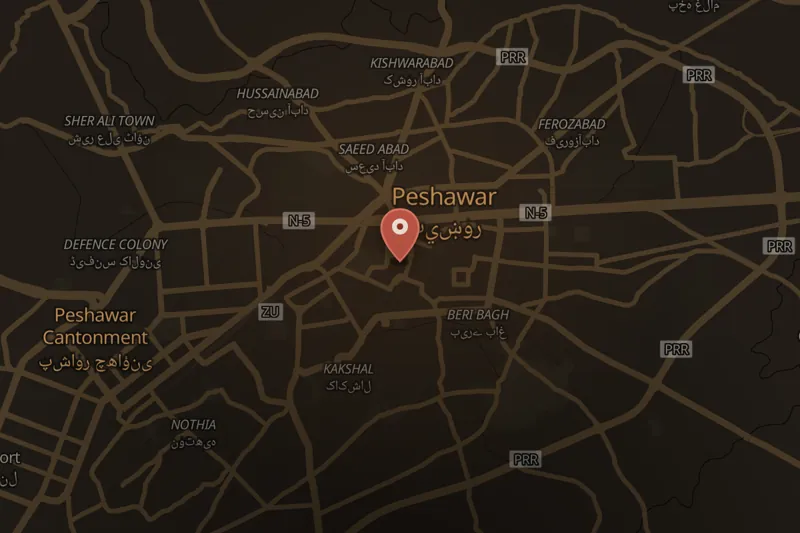
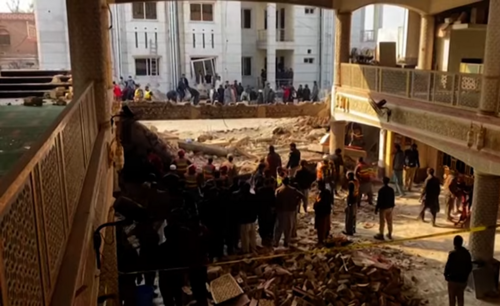
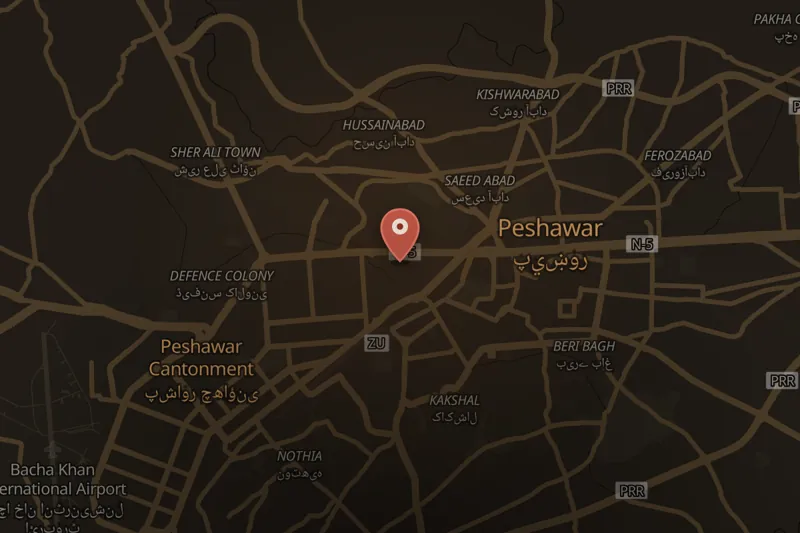
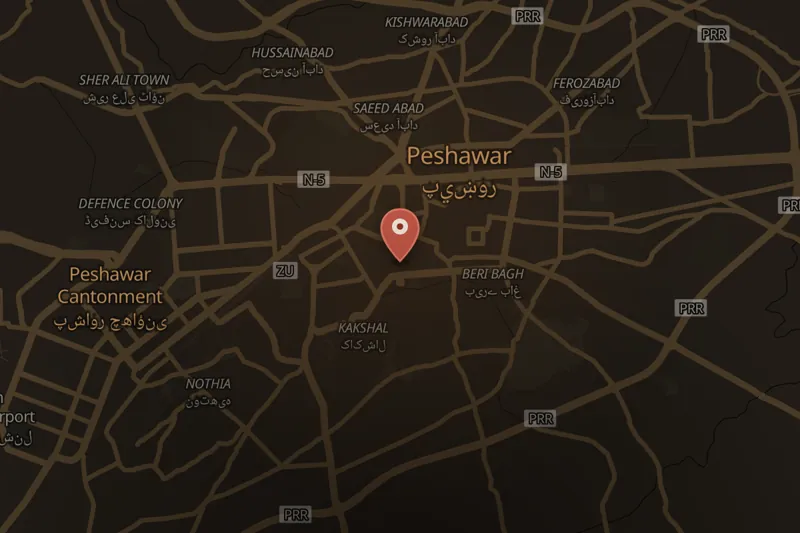
On 30 January 2023, at approximately 1:30 p.m. Pakistan Standard Time, a suicide bomber detonated an explosive vest inside the Police Lines mosque in Peshawar, Khyber Pakhtunkhwa, Pakistan. The mosque was located within a high-security compound housing several government offices, including the headquarters of the Khyber Pakhtunkhwa Police. The bomber, an Afghan national identified as "Qari," disguised himself as a police officer and infiltrated the compound, passing through multiple security checkpoints before joining the congregational Zuhr prayers. CCTV footage showed him approaching the compound in a police uniform, helmet, and mask, pushing a motorcycle as if it were broken down, and asking a constable for directions to the mosque. Guards believed him to be a fellow officer. Over 300 people, mostly police officers, were praying at the time. The bomber detonated a vest containing 12 kilograms of TNT, causing the main hall's wall and inner roof to collapse onto worshippers.
The attack killed 84 people, excluding the perpetrator, and injured 217 others. Of the victims, 83 were police officers and one was a female civilian worker at the compound. Initial reports had placed the death toll at 101, but Khyber Pakhtunkhwa Police Chief Moazzam Jah Ansari later revised the figure, stating some bodies had been mistakenly counted twice.
Jamaat-ul-Ahrar, a splinter faction of the Pakistani Taliban (TTP), claimed responsibility shortly after the bombing, with leader Omar Mukaram Khurasani and senior member Sarbakaf Mohmand stating it was retaliation for the death of the faction's founder, Omar Khalid Khorasani, whom they said Pakistani security forces killed in August 2022. Later the same day, TTP spokesperson Muhammad Khorasani issued a statement denying the group's involvement, asserting a policy against attacks on mosques. Analysts, including commentator Bill Roggio and the International Crisis Group, suggested the TTP likely had knowledge of the plot despite its denial.
The bombing was condemned domestically by Pakistani Prime Minister Shehbaz Sharif, former Prime Minister Imran Khan, Interior Minister Rana Sanaullah, and Foreign Minister Bilawal Bhutto Zardari, and internationally by India, Canada, China, the United States, Saudi Arabia, the United Arab Emirates, Qatar, and the United Nations. Protests by police officers and later by thousands of residents across Khyber Pakhtunkhwa followed, demanding an investigation into the security failure.
In the aftermath, Sarbakaf Mohmand died in Afghanistan on 20 June 2023, reportedly amid infighting within the TTP. On 12 November 2024, Pakistani authorities arrested a police constable, Muhammad Wali, accused of facilitating the attack by providing reconnaissance, a uniform, and the suicide vest, and by transmitting compound details to a Jamaat-ul-Ahrar handler. On 12 November 2025, another alleged perpetrator, Qari Hidayatullah, was killed in an explosion in Nangarhar province, Afghanistan; he was also linked to the 2015 Meena Bazar bombing in Pakistan.

 UNSOLVEDListen