Start here
The FAILED Investigation - The Ashikaga Murder Case
The creator's telling of the case, the strongest entry point on file.
Watch on YouTubeBefore you continue
This case involves crimes against children. Casepin presents the record in neutral, non-graphic language. Choose whether to continue.
Overturned conviction · 1990
Also known as Murder of Mami Matsuda
The short answer
Four-year-old Mami Matsuda was abducted from a pachinko parlor in Ashikaga, Japan, in 1990 and found dead nearby. Toshikazu Sugaya was convicted based on flawed early DNA testing, then exonerated in 2009 after seventeen years' imprisonment when retesting proved his innocence; the case remains unsolved.
Start hereThe FAILED Investigation - The Ashikaga Murder CaseThe coverage index
1 piece from 1 creator: ranked, with duplicates removed and short clips set aside.
Start here
Video · YouTube
The creator's telling of the case, the strongest entry point on file.
Watch on YouTubeTitles and descriptions are the creators’ own and may not reflect current legal status. The sourced facts are in the file below. Players load only when you press play. Suggest coverage we’re missing.
The case file
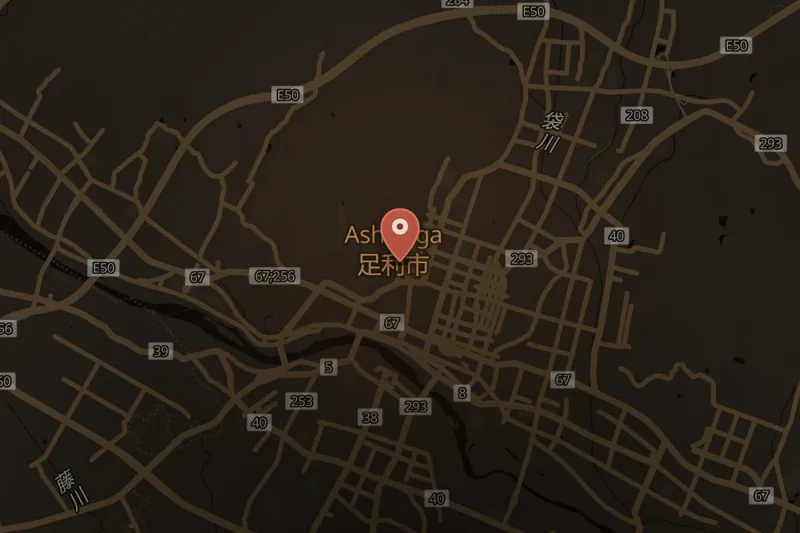
On May 12, 1990, four-year-old Mami Matsuda went missing from a pachinko parlor in the city of Ashikaga, Tochigi Prefecture, Japan. She was found dead the following day at the nearby Watarase River. The case became known as the Ashikaga murder case and was later identified as part of a broader pattern referred to as the North Kanto Serial Young Girl Kidnapping and Murder Case, which encompassed a series of killings and disappearances of young girls in the Ashikaga area and neighboring Ota City, Gunma Prefecture, spanning from 1979 to 2005.
In 1991, Toshikazu Sugaya was arrested and subsequently convicted of Mami Matsuda's murder. His conviction rested on DNA evidence produced through testing methods that were, at the time, considered advanced but were later determined to be imprecise. In 2007, journalist Kiyoshi Shimizu, who had been given latitude to investigate the case after previous award-winning reporting, uncovered problems with the DNA testing method used to convict Sugaya. In 2009, when Sugaya's DNA was retested against the original evidence, the results conclusively showed that he was not a match, establishing his innocence. Sugaya was released in May 2009, after having spent seventeen years in prison.
Following Sugaya's exoneration, the prosecutor's office stated that the statute of limitations on the crime had passed, meaning the actual perpetrator could no longer be prosecuted for the 1990 killing. However, the statute of limitations had not yet passed on the most recent case within the wider North Kanto series, and multiple government officials, including then-Prime Minister Naoto Kan, publicly urged police to pursue a resolution of that outstanding case.
Kiyoshi Shimizu received the Editors' Choice Magazine Journalism Award for his reporting exposing the miscarriage of justice in the Sugaya conviction. In 2010 and 2011, Shimizu reported that he had identified strong evidence, including DNA evidence, pointing to an alleged perpetrator, and provided this information to police. No arrest resulted. Police reasoning cited a mismatch between the alleged perpetrator's DNA and DNA evidence previously attributed to the culprit in the original Ashikaga case. Shimizu maintained that the original DNA testing methods used in the case were flawed and suggested that an arrest under his theory would require the prosecutor's office to acknowledge those flaws. He drew a parallel to the Iizuka case, in which the same disputed testing methods had been used and the convicted individual was executed in 2008 despite requests for new DNA testing and a retrial.
The case remains formally unsolved with respect to identifying and prosecuting the actual perpetrator of Mami Matsuda's death, following Sugaya's full exoneration.
13 dated entries · 1979–2011
A five-year-old girl was kidnapped near Ashikaga; she was found dead on August 9, 1979, near the Watarase River, in an incident later grouped with the North Kanto series.
A five-year-old girl was kidnapped; she was found dead on March 8, 1986, at a field east of Okubo elementary school in Ashikaga City.
Four-year-old Mami Matsuda went missing from a pachinko parlor in Ashikaga, Tochigi Prefecture.
Mami Matsuda was found dead at the Watarase River near Ashikaga.
Toshikazu Sugaya was arrested and later convicted of the murder based on DNA evidence.
A four-year-old girl was kidnapped in the North Kanto area; her body was never found.
A seven-year-old girl was kidnapped and found dead, the last case in the North Kanto series noted.
Journalist Kiyoshi Shimizu discovered that the DNA testing method used to convict Sugaya was imprecise.
The convicted individual in the related Iizuka case, which used the same disputed DNA testing method, was executed despite requests for retesting and retrial.
Retesting of Sugaya's DNA against the case evidence conclusively showed he was innocent.
Toshikazu Sugaya was released after seventeen years of imprisonment.
Kiyoshi Shimizu reported evidence, including DNA evidence, that he said identified the actual perpetrator, and provided it to police.
Shimizu continued reporting on the alleged perpetrator evidence; police did not make an arrest, citing a DNA mismatch.
2 named in this file
Victims first. Every legal label is set from public records and court outcomes, not from the prose.
Four-year-old girl abducted from a pachinko parlor and found dead at the Watarase River in Ashikaga in 1990.[3]
Convicted in 1991 of the murder based on flawed DNA evidence; imprisoned for seventeen years and released in May 2009 after retesting proved his innocence.[3]
3 cited
Coverage is not a source: every fact in this file rests on the records below.
PressFox News (wire report)Accessed Jul 11, 2026
PressThe Irish TimesAccessed Jul 11, 2026
EncyclopedicWikipediaAccessed Jul 7, 2026
Trust
Jul 11, 2026Coverage added
Coverage added: The FAILED Investigation - The Ashikaga Murder Case (Dire Trip).
SourceJul 11, 2026Source review
Removed a source link that no longer carries the cited record.
Jul 11, 2026Source review
Removed a source link that no longer carries the cited record.
Jul 11, 2026Source review
Added source: Japanese Man Acquitted 17 Years After Forced Murder Confession (Fox News (wire report)).
SourceJul 11, 2026Source review
Added source: Miscarriage of justice could be turning point for Japan's justice system (The Irish Times).
SourceAre you family of someone named in this file? Corrections and removal requests from victims’ families are prioritized.
Near this case
 Credit: Unknown·Editorial use·SourceSOLVEDListen
Okegawa Station, Okegawa, Saitama Prefecture, Japan · 1990s
Shiori Ino, a 21-year-old university student, was fatally stabbed in Okegawa, Saitama, Japan, on 26 October 1999 in a contract killing arranged by her abusive former boyfriend, after police repeatedly declined to act on her stalking reports.
 Credit: 663highland·CC BY-SA 4.0·SourceUNSOLVEDListen
Nikkō, Tochigi Prefecture, Japan · 2010s
Tiphaine Véron, a 36-year-old French tourist, disappeared in Nikkō, Japan, on 29 July 2018 after leaving her hotel following breakfast. Her belongings, including her passport, were found untouched in her room, and no trace of her has been found since.
 SOLVEDListen
Sayama, Saitama, Japan · 1960s
Sixteen-year-old Yoshie Nakata was kidnapped, raped, and murdered in Sayama, Saitama, Japan in May 1963; Kazuo Ishikawa, a burakumin farm worker, was convicted and imprisoned for 31 years in a case that remains disputed and tied to allegations of caste-based discrimination in Japan's justice system.
 Image record·Editorial use·SourceSOLVEDListen
California Polytechnic State University (Cal Poly), San Luis Obispo, California · 1996
Kristin Smart, a 19-year-old Cal Poly San Luis Obispo student, disappeared in the early hours of May 25, 1996, after leaving an off-campus party with fellow student Paul Flores, the last person known to have seen her. Flores was convicted of her murder in 2022 and his conviction was upheld on appeal; Smart's remains have never been recovered.
 Credit: Woodlawn High School·Editorial use·SourceSOLVEDListen
Leakin Park, Baltimore, Maryland · 1999
Hae Min Lee, an 18-year-old Baltimore County high school student, was strangled and found buried in Leakin Park in February 1999. Her ex-boyfriend Adnan Syed was convicted of first-degree murder in 2000; the case gained international attention after the 2014 podcast Serial, and Syed's conviction underwent multiple vacaturs, appeals, and reinstatements through 2025.
 Credit: Via Wikipedia·Editorial use·SourceUNSOLVEDListen
Fulham, London · 1990s
English television presenter Jill Dando was shot dead outside her London home in 1999, and the case remains unsolved.