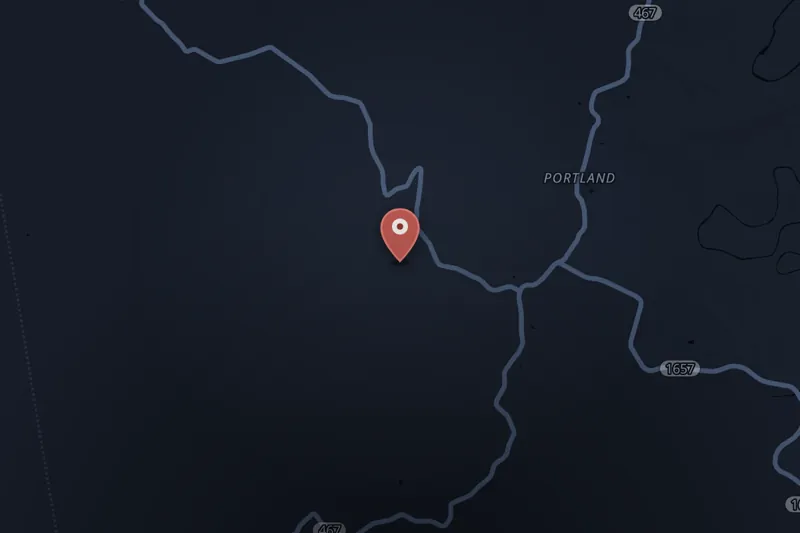
Solomon P. Sharp was a Kentucky lawyer and politician who served in the state legislature and two terms in the U.S. House of Representatives before becoming Kentucky's attorney general. In 1820, Anna Cooke, a planter's daughter, said Sharp had fathered her stillborn child; Sharp denied paternity, and public opinion at the time sided with him. Cooke withdrew to her mother's plantation near Bowling Green, where she was later courted by a young lawyer, Jereboam O. Beauchamp, who had previously admired Sharp. According to accounts of the courtship, Cooke told Beauchamp she would only marry him if he killed Sharp. Beauchamp made at least two failed early attempts to confront or duel Sharp before he and Cooke married in June 1824.
Sharp's political career became entangled in Kentucky's Old Court–New Court controversy, a dispute between debtor-relief ("New Court") and creditor ("Old Court") factions following the Panic of 1819. Sharp, aligned with the New Court, resigned as attorney general in 1825 to run for the state House against Old Court candidate John J. Crittenden. During that campaign, Old Court supporter John Upshaw Waring circulated handbills reviving the paternity allegations and adding a further claim — never verified — that Sharp had denied paternity by asserting the child was of mixed race and fathered by a family slave. Sharp won the election despite the allegations, and word of the renewed claims reportedly reincited Beauchamp's resolve to kill him.
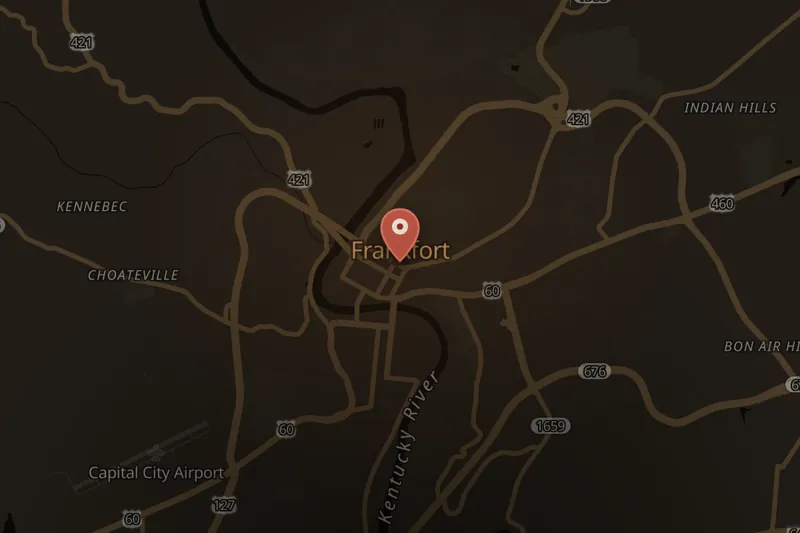
In the early morning of November 7, 1825, Beauchamp, wearing a disguise and using a false name, gained entry to Sharp's Frankfort home and fatally stabbed him; Sharp's wife, Eliza, witnessed the attack from the stairway. Beauchamp fled, disposed of his disguise in the Kentucky River, and was arrested four days later at his home in Glasgow. An examining court initially found insufficient evidence to hold him, but testimony from Eliza Sharp, who identified Beauchamp's voice, and from Patrick H. Darby, who recounted Beauchamp's earlier threats against Sharp, led to his indictment.
Beauchamp's trial began May 8, 1826, and lasted thirteen days; despite the absence of physical evidence or a murder weapon, the jury convicted him after about an hour of deliberation. He was sentenced to hang on June 16, 1826, later stayed to July 7 to allow him to write a written justification of his actions. Anna Beauchamp was separately examined and acquitted of complicity for lack of evidence, and was permitted to stay in her husband's cell. The couple attempted double suicide by laudanum on July 5, which failed, and again by stabbing themselves with a smuggled knife on the morning of the execution. Anna died of her wound shortly before Beauchamp was hanged; weakened by his own stab wound, he was executed by hanging on July 7, 1826, the first legal execution in Kentucky's history. The couple were buried together in a shared coffin, positioned in an embrace, at Maple Grove Cemetery in Bloomfield, Kentucky.
Some contemporaries, including Sharp's widow, alleged that Old Court partisans, particularly Darby, had instigated Beauchamp to commit the murder for political gain; Darby denied involvement and later brought unsuccessful libel suits against several of Sharp's associates. He died in December 1829 before any suit reached trial. The case later inspired numerous literary works, including an unfinished play by Edgar Allan Poe and Robert Penn Warren's novel World Enough and Time.

 UNSOLVEDListen