
Solved case
Kidnapping into Slavery in the United States
Between 1780 and 1865, free Black people and fugitive slaves across the United States were abducted, tricked, or apprehended and sold into slavery through a clandestine trafficking network later termed the "Reverse Underground Railroad."
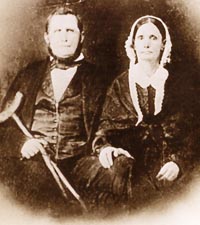
From 1780 to 1865, a widespread and organized practice of kidnapping free Black people and fugitive slaves for sale into slavery operated across both free and slave states in the United States. Historians have retroactively termed this trafficking network the "Reverse Underground Railroad," a counterpart to the abolitionist Underground Railroad. Kidnappers used three main methods: physical abduction, "inveiglement" (trickery, especially targeting children), and apprehension of fugitive slaves for reward. Rewards for returned fugitives ranged from roughly $400 to $700, equivalent to an estimated $9,000 to $15,000 in 2019 terms. According to historian Richard Bell, professional kidnappers forced into slavery roughly as many African Americans as the Underground Railroad ever helped escape.
Free Black people were most vulnerable in border states such as Delaware, Maryland, Kentucky, and Missouri, but kidnapping also occurred frequently in New York, Pennsylvania, Illinois, and parts of Tennessee. In New York City, a gang known as "the black-birders" abducted men, women, and children, sometimes with the cooperation of police and city officials. In Philadelphia, missing-children notices for kidnapped Black youths were common in Black newspapers, and at least a hundred children were reported abducted in the city over a two-year period. Children were considered especially susceptible to trickery-based kidnapping.
Notable documented kidnapping operations include the gang led by Martha "Patty" Cannon, who operated on the Delmarva Peninsula from 1811 to 1829 before being indicted for four murders and dying in prison in 1829, reportedly by suicide. In Illinois, John Hart Crenshaw ran a salt operation in Gallatin County using enslaved labor and was linked to kidnapping free Black people for sale into Kentucky; his home became known as "The Old Slave House." In Tennessee, outlaw John A. Murrell led a gang that kidnapped enslaved people from plantations under false promises of freedom, later reselling them; he was convicted of slave-stealing in 1834 and sentenced to ten years in the Tennessee State Penitentiary.
Efforts to prevent and reverse kidnappings included the Society for the Relief of Free Negroes Unlawfully Held in Bondage, founded in Philadelphia in 1775, later reorganized as the Pennsylvania Abolition Society, and the New York Vigilance Committee, which reported protecting 335 people from enslavement by January 1837. Philadelphia high constable Samuel Parker Garrigues traveled to Southern states to rescue kidnapped children and adults, including Charles Bailey, who was recovered after a three-year search but died shortly after returning to Philadelphia; Garrigues also arrested Bailey's abductor and a member of the Patty Cannon gang. Free Black citizens petitioned Congress in 1800 to intervene against kidnappings, though the petition was ignored.
The best-known account of this practice is Solomon Northup's 1853 memoir "Twelve Years a Slave," describing his 1841 kidnapping from New York and subsequent enslavement in Louisiana; the book was adapted into a 2013 film that won three Academy Awards. Other documented victims include Cornelius Sinclair and the sons of Jude Hall.
Key facts
- Victims
- Mary Marlow, Cornelius Sinclair, Charles Bailey, Solomon Northup
- Date
- 1822
- Location
- United States (multiple states, primarily Delaware, Maryland, Pennsylvania, New York, Illinois, and Tennessee)
- Case status
- solved
Case timeline
1775
Anthony Benezet and others organize the Society for the Relief of Free Negroes Unlawfully Held in Bondage in Philadelphia.
1780
Start of the 85-year period during which free Black people were kidnapped or re-enslaved in the United States, according to historical accounts.
1800
Richard Allen and Absalom Jones send a petition signed by 73 free Black citizens to Congress urging action against kidnappings; it is ignored.
1811
Martha 'Patty' Cannon begins leading a gang kidnapping slaves and free Black people on the Delmarva Peninsula.
1822
South Carolina passes the Negro Seamen Act, allowing free Black sailors to be jailed and potentially sold into slavery.
1825
Charles Bailey is kidnapped at age fourteen in Philadelphia.
1826
Rhode Island newspaper editors interview an enslaved man who says he was born free in New York and sold into slavery in Virginia and Alabama.
1827
The Protecting Society of Philadelphia is established to prevent kidnapping; The African Observer publishes an account of Philadelphia children lured aboard a ship and sold south.
1829
Patty Cannon is indicted for four murders and dies in prison, reportedly by arsenic poisoning suicide.
1834
John A. Murrell is arrested and sentenced to ten years in the Tennessee State Penitentiary for slave-stealing.
1837-01
The New York Vigilance Committee reports it has protected 335 persons from slavery.
1839
The governor of South Carolina publishes notices about two seven-year-old children abducted from a Colleton District plantation.
1853
Solomon Northup publishes 'Twelve Years a Slave,' recounting his kidnapping from New York and enslavement in Louisiana.
1860
John and Nancy Curtis are arrested in Johnson County, Illinois, for attempting to kidnap their own freed former slaves to sell into slavery in Missouri.
1865
End of the 85-year period of documented kidnapping into slavery in the United States.
1906
Newspapers report the death and funeral of Mary Marlow, a formerly enslaved woman who said she was kidnapped as a girl near Richmond, Virginia.
Best coverage
No coverage has been attached to this file yet.
People
John Purnell
CHARGEDMember of the Patty Cannon gang tracked down and arrested by Philadelphia high constable Samuel Parker Garrigues.
Mary Marlow
VICTIMFormerly enslaved woman who recounted being kidnapped as a child near Richmond, Virginia and sold into slavery in Georgia; her account was reported in 1906 newspaper obituaries.
Martha "Patty" Cannon
CHARGEDIndicted in 1829 for four murders connected to her gang's kidnapping and slave-trafficking operation on the Delmarva Peninsula; died in prison awaiting trial.
Cornelius Sinclair
VICTIMNamed as a notable victim of kidnapping into slavery in the United States.
Charles Bailey
VICTIMKidnapped at age fourteen in Philadelphia in 1825; rescued after a three-year search by high constable Samuel Parker Garrigues but died shortly after returning home.
Solomon Northup
VICTIMFree Black man from New York kidnapped and sold into slavery in Louisiana, later documented in his 1853 memoir 'Twelve Years a Slave.'
John A. Murrell
CONVICTEDConvicted and sentenced in 1834 to ten years in the Tennessee State Penitentiary for slave-stealing after leading a gang that kidnapped and resold enslaved people.
Roles reflect public records and court outcomes at the time of writing — supporting citations are on file under Sources.
Archival records

newspaper
"Kidnapping" Newspapers.com, The Times-Picayune, February 25, 1841
Credit: New Orleans Times-Picayune · Public domain · Source

archival location
John-A.-Murrell-Portrait
Credit: Nashville Daily American Newspaper, January 1, 1876, A Genealogical Scrapbook · Public domain · Source
portrait public figure
John and Sina Crenshaw
Credit: Public domain · Source

archival location
Kidnapping a free black to be sold into slavery, 1834 woodcut
Credit: Unknown authorUnknown author · Public domain · Source
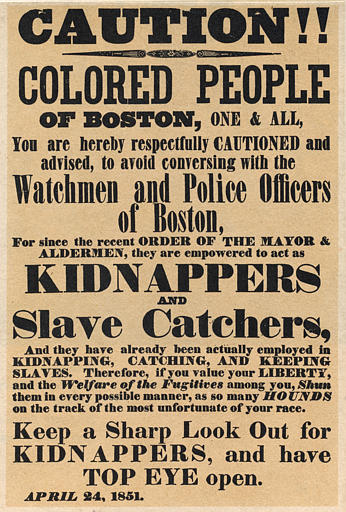
other document
Slave kidnap post 1851 boston
Credit: Public domain · Source

other document
Tearing Up Free Papers
Credit: Unknown authorUnknown author · Public domain · Source

archival location
The Old Slave House
Credit: HaarFager at en.wikipedia · CC BY-SA 3.0 · Source
Places
Common questions
- What happened to the victim?
- Between 1780 and 1865, free Black people and fugitive slaves across the United States were abducted, tricked, or apprehended and sold into slavery through a clandestine trafficking network later termed the "Reverse Underground Railroad."
- Where did the kidnapping happen?
- United States (multiple states, primarily Delaware, Maryland, Pennsylvania, New York, Illinois, and Tennessee).
- Who was convicted?
- John A. Murrell (Convicted and sentenced in 1834 to ten years in the Tennessee State Penitentiary for slave-stealing after leading a gang that kidnapped and resold enslaved people.).
- What is the current status of the case?
- Status: solved.
Related cases
View all cases
Death of Aaron Bushnell
Embassy of Israel, Washington, D.C.

Killing of Robert Eric Wone
Swann Street, Dupont Circle, Washington, D.C.

Attempted assassination of Ronald Reagan
Washington Hilton, Washington, D.C.

2022 University of Idaho Murders
Moscow, Idaho
Death of Michael Jackson
Holmby Hills, Los Angeles, California

Disappearance of Crystal Rogers
Bardstown, Kentucky
Sources
- ENCYCLOPEDICKidnapping into slavery in the United StatesWikipedia · 2026-07-07
- PRESSContemporaneous coverage — 12 Years a Slave awards coverageThe New York Times · 2026-07-07
- PRESSYou know about the Underground Railroad. What about the Reverse Underground Railroad?The Washington Post · 2026-07-07
Record history
- First published
- JUL 07, 2026
When a file you follow changes — a new development, a correction, fresh coverage — the Dispatch is how you hear about it.
The Casepin Dispatch
A calm weekly briefing from the archive — one case worth understanding, meaningful updates to files you follow, and the best new coverage. You’ll also get the one-time note when the apps land. No gore, no rumor, no drip.