Bailey Sarian / 1 min
Case file
Attempted assassination of Ronald Reagan

On March 30, 1981, President Ronald Reagan was shot and wounded by John Hinckley Jr. outside the Washington Hilton Hotel in Washington, D.C., as Reagan returned to his limousine following a speaking engagement. Hinckley, who had developed an erotomanic obsession with actress Jodie Foster after repeatedly viewing the 1976 film Taxi Driver, believed the attack would impress her. He had previously stalked President Jimmy Carter and was arrested on a firearms charge in Nashville in October 1980, an incident not connected at the time to presidential security concerns.
At 2:27 p.m., as Reagan exited the hotel's "President's Walk" toward his limousine, Hinckley fired six shots from a Röhm RG-14 .22 LR revolver in 1.7 seconds. The first shot struck White House press secretary James Brady in the head. The second struck D.C. police officer Thomas Delahanty in the neck. A bystander, Alfred Antenucci, and Secret Service agents moved to subdue Hinckley. Special Agent Jerry Parr pushed Reagan into the limousine; in doing so, Secret Service agent Tim McCarthy placed himself in the line of fire and was struck in the chest. The final bullet ricocheted off the limousine and struck Reagan under his left arm, breaking a rib, puncturing a lung, and lodging near his heart.
Reagan was taken to George Washington University Hospital, where he underwent emergency exploratory surgery and was later found to have lost more than half his blood volume. He was released from the hospital on April 11, 1981. Brady, McCarthy, and Delahanty all survived their wounds; Brady suffered permanent brain damage requiring a wheelchair, while Delahanty developed permanent nerve damage and eventually retired from the police department due to disability.
In the hours following the shooting, questions arose about the constitutional line of presidential succession. Secretary of State Alexander Haig stated at a White House press briefing that he was "in control here" pending the return of Vice President George H. W. Bush, a claim that was constitutionally inaccurate, since Haig was fourth in the line of succession behind Bush, House Speaker Tip O'Neill, and Senate President pro tempore Strom Thurmond. Neither Section 3 nor Section 4 of the Twenty-fifth Amendment was formally invoked. Bush returned to Washington from Texas and assumed oversight of the government response that evening without a formal transfer of power.
On June 21, 1982, Hinckley was found not guilty by reason of insanity on all counts and was confined to St. Elizabeths Hospital, a psychiatric facility in Washington, D.C. He remained under institutional or supervised psychiatric care for decades, being permitted to live full-time with his mother under court supervision in September 2016.
James Brady died on August 4, 2014, in Alexandria, Virginia, at age 73. The District of Columbia Medical Examiner subsequently ruled his death a homicide resulting from the 1981 wounds. In 2015, federal prosecutors announced they would not pursue additional charges against Hinckley in connection with Brady's death, citing double jeopardy protections related to the earlier insanity verdict and the ex post facto implications of the "year and a day" rule that had applied at the time of the shooting.

Key facts
- Victims
- Thomas Delahanty, James Brady, Ronald Reagan, Tim McCarthy
- Date
- 1981
- Location
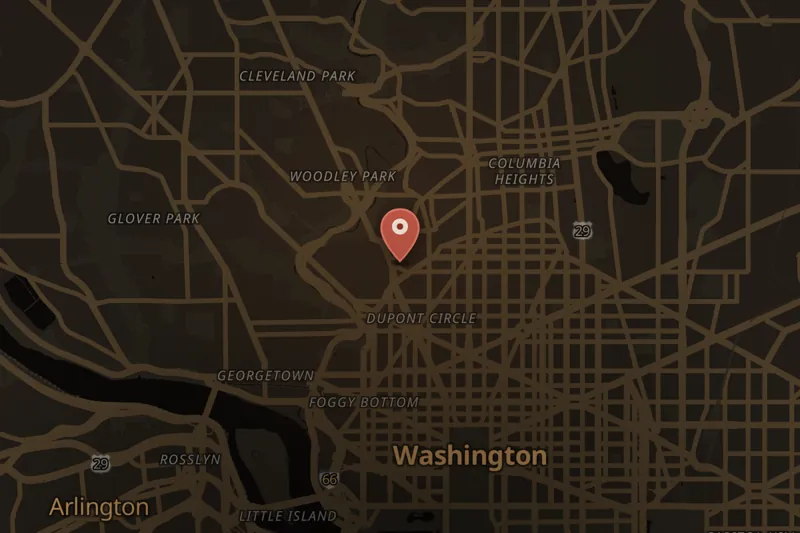
- Washington Hilton, Washington, D.C.
- Case status
- solved
Case timeline
1980-10
John Hinckley Jr. is arrested at Nashville International Airport for illegal possession of a firearm while trailing President Jimmy Carter; the FBI does not connect this to presidential security.
1981-03-28
Hinckley arrives in Washington, D.C., and checks into a hotel, initially planning to travel on to New Haven to pursue Jodie Foster.
1981-03-30
Hinckley shoots and wounds President Ronald Reagan, press secretary James Brady, Secret Service agent Tim McCarthy, and D.C. police officer Thomas Delahanty outside the Washington Hilton Hotel.
1981-03-30
Reagan undergoes emergency exploratory surgery at George Washington University Hospital after being shot under his left arm.
1981-04-11
Reagan is released from George Washington University Hospital.
1981-04-25
Reagan returns to the Oval Office.
1982-03
Jodie Foster testifies in a closed session as part of Hinckley's trial.
1982-06-21
Hinckley is found not guilty by reason of insanity on all counts and is confined to St. Elizabeths Hospital.
2014-08-04
James Brady dies in Alexandria, Virginia, at age 73.
2015
The D.C. Medical Examiner rules Brady's death a homicide; federal prosecutors announce they will not charge Hinckley in connection with it.
2016-09-10
Hinckley is permitted to permanently leave St. Elizabeths Hospital to live with his mother full-time under court supervision.
Best coverage
Titles and descriptions are the creators’ own and may not reflect current legal status; see the dossier above for sourced case facts.
Dateline NBC / 1 min
Dateline Episode Trailer: Hinckley – Diary of a Dangerous Mind | Dateline NBC
People
Thomas Delahanty
VICTIMD.C. police officer shot in the neck; suffered permanent nerve damage and retired due to disability
John Hinckley Jr.
ACQUITTEDFound not guilty by reason of insanity on all counts on June 21, 1982, for the shooting; confined to St. Elizabeths Hospital
James Brady
VICTIMWhite House press secretary; shot in the head, left with permanent disability; died in 2014, death later ruled a homicide
Ronald Reagan
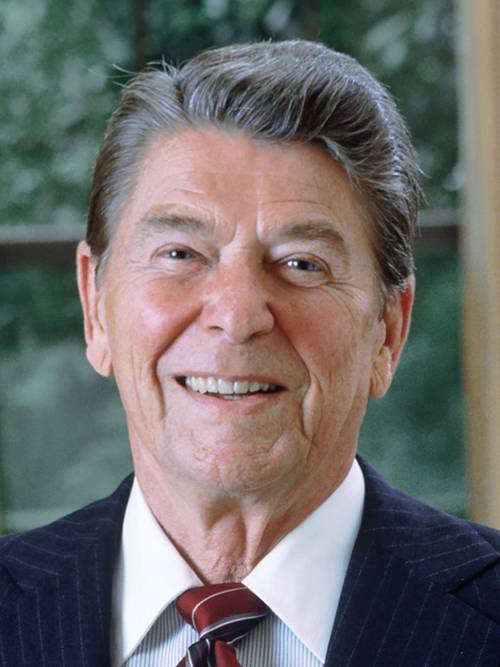
VICTIMPresident of the United States; shot and wounded outside the Washington Hilton
Tim McCarthy
VICTIMSecret Service agent shot in the chest while shielding the president; recovered fully
Roles reflect public records and court outcomes at the time of writing — supporting citations are on file under Sources.
Archival records

portrait victim
Ronald Reagan, James Brady, Tim McCarthy, Thomas Delahanty
Credit: White House / US federal government (public domain) · Public domain (PD-US-government) · Source

archival location
Alexander Haig in The Press Room Making Remarks About The Assassination Attempt and The President'S Health - DPLA - e07c003aeb36e30e3801a002300482a1
Credit: President (1981-1989 : Reagan). White House Photographic Office. 1981-1989 · Public domain · Source

portrait public figure
James Brady in 2011
Credit: The White House from Washington, DC · Public domain · Source

portrait public figure
President Ronald Reagan and Nancy Reagan returning home to the White House from George Washington Hospital
Credit: Series: Reagan White House Photographs, 1/20/1981 - 1/20/1989 Collection: White House Photographic Collection, 1/20/1981 - 1/20/1989 · Public domain · Source

crime scene press
President Ronald Reagan moments before he was shot in an assassination attempt 1981
Credit: Michael Evans · Public domain · Source

unclassified
Reunion of 3 Secret Service agents
Credit: Photo taken by Helen McConnell, friend of the Parr Family. · CC0 · Source
Places
Common questions
- What happened to the victim?
- On March 30, 1981, John Hinckley Jr. shot and wounded President Ronald Reagan and three others outside the Washington Hilton in Washington, D.C. Hinckley was later found not guilty by reason of insanity.
- Where did the crime happen?
- Washington Hilton, Washington, D.C.
- What is the current status of the case?
- Status: solved. Last verified July 2026.
Sources
- ENCYCLOPEDICAttempted assassination of Ronald ReaganWikipedia · 2026-07-05
- PRESSJames Brady's Death Ruled a Homicide, Police SayThe New York Times · 2026-07-05
- PRESSJames Brady's death ruled homicide by D.C. medical examinerThe Washington Post · 2026-07-05
Record history
- First published
- JUL 05, 2026
- Last verified against sources
- JUL 05, 2026