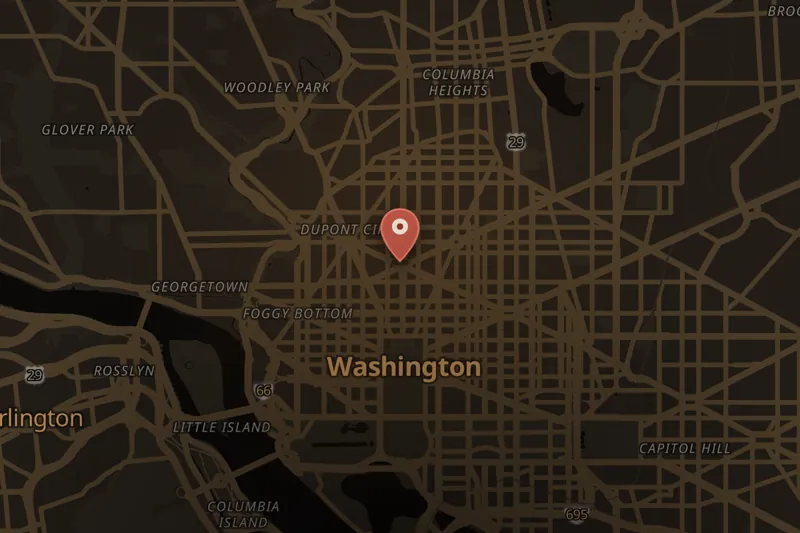
Orlando Letelier, a former Chilean ambassador to the United States and cabinet minister under President Salvador Allende, became a leading international voice against the military dictatorship of Augusto Pinochet after being imprisoned and tortured following the 1973 Chilean coup. Released in 1974 under international diplomatic pressure, he relocated to Washington, D.C., where he worked at the Institute for Policy Studies and lobbied against loans and investment in Pinochet's Chile. On September 10, 1976, the Chilean government revoked his citizenship, citing his efforts to block foreign financial support for the regime.
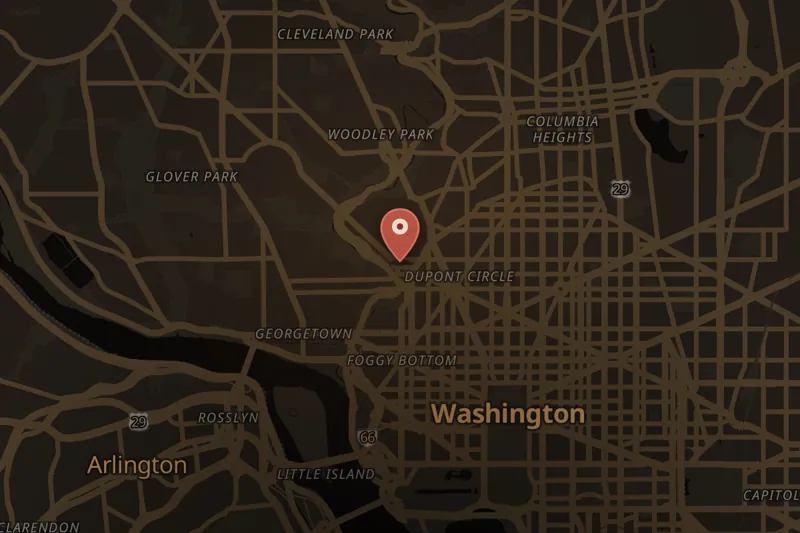
On September 21, 1976, Letelier was driving to work in Washington, D.C., with colleague Ronni Moffitt and her husband Michael. As their car rounded Sheridan Circle on Embassy Row at approximately 9:35 a.m., a bomb planted beneath the driver's seat exploded. Letelier suffered catastrophic injuries and died at George Washington University Medical Center; Moffitt's carotid artery and larynx were severed by shrapnel and she died roughly 30 minutes after Letelier. Michael Moffitt survived with a minor head wound. Investigators determined the device was a plastic explosive attached to the vehicle's underside, not controlled by a timer or remote detonator.
The FBI's investigation, aided by a classified cable identifying links to Operation Condor, eventually implicated Michael Townley, a DINA operative based in the U.S., and Armando Fernandez Larios. Chile extradited Townley to the U.S. in 1978; he pleaded guilty to conspiracy to commit murder, received a 10-year sentence, and testified that he recruited Cuban exiles — including José Dionisio Suárez Esquivel, Virgilio Paz Romero, Alvin Ross Díaz, and brothers Guillermo and Ignacio Novo Sampol — to help carry out the bombing. In January 1979, the Novo Sampol brothers and Díaz were tried in Washington, D.C.; all three were initially found guilty of murder, though they were later acquitted at a new trial. Suarez and Paz remained fugitives until being apprehended in the 1990s, after which they pleaded guilty and served short sentences. Fernandez Larios fled Chile in 1987 with FBI assistance and pleaded guilty as an accessory to murder in exchange for dropped charges. In Chile, former DINA director General Manuel Contreras and Brigadier Pedro Espinoza Bravo were convicted of the murders on November 12, 1993, and sentenced to seven and six years' imprisonment, respectively.
Declassified U.S. documents, including a 2015 CIA report cited by author John Dinges, indicated that Contreras told a confidant he had authorized the assassination on Pinochet's orders, and that the CIA had knowledge of Pinochet's direct involvement by 1978. Other documents indicate the State Department had prepared a warning to Southern Cone governments about planned assassinations abroad shortly before the bombing, which was reportedly not delivered after intervention by Secretary of State Henry Kissinger. Pinochet, who died on December 10, 2006, was never charged in connection with the case. A civil liability dispute between the Letelier and Moffitt families and the Chilean government was resolved through arbitration under the 1914 Chile–United States peace treaty in the early 1990s.


 Credit: White House / US federal government (public domain)Public domainSourceSOLVEDListen