
Start here
Hell’s Belle The Black Widow of the Midwest - Belle Gunness - Mystery & Makeup GRWM | Bailey Sarian

Bailey Sarian's 36-minute breakdown, the fullest single telling on file.
Watch on YouTubeBefore you continue
This case involves crimes against children. Casepin presents the record in neutral, non-graphic language. Choose whether to continue.
Cold case · 1902
Also known as Belle Gunness · Brynhild Paulsdatter Størseth

The short answer
Belle Gunness, a Norwegian-American woman living on a farm in La Porte, Indiana, is believed to have killed at least fourteen people—including two husbands, several children in her care, and multiple men lured by personal advertisements—between 1884 and 1908, before her farmhouse burned down and dozens of human remains were unearthed on the property.
Start hereHell’s Belle The Black Widow of the Midwest - Belle Gunness - Mystery & Makeup GRWM | Bailey SarianBailey Sarian · 36 minThe coverage index
1 piece from 1 creator: ranked, with duplicates removed and short clips set aside.
Start here
Video · YouTube · 36 min · 2020
Bailey Sarian's 36-minute breakdown, the fullest single telling on file.
Watch on YouTubeTitles and descriptions are the creators’ own and may not reflect current legal status. The sourced facts are in the file below. Players load only when you press play. Suggest coverage we’re missing.
The case file
Belle Gunness, born Brynhild Paulsdatter Størseth in Selbu, Norway, in 1859, immigrated to the United States in 1881 and settled near her sister in Chicago, where she worked as a domestic servant and later at a butcher's shop. She married Mads Ditlev Anton Sørensen in 1884. During their marriage, the couple's candy store and home each burned down, generating insurance payouts, and two infants in Gunness's care died of what was recorded as inflammation of the large intestine, with insurance collected after each death. Sørensen himself died on July 30, 1900—the same day two of his life insurance policies overlapped in coverage—of a cerebral hemorrhage; Gunness said she had given him quinine powder for a headache before finding him dead. She collected a total of $5,000 and used the funds to purchase a pig farm in La Porte, Indiana.
In 1902, Gunness married Peter Gunness. Within a week, his infant daughter died in Belle's care of unknown causes, and Peter himself died eight months later of a skull injury that Gunness attributed to a falling meat grinder. A coroner's jury examined the case on suspicion of murder but took no further action, and Gunness collected $3,000 in insurance money.
Beginning in 1905, Gunness placed marriage advertisements in Chicago newspapers, corresponding with men who subsequently disappeared after visiting her farm, including Henry Gurholt and John Moe; their belongings were later found among more than a dozen trunks in her house. Her activities came to public attention in April 1908 when the Gunness farmhouse burned to the ground. The ruins contained the body of a headless adult woman, initially identified as Gunness, along with the bodies of her three children. Subsequent excavation of the property uncovered partial remains of at least eleven more people, including Andrew Helgelien, identified after his brother Asle Helgelien alerted police to correspondence urging Andrew to visit with money. Bodies were found dismembered in a consistent manner—decapitated, with arms removed at the shoulders and legs severed at the knees—buried in shallow depressions across the property. Most remains could not be identified.
Ray Lamphere, Gunness's hired hand and periodic lover, was convicted of arson in November 1908 in connection with the fire. He later gave confessions—one published by journalist Edward Bechly and a separate account recorded by Reverend Edwin Schell—asserting that Gunness had lured and murdered the men who answered her advertisements, and that the headless female body was a victim planted to simulate her own death. Dr. Harry Long of La Porte, who had known Gunness personally, stated the body was not hers based on its size, build, and manicured nails, while Gunness's dentist identified a dental crown found in the ruins as hers. Whether Gunness died in the fire or escaped has never been conclusively resolved; a 2008 attempt at DNA testing on the corpse was inconclusive due to sample degradation.
11 dated entries · 1859–2008
Brynhild Paulsdatter Størreth (later Belle Gunness) is born in Selbu, Norway.
Gunness immigrates to the United States and joins her sister in Chicago.
Gunness marries Mads Ditlev Anton Sørensen.
Mads Sørensen dies of cerebral hemorrhage the day two of his life insurance policies overlapped.
Belle marries Peter Gunness; his infant daughter dies days later.
Peter Gunness dies of a skull injury Belle attributes to a falling meat grinder; Belle begins placing marriage advertisements in Chicago newspapers.
John Moe travels to La Porte after corresponding with Gunness and is never seen again.
The Gunness farmhouse burns down; a headless woman's body and three children's bodies are found in the ruins.
Dr. Harry Long publicly states the recovered body is not Gunness's.
Ray Lamphere is convicted of arson in connection with the farmhouse fire.
DNA testing is attempted on the recovered corpse to determine if it is Gunness's; results are inconclusive.
7 named in this file
Victims first. Every legal label is set from public records and court outcomes, not from the prose.
Man from South Dakota who corresponded with Gunness and traveled to La Porte with money; his remains were identified after his brother alerted police.[3]
Wisconsin farmhand who answered a Gunness advertisement and disappeared after traveling to La Porte.[3]
Identified among the remains found on the Gunness property; Gunness had told neighbors she had gone to Los Angeles.[3]
Minnesota man who corresponded with Gunness, withdrew a large sum of cash, and disappeared after visiting La Porte.[3]
First husband of Belle Gunness; died in 1900 of cerebral hemorrhage after his life insurance policies overlapped.[3]
Second husband of Belle Gunness; died in 1902 of a skull injury attributed to a falling meat grinder.[3]
Convicted of arson in November 1908 in connection with the fire at the Gunness farmhouse.[3]
From the record
3 cited
Coverage is not a source: every fact in this file rests on the records below.
PressNew York PostAccessed Jul 18, 2026
Pressnewspaperarchive.comAccessed Jul 18, 2026
EncyclopedicWikipediaAccessed Jul 18, 2026
Trust
Are you family of someone named in this file? Corrections and removal requests from victims’ families are prioritized.
Near this case
 SOLVEDListen
Niles Charter Township, Michigan · 1980s
Roxanne Wood was killed in her Niles Township home in 1987, and forensic genealogy led to a second-degree murder conviction 35 years later.
 Credit: Harris & Ewing, photographer·Public domain·SourceUNSOLVEDListen
Near Republic Steel mill, South Chicago · 1930s
On May 30, 1937, Chicago police shot and killed ten unarmed striking steelworkers and supporters marching toward the Republic Steel mill during the Little Steel strike; no officers were ever prosecuted.
 Image record·Editorial use·SourceSOLVEDListen
Near Christian Fenger Academy High School, Chicago, Illinois · 2000s
Derrion Albert, a 16-year-old Chicago student, was beaten to death on September 24, 2009, after being pulled into a brawl between rival student factions near Christian Fenger Academy High School; the attack, captured on video, prompted national attention and multiple convictions.
 Credit: Family/Instagram photograph, widely distributed in press coverage·Editorial use·SourceSOLVEDListen
Moscow, Idaho · 2022
Four University of Idaho students—Madison Mogen, Kaylee Goncalves, Ethan Chapin, and Xana Kernodle—were fatally stabbed inside an off-campus house in Moscow, Idaho, in the early morning hours of November 13, 2022. Bryan Kohberger, a criminology PhD student at nearby Washington State University, was arrested that December and pleaded guilty in 2025, receiving four consecutive life sentences.
 Credit: Mona Eshaiker·CC BY-SA 3.0·SourceSOLVEDListen
Holmby Hills, Los Angeles, California · 2009
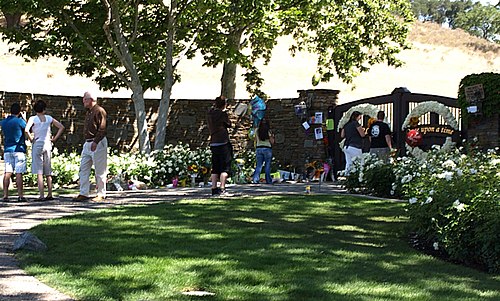
Singer Michael Jackson died on June 25, 2009, in Los Angeles from acute propofol intoxication administered by his personal physician, Conrad Murray. The Los Angeles County coroner ruled the death a homicide, and Murray was convicted of involuntary manslaughter in November 2011.
 Credit: Raptac·CC BY-SA 4.0·SourceSOLVEDListen
Bardstown, Kentucky · 2015
Crystal Rogers, a 35-year-old Bardstown, Kentucky, mother of five, disappeared in July 2015 and has never been found; in 2025, her former boyfriend, Brooks Houck, was found guilty of her murder, and two other men were convicted of related conspiracy and evidence-tampering charges.
Also covered by
 Credit: English Wikipedia·Editorial use·SourceSOLVEDListen
Modesto, California · 2002
Laci Peterson, 27 and eight months pregnant, disappeared from her Modesto, California home on December 24, 2002; her body and that of her unborn son Conner were found in San Francisco Bay in April 2003, and her husband Scott Peterson was convicted in 2004 of murdering both.
 Credit: CBS News / Travis Alexander (personal photo)·Editorial use·SourceSOLVEDListen
Mesa, Arizona, United States · 2000s
Travis Alexander, 30, was stabbed, slashed, and shot to death in his Mesa, Arizona home on June 4, 2008. His ex-girlfriend, Jodi Arias, was convicted of first-degree murder in 2013 and sentenced to life without parole in 2015 after two juries deadlocked on the death penalty.
 COLDListen
Cumming, Georgia · 2018
Tamla Horsford, a 40-year-old mother of five, died from a fall at a home in Cumming, Georgia, during a gathering on November 3-4, 2018; two separate investigations ruled her death accidental, though her family has disputed that finding and pushed for further inquiry.
 Credit: Los Angeles Police Department·Public domain·SourceUNSOLVEDListen
Leimert Park, Los Angeles, California, USA · 1940s
Elizabeth Short, known posthumously as the Black Dahlia, was found murdered in Los Angeles in January 1947 in a case that remains unsolved.
 Credit: Ted Van Zyl·Editorial use·SourceSOLVEDListen
Albuquerque, New Mexico, United States · 1993
Girly Chew Hossencofft, a Malaysian-born bank teller living in Albuquerque, New Mexico, disappeared on September 9, 1999, shortly after filing for divorce from her husband Diazien Hossencofft. He and his girlfriend Linda Henning were later convicted of her murder. Her body has never been found.
 Credit: Argonne National Laboratory / Wikimedia Commons, c.1922–23·Public domain·SourceSOLVEDListen
Orange, New Jersey · 1917
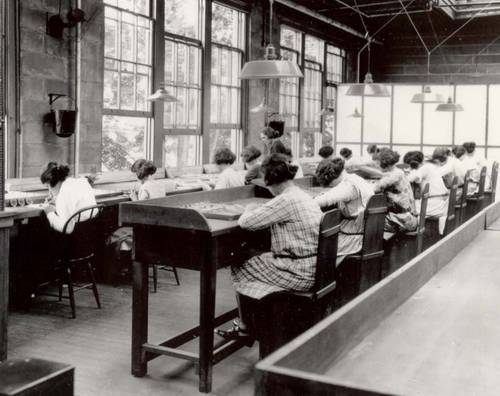
Beginning in 1917, factory workers who came to be known as the Radium Girls were poisoned after being instructed to shape radium-paint brushes with their lips; the resulting illnesses, deaths, and lawsuits against the United States Radium Corporation and the Radium Dial Company reshaped U.S. occupational health and labor law.