
Start here
RUSSIA: BUDYONNOVSK: HOSTAGE SITUATION UPDATE
The creator's telling of the case, the strongest entry point on file.
Watch on YouTubeBefore you continue
This case involves crimes against children. Casepin presents the record in neutral, non-graphic language. Choose whether to continue.
Solved case · 1995
Also known as Budennovsk hostage crisis · Teract v Budyonnovske
The short answer
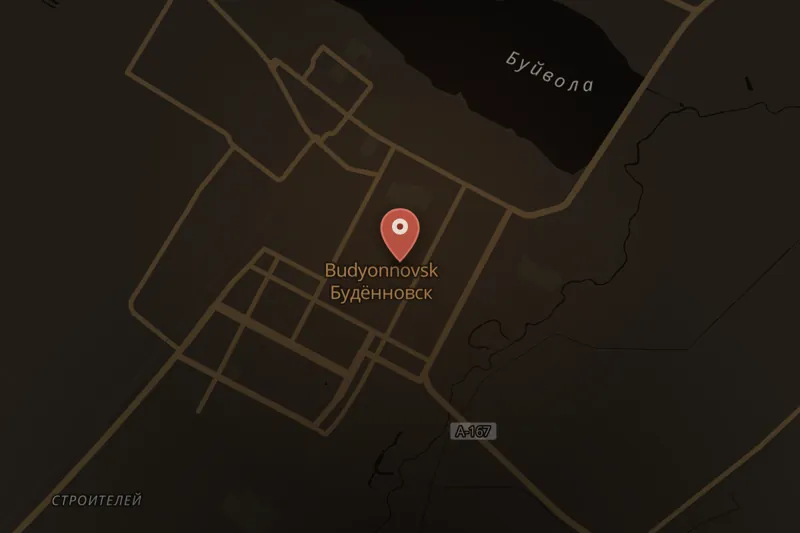
In June 1995, Chechen separatist fighters led by Shamil Basayev, who was killed in 2006 before facing trial, seized a hospital in Budyonnovsk, Russia, holding over 2,000 hostages for six days; the siege ended after Russian Prime Minister Viktor Chernomyrdin agreed to Basayev's demands, but at least 129 people were killed.
Start hereRUSSIA: BUDYONNOVSK: HOSTAGE SITUATION UPDATEThe coverage index
5 pieces from 5 creators: ranked, with duplicates removed and short clips set aside.
Start here
Video · YouTube · 2015
The creator's telling of the case, the strongest entry point on file.
Watch on YouTube1995: Chechen Terrorists Held 1500 Hospital Hostages for 6 Days

Shamil Basaev and Budennovsk hospital hostage crisis in 1995. Сauses and consequences

The Budyonnovsk Hospital Horror: What Russia Covered Up for 30 Years


Titles and descriptions are the creators’ own and may not reflect current legal status. The sourced facts are in the file below. Players load only when you press play. Suggest coverage we’re missing.
The case file
Between 14 and 19 June 1995, during the First Chechen War, a group of more than 100 Chechen separatist fighters led by Shamil Basayev crossed from Chechnya through Dagestan into Stavropol Krai, Russia, disguised as a military convoy transporting the bodies of dead soldiers. After passing through more than twenty checkpoints, the convoy was stopped by local police in the city of Budyonnovsk. The fighters opened fire, seizing the police headquarters and city hall before retreating to the city's main hospital as Russian reinforcements arrived. As many as 41 people, including police officers, soldiers, and civilians, were killed in this initial phase of the attack.
Basayev's group fortified the hospital, mining the ground floor with explosives, and held more than 2,000 hostages, including approximately 150 children and several women with newborn infants. Basayev demanded an end to the war in Chechnya, an amnesty for Chechen fighters, and direct negotiations between Russia and Chechen leadership. Russian authorities threatened to kill 2,000 Chechen prisoners in response. Over 300 hostages were released through low-level negotiations in the first two days. On 15 June, one hostage was killed, and the following day five more male hostages were shot, reportedly on Basayev's order, after journalists failed to arrive as demanded; Russian officials initially dismissed reports of the killings.
On 17 June, Russian special forces, including the Alfa and Vympel units, launched an assault on the hospital. The attack met fierce resistance, and many hostages were killed by crossfire during the fighting. Basayev released pregnant women and nursing mothers during a temporary ceasefire, but two further assaults on the hospital also failed, resulting in additional casualties. Yeltsin's human rights adviser Sergey Kovalyov described seeing burned corpses and human remains in the aftermath of the fighting.
On 18 June, Chernomyrdin negotiated directly with Basayev in a televised call, agreeing to halt military operations in Chechnya and begin high-level talks with separatist leaders, resulting in the release of 350 additional hostages. On 19 June, remaining hostages were freed, though more than one hundred volunteers, including journalists, State Duma deputies, and officials, accompanied Basayev's group by bus to Chechnya to ensure safe passage.
Official figures put the death toll at a minimum of 129 killed and 415 injured, while other estimates suggest up to 166 deaths. The crisis caused a political crisis in Russia, leading to the resignations of the FSB director and interior minister, and is regarded as a turning point in the war, which concluded in August 1996 with the Khasavyurt Accord. Basayev also obtained radioactive caesium-137 during the raid, later used in an act of radiological terrorism in Moscow. He was killed in 2006; dozens of other participants in the attack were subsequently killed or imprisoned.
8 dated entries · 1995–2006
Chechen fighters led by Shamil Basayev attack Budyonnovsk, seize police headquarters and city hall, then retreat to the city's main hospital taking hostages.
Over 300 hostages released through negotiations; one hostage killed by the attackers in the evening.
Five additional male hostages shot, reportedly on Basayev's order, after journalists fail to arrive as demanded.
Russian special forces launch assault on the hospital; multiple attacks fail amid heavy casualties; ceasefire allows release of pregnant women and nursing mothers.
Chernomyrdin and Basayev reach agreement in televised negotiation; 350 additional hostages released.
Remaining hostages released; volunteer hostages accompany Basayev's group by bus to Chechnya.
FSB director Sergei Stepashin and interior minister Viktor Yerin resign amid fallout from the crisis.
Shamil Basayev is killed.
5 named in this file
Victims first. Every legal label is set from public records and court outcomes, not from the prose.
Identified as one of the hostage-takers in the 1995 Budyonnovsk hospital hostage crisis, serving as Shamil Basayev's deputy; killed in 2002, so was never prosecuted.[3]
Identified as the hostage-taker who led the 1995 Budyonnovsk hospital hostage crisis; killed in an explosion in 2006, so was never prosecuted.[3]
FSB director at the time of the crisis; resigned on 30 June 1995 amid criticism of the government's handling of the siege.[3]
Yeltsin's human rights adviser who negotiated and later described the aftermath of the assault on the hospital; also served as a volunteer hostage during the release of Basayev's group.[3]
Interior minister at the time of the crisis; resigned on 30 June 1995.[3]
3 cited
Coverage is not a source: every fact in this file rests on the records below.
PressThe New York TimesAccessed Jul 7, 2026
PressCNNAccessed Jul 7, 2026
EncyclopedicWikipediaAccessed Jul 7, 2026
Trust
Are you family of someone named in this file? Corrections and removal requests from victims’ families are prioritized.
Near this case
 SOLVEDListen
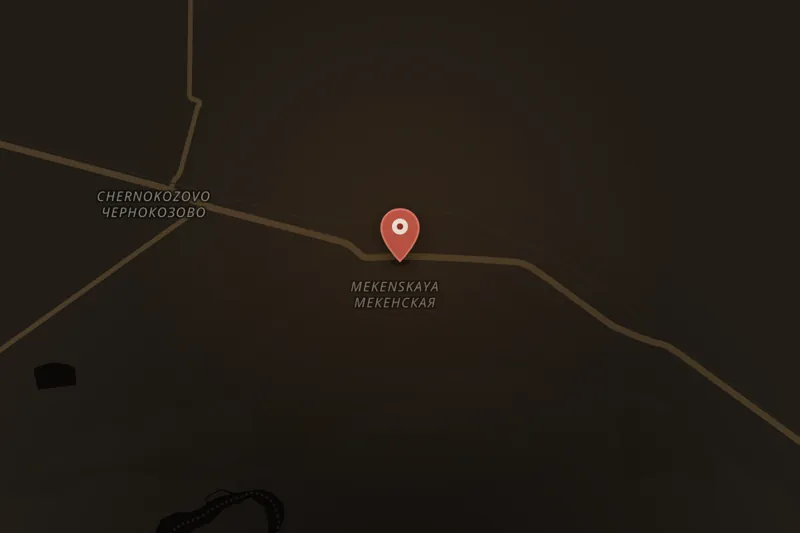
Mikenskaya, Chechnya, Russia · 1990s
On 8 October 1999, during the Second Chechen War, at least 34 ethnic Russian residents of the village of Mikenskaya were shot dead by a lone gunman, Ahmed Ibragimov, in under an hour. He fled but was captured two days later and killed by villagers before facing trial.
 Credit: Mayimbú·CC BY-SA 4.0·SourceSOLVEDListen
Japanese Ambassador's Residence, San Isidro District · 1996
On 17 December 1996, 14 Túpac Amaru Revolutionary Movement (MRTA) militants seized the Japanese ambassador's residence in Lima, Peru, taking hundreds hostage; the 126-day siege ended on 22 April 1997 with a military raid that killed all 14 militants, one hostage, and two commandos, followed by years of investigations into alleged extrajudicial killings of surrendered rebels.
 Credit: Frankk785·CC BY-SA 3.0·SourceSOLVEDListen
Legislative Assembly of El Salvador, San Salvador · 1993
Between 1993 and 1995, former soldiers of the Armed Forces of El Salvador stormed the country's Legislative Assembly on four occasions to demand unpaid wartime compensation, twice taking hostages including sitting legislators before crises were resolved through negotiation.
 Credit: San Quentin State Prison, California Department of Corrections and Rehabilitation·Public domain·SourceSOLVEDListen
Lindhurst High School, Olivehurst, California · 1992
On May 1, 1992, a former student armed with a shotgun and a sawed-off rifle killed four people and wounded ten others at Lindhurst High School in Olivehurst, California, before holding dozens of students hostage in an eight-hour standoff.
 Credit: Petr Bartolomey / Wikimedia Commons·CC BY-SA 2.0·SourceCOLDListen
Dyatlov Pass, Ural Mountains, Sverdlovsk Oblast, Russia · 1959
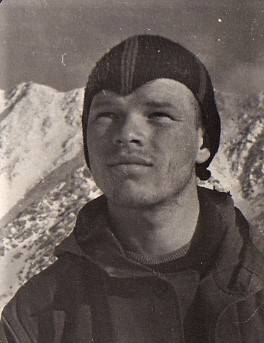
Nine experienced Soviet ski hikers led by Igor Dyatlov died in the northern Ural Mountains on 1 or 2 February 1959 after cutting their way out of their tent and fleeing into a snowstorm inadequately dressed for the cold; Russian authorities reopened the case in 2019 and announced in 2020 that an avalanche was the most likely cause, though the deaths remain widely described as unexplained and some researchers dispute that conclusion.
Apartment block, central Moscow, Russia · 2006
Russian journalist and human rights activist Anna Politkovskaya, a prominent critic of the Second Chechen War and of Vladimir Putin, was shot dead in her Moscow apartment building elevator on 7 October 2006. After a lengthy and repeatedly stalled investigation, six people were eventually convicted of crimes related to her murder, though the identity of whoever ordered the killing was never conclusively established in court.
