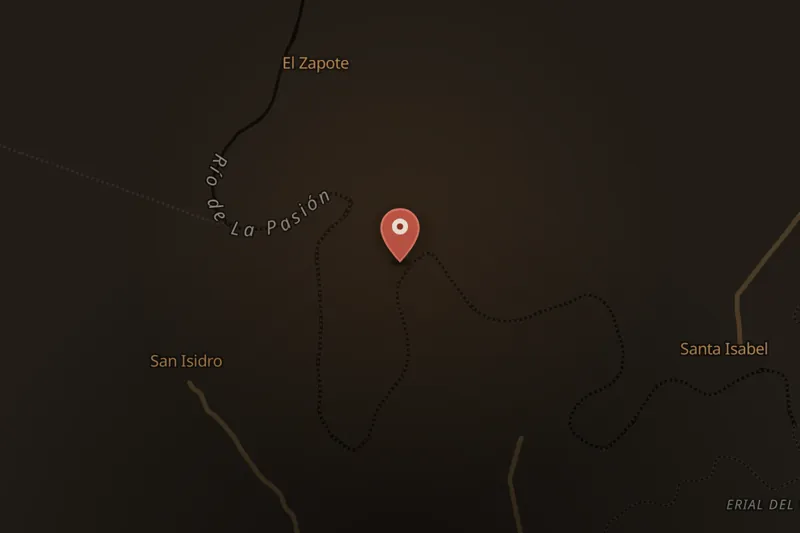
Cancuén is an archaeological site of the pre-Columbian Maya civilization located in the Pasión subregion of the central Maya lowlands, in what is now the Guatemalan Department of Petén. The city flourished during the Classic Period, reaching its peak in the 7th century, and served as a major trade center specializing in jade, pyrite, and obsidian. Its position on the Pasión River allowed it to dominate regional trade. One of its most powerful rulers, Tajal Chan Ahk, built the city's palace in 770 AD, a structure covering nearly 23,000 square meters with 200 rooms, making it the largest palace in the Maya area. The city also featured two ball courts, a large marketplace, and a dock on the river. Notably, Cancuén lacked large temples or burial sites, leading researchers to believe residents worshipped and buried their dead in nearby mountains.
Around 800 AD, a mass killing occurred at Cancuén. Archaeological investigation found several dozen bodies dressed in royal garments near the base of the site's central pyramid. Among the dead was the city's ruler at the time, Kan Maax. Evidence indicates the victims had been executed and their bodies dumped in a cistern. This event occurred during the period when Maya civilization more broadly experienced significant upheaval and collapse, and some scholars believe the massacre at Cancuén was connected to that wider societal disruption. Cancuén is thought to have been abandoned shortly after this event and was not subsequently reoccupied.
The site was rediscovered in 1905 by Austrian explorer Teoberto Maler. Early investigations found no major temples or burial sites, leading archaeologists at the time to assess Cancuén as a minor or subsidiary settlement. The site was largely overlooked until 1967, when students from Harvard University uncovered the ruins of what proved to be the largest palace in the Maya world, with walls up to 1.8 meters thick, more than 200 rooms, and 12 patios spanning over 200,000 square feet. Later investigation suggested the full site, including a maze of rooms with 20-foot-high arched ceilings, may have covered at least 3 square miles. Following the palace's discovery, further archaeological expeditions were conducted, including teams from Vanderbilt University and the Universidad del Valle de Guatemala, with involvement from the National Geographic Society.

 Credit: Renata AvilaCC BY 2.0SourceSOLVEDListen