Casepin
Back to cases

Case file

1980 Spanish Embassy Burning in Guatemala City

SOLVED1998Former Spanish Embassy, Guatemala City, Guatemala3 SOURCESUPDATED JUL 2026

Documents violence · torture · ongoing investigation — written to inform, not to shock.

Illustrative

On January 31, 1980, a group of K'iche' and Ixil peasant farmers, organized with members of the Comité de Unidad Campesina and the Robin García Revolutionary Student Front, entered the Spanish Embassy in Guatemala City. The occupation followed the peasants' unsuccessful attempt to be heard by the Guatemalan Congress over army violence in Quiché department, including the kidnapping and murder of peasants in Uspantán, and after their legal adviser was assassinated. At the time of the occupation, Spanish Ambassador Máximo Cajal y López was meeting with former vice president Eduardo Cáceres Lenhoff, former Foreign Minister Adolfo Molina Orantes, and lawyer Mario Aguirre Godoy. The protesters stated they intended a peaceful occupation and planned a press conference.

Guatemalan President Fernando Romeo Lucas García, police chief Germán Chupina Barahona, and Minister of the Interior Donaldo Álvarez Ruiz decided to forcibly remove the occupiers despite the ambassador's pleas to negotiate. Approximately 300 armed state agents surrounded the embassy, cut utilities, and SWAT police occupied parts of the building over the ambassador's objections that this violated international law. The peasants and captives barricaded themselves in the ambassador's office. Police breached the door and introduced a substance, likely white phosphorus, which combined with Molotov cocktails inside to ignite a fire; the exact cause and responsibility remain disputed among academics. Police refused to allow firefighters to intervene as the fire spread. Thirty-seven people died, including Eduardo Cáceres, Adolfo Molina Orantes, activist Vicente Menchú (father of Rigoberta Menchú), Spanish Consul Jaime Ruiz del Árbol, and other embassy staff.

Ambassador Cajal y López escaped through a window. The only other survivor, demonstrator Gregorio Yujá Xona, suffered severe burns. After hospital police protection was withdrawn on February 1, armed men believed to be plainclothes Judicial Police abducted Yujá Xona; he was tortured, shot, and his body left with a note reading "Brought to Justice for Being a Terrorist" and threatening the ambassador. Cajal y López fled the country with diplomatic assistance.

The Guatemalan government claimed the occupiers had "sacrificed" hostages and "immolated themselves," a claim Cajal denied. Spain severed diplomatic relations, not restored until 1984. Guatemala's truth commissions (CEH and REHMI) later rejected the government's account. In 1999 Rigoberta Menchú filed a criminal complaint in Spain against former officials including Presidents Romeo Lucas García, Efraín Ríos Montt, and Óscar Humberto Mejía Víctores. In 2005 a Spanish judge issued an arrest warrant for former Interior Minister Donaldo Álvarez, who remains a fugitive. In 2015, former SWAT chief Pedro García Arredondo was convicted and sentenced to 40 years for murder and crimes against humanity related to the fire, and an additional 50 years for killing two students at the victims' funeral, having previously been sentenced to 70 years in a separate 2012 case.

Key facts

Victims
Gregorio Yujá Xona, Vicente Menchú, Adolfo Molina Orantes, Eduardo Cáceres Lenhoff, Jaime Ruiz del Árbol
Date
1998
Location
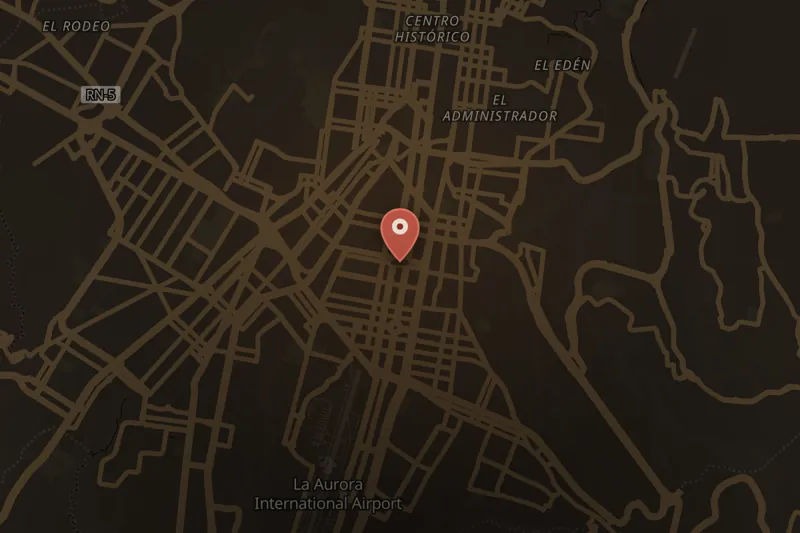
Former Spanish Embassy, Guatemala City, Guatemala
Case status
solved

Case timeline

  1. 1980-01-28

    Protesters briefly took over two radio stations.

  2. 1980-01-31

    Peasants and allied protesters occupied the Spanish Embassy in Guatemala City; police raid led to a fire killing 37 people.

  3. 1980-02-01

    Survivor Gregorio Yujá Xona was abducted from hospital, tortured, and killed after his police guard was withdrawn.

  4. 1984-09-22

    Diplomatic relations between Spain and Guatemala were normalized.

  5. 1998

    Guatemalan Congress requested an investigation into the fire.

  6. 1999

    Rigoberta Menchú filed a criminal complaint in Spain against former Guatemalan officials.

  7. 2005

    A Spanish judge issued an arrest warrant for former Interior Minister Donaldo Álvarez.

  8. 2009-01-30

    Guatemalan government filed 3,350 criminal complaints alleging human rights violations tied to the era.

  9. 2015-01-20

    Former SWAT police chief Pedro García Arredondo was sentenced to 40 years in prison for murder and crimes against humanity related to the embassy fire, plus 50 additional years for killing two students at the funeral.

Best coverage

No approved coverage links are attached yet.

People

  • Gregorio Yujá Xona

    VICTIM

    Demonstrator who survived the embassy fire with severe burns but was later abducted, tortured, and killed.

    citation on file

  • Vicente Menchú

    VICTIM

    Indigenous activist and father of Rigoberta Menchú who died in the embassy fire.

    citation on file

  • Máximo Cajal y López

    LAW ENFORCEMENT

    Spanish Ambassador present during the occupation; escaped the fire and later fled the country; role in dossier is as a survivor/witness official, not law enforcement in the criminal sense but included as embassy authority figure.

    citation on file

  • Adolfo Molina Orantes

    VICTIM

    Former Guatemalan Minister of Foreign Affairs who died in the embassy fire.

    citation on file

  • Eduardo Cáceres Lenhoff

    VICTIM

    Former Guatemalan vice president who died in the embassy fire.

    citation on file

  • Pedro García Arredondo

    CONVICTED

    Former SWAT police chief convicted in 2015 and sentenced to 40 years for murder and crimes against humanity for ordering that no one be allowed to escape the burning embassy, plus 50 additional years for killing two students at the funeral of the victims.

    citation on file

  • Donaldo Álvarez Ruiz

    CHARGED

    Former Guatemalan Minister of the Interior; a Spanish judge issued an arrest warrant against him in 2005 holding him responsible for the incident; he is considered a fugitive.

    citation on file

  • Jaime Ruiz del Árbol

    VICTIM

    Spanish Consul who died in the embassy fire.

    citation on file

Places

Common questions

What happened to the victim?
On January 31, 1980, indigenous peasant activists occupying the Spanish Embassy in Guatemala City to protest army violence were killed, along with embassy staff and Guatemalan officials, when police stormed the building and a fire broke out, leaving 37 dead.
Where did the crime happen?
Former Spanish Embassy, Guatemala City, Guatemala.
Who was convicted?
Pedro García Arredondo (Former SWAT police chief convicted in 2015 and sentenced to 40 years for murder and crimes against humanity for ordering that no one be allowed to escape the burning embassy, plus 50 additional years for killing two students at the funeral of the victims.).
What is the current status of the case?
Status: solved.

Sources

  1. 1980 Spanish embassy burning in Guatemala Citywikipedia · Wikipedia · 2026-07-07
  2. Contemporaneous coverage — TIMEnews · TIME · 2026-07-07
  3. Contemporaneous coverage — BBC Newsnews · BBC News · 2026-07-07